Constructor record
Source: Jolpica F1 API- Starts
- 5
- Race wins
- 0
- Podiums
- 1
- 1-2 finishes
- 0
- Best finish
- P3
- Points
- 25
Every appearance
| Year | Best | 2nd | Pts |
|---|---|---|---|
| 2021 | P11 | — | 0 |
Team × Circuit · street
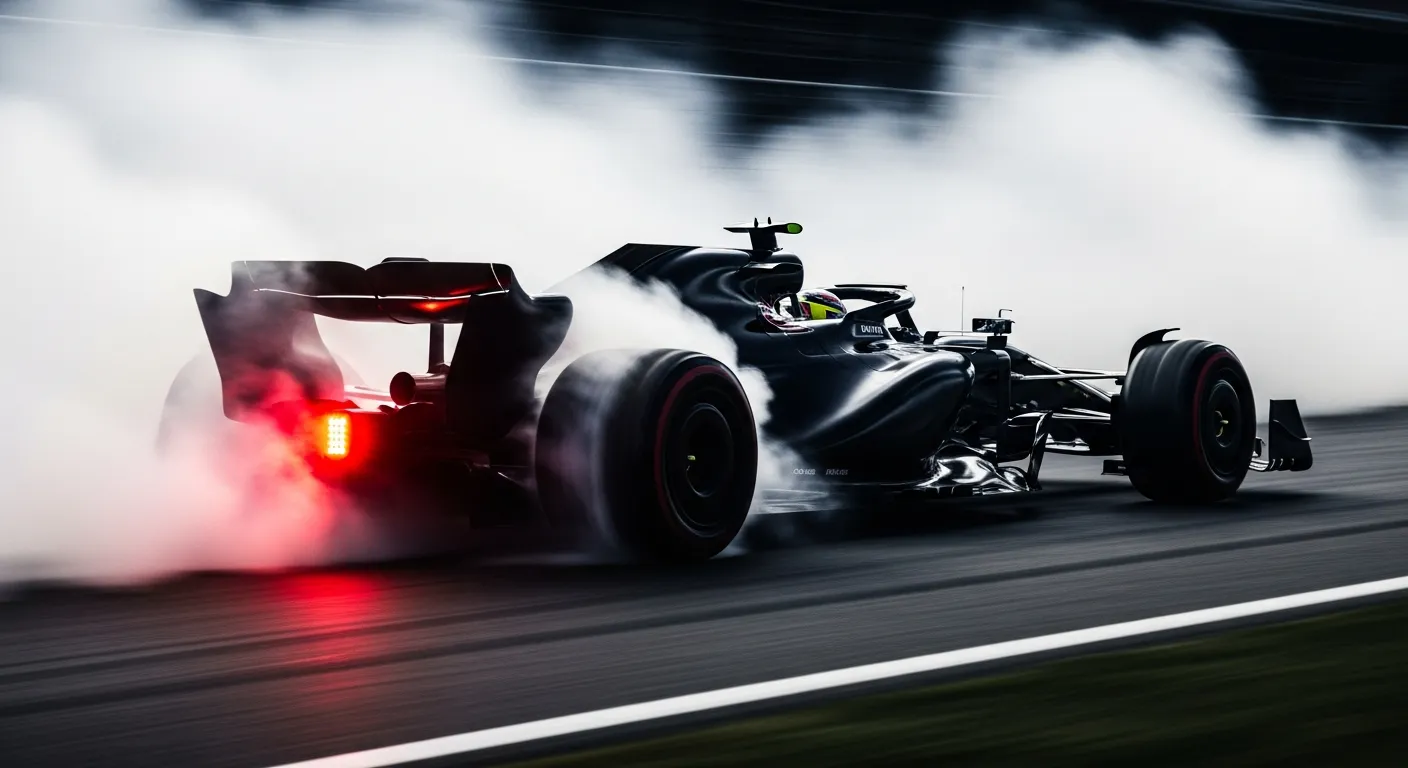
Aston Martin's performance at the Saudi Arabian Grand Prix has seen significant fluctuations, highlighted by a breakthrough podium in 2023 amidst other challenging outings.
| Year | Best | 2nd | Pts |
|---|---|---|---|
| 2021 | P11 | — | 0 |
| 2022 | P12 | P13 | 0 |
| 2023 | P3 | — | 15 |
| 2024 | P5 | — | 10 |
| 2025 | P11 | P16 | 0 |
Aston Martin's relationship with the high-speed Jeddah street circuit has been one of significant performance swings, highlighted by their breakthrough podium in 2023 after initial struggles. This circuit, known for its rapid, flowing nature and unforgiving walls, demands a car concept that balances outright aerodynamic efficiency with robust mechanical grip through its numerous fast corners.
In their initial appearances, Aston Martin found the Jeddah Corniche Circuit a challenging proposition. The 2021 and 2022 seasons saw the team finish outside the points, with a best position of 11th and 12th respectively. This period reflected a car that perhaps struggled to find the optimal setup for Jeddah's unique blend of high-speed sections and technical demands, a common hurdle for teams adapting to new street circuits. The inherent unpredictability of such venues, where a single misstep can end a race, adds another layer of complexity.
However, the 2023 Saudi Arabian Grand Prix marked a significant turning point. Aston Martin secured their first, and to date, only podium at Jeddah, finishing 3rd. This performance underscored a substantial leap in the AMR23's capabilities, particularly its ability to navigate the circuit's sweeping bends with confidence and maintain strong straight-line speed, benefiting from the Mercedes power unit. This success suggested that the team had refined its aerodynamic package and suspension setup to better exploit the circuit's characteristics, a stark contrast to their earlier outings.
The momentum continued into 2024, where the team again delivered a strong points finish, securing 5th place. This consistency demonstrated that the 2023 podium was not an anomaly but rather a testament to a car concept that, when optimized, can perform effectively on circuits demanding both high-speed stability and precise handling. The ability to extract performance on a circuit like Jeddah often correlates with success on other high-speed tracks, a factor teams consider when developing their car's philosophy. Fans observe similar performance variability at other high-speed street circuits, such as Racing Bulls at the Australian Grand Prix or the unique demands of Williams at the Las Vegas Grand Prix. The Formula 1 — official site provides extensive data on how different car concepts perform across various circuits.
Looking ahead, the verified record for 2025 shows a dip in performance, with finishes of 11th and 16th, resulting in zero points. This illustrates the dynamic nature of Formula 1 and the constant evolution required to remain competitive, especially on a circuit as demanding as Jeddah. Maintaining the delicate balance between low drag for the long straights and high downforce for the fast corners is a perennial challenge. The team's ongoing development, particularly with the transition to Honda power units from 2026, will be crucial in addressing these fluctuations and consistently challenging at the front. The Jeddah circuit's layout, with its 27 corners and average speeds exceeding 250 km/h, places immense stress on both the chassis and the power unit. The Mercedes power unit, which Aston Martin currently utilizes, has historically been strong in terms of outright power and efficiency, which is a clear advantage on such a demanding track. This complex interplay is often discussed in detail on platforms like Wikipedia: Formula One, offering a broad perspective on the sport's technical aspects. The data from Jolpica/Ergast — 2026 season data will continue to be a crucial resource for tracking how teams adapt their performance over time, much like how teams approach the high-speed demands of Williams at the Qatar Grand Prix.