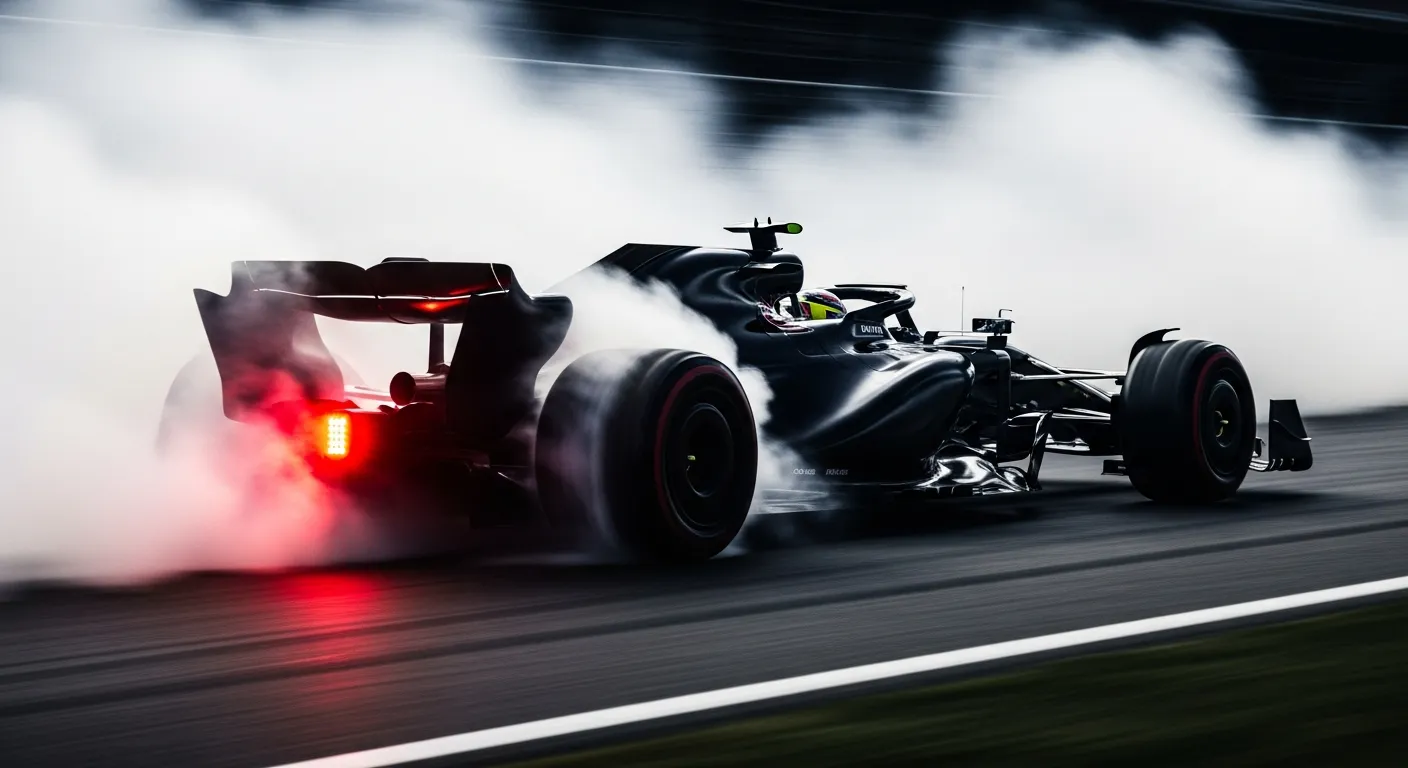
Aston Martin's engagement with the Italian Grand Prix at Monza has historically presented a distinct challenge for their car philosophy, often struggling to convert their typical strengths into dominant performances on the high-speed permanent circuit. The team, in its current iteration, has participated in 6 Italian Grands Prix, securing 0 wins, 0 podiums, and 0 one-two finishes. Their best result remains a 7th place finish in 2021, contributing to their modest total of 8 points at this venue. This contrasts with teams that have found a more consistent rhythm at Monza, such as Alpine at the Italian Grand Prix, which has also faced its own unique set of challenges at the Temple of Speed.
Monza, with its long straights and heavy braking zones, is a unique test of a car's low-drag efficiency and outright power. The Aston Martin AMR series, while often demonstrating strong aerodynamic performance in medium to high-downforce configurations, has at times found the extreme low-downforce setup required for Monza to be a compromise. The Mercedes power unit, which has been a consistent performer, is critical here, but the overall package must be optimized for minimal drag. This dynamic is a key factor in understanding the team's results on a circuit that demands a very specific car balance, a different challenge than, say, the undulating terrain of Alpine at the Belgian Grand Prix.
The team's approach to Monza often involves a careful balance between qualifying pace, which benefits immensely from slipstreaming, and race day tire management through the chicanes. The high-speed nature means even minor aerodynamic inefficiencies are magnified, and the setup window can be narrow. With the impending switch to Honda power units from 2026, as detailed in Jolpica/Ergast's 2026 season data, the team's long-term prospects at power-sensitive circuits like Monza will be keenly observed. For now, the focus remains on extracting maximum performance from their current package, a constant evolution within the Formula 1 — official site regulations.
Drivers like Fernando Alonso and Lance Stroll face the task of threading the needle through Monza's chicanes while maintaining momentum on the straights. The permanent circuit's layout means that a car that is not inherently fast in a straight line will struggle to make up time elsewhere without compromising stability under braking. This is a different kind of pressure than what drivers might experience at a circuit like Alpine at the British Grand Prix, which features a more varied mix of corners. The team's principal, Mike Krack, and his technical team are constantly refining the AMR's low-drag package to better suit these unique demands. The challenge is not just about raw power, but about how effectively the chassis and aero package translate that power into lap time without sacrificing critical stability.