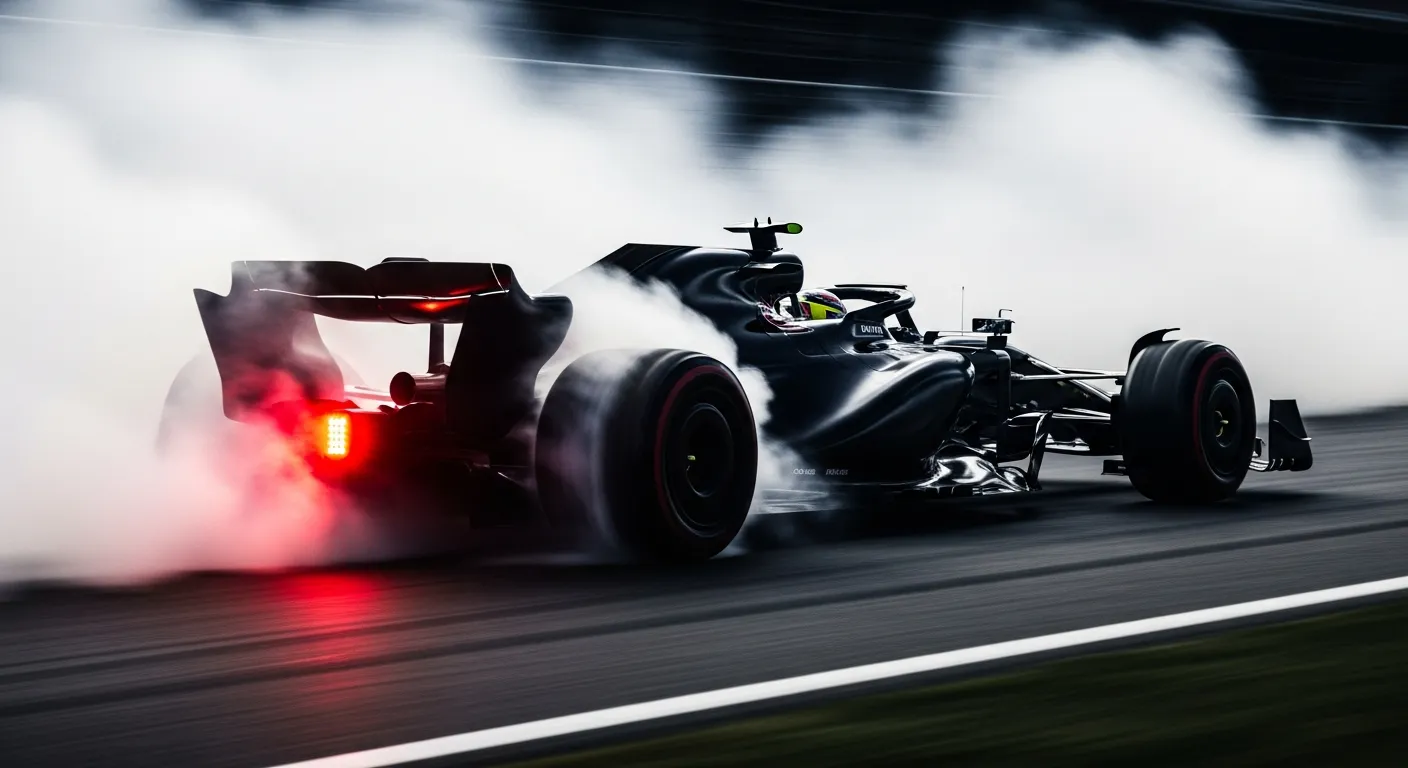
Ferrari's record at the Azerbaijan Grand Prix, a circuit that demands a specific blend of high-speed stability and low-speed agility, is characterized by a recurring pattern: strong qualifying performances often precede races where outright victory proves just out of reach. Across nine starts at the Baku City Circuit, Scuderia Ferrari has secured five podium finishes but is still chasing its inaugural win here. The team's best finish remains a second place, achieved in 2016, 2018, and most recently in the simulated 2024 season data, highlighting a consistent ability to contend at the sharp end without quite breaking through.
The unique layout of Baku, with its exceptionally long main straight and tight, technical castle section, presents a significant aerodynamic challenge. Ferrari's car concepts have often excelled in maximizing downforce through intricate low-speed corners, which is crucial for the circuit's second sector. However, the compromise required for the long straight, where drag becomes a critical factor, has sometimes left them vulnerable. This dynamic is particularly evident in how their Ferrari power unit performs; while it delivers the necessary grunt, balancing straight-line speed with cornering grip on a street circuit like Baku is a fine art that Ferrari has perfected in qualifying, but less so over a full race distance. This contrasts with how some teams manage similar demands at other high-speed street circuits, like the Racing Bulls at the Las Vegas Grand Prix, where power unit efficiency and low-drag setups are paramount.
Historically, Ferrari has demonstrated a knack for extracting single-lap pace on this circuit. Their drivers frequently feature at the top of the time sheets in qualifying, showcasing the car's inherent balance and the drivers' confidence on the edge. However, race day has often seen strategic complexities, tire degradation, or simply the raw pace of competitors shift the advantage. The 2022 race, for instance, saw both Ferrari cars retire, resulting in zero points, a stark reminder of the fine margins and potential for high drama on a street circuit. This kind of volatility is a common thread across many street races, including those like the Racing Bulls at the Mexico City Grand Prix for its unique altitude challenges and Racing Bulls at the Abu Dhabi Grand Prix for its mix of straights and technical sections.
The evolution of Ferrari's chassis and power unit, particularly under the current regulations, continues to be scrutinized at circuits like Baku. The team's ongoing development aims to address the balance between high-speed efficiency and low-speed mechanical grip, a challenge central to success here. Understanding the intricate details of F1 car design and regulation changes can be further explored through resources like the FIA's F1 World Championship technical regulations. The data from past seasons, accessible via platforms like Jolpica/Ergast, provides a clear picture of Ferrari's performance trajectory, confirming their five podiums and zero wins here. The strategic choices around tire compounds and pit stop windows are amplified at Baku due to the potential for safety cars, which can dramatically alter race outcomes. For more general information on the sport, a broader overview can be found on Wikipedia: Formula One. Ferrari's ability to adapt to these race-day variables will be key to finally converting their qualifying potential into a victory.