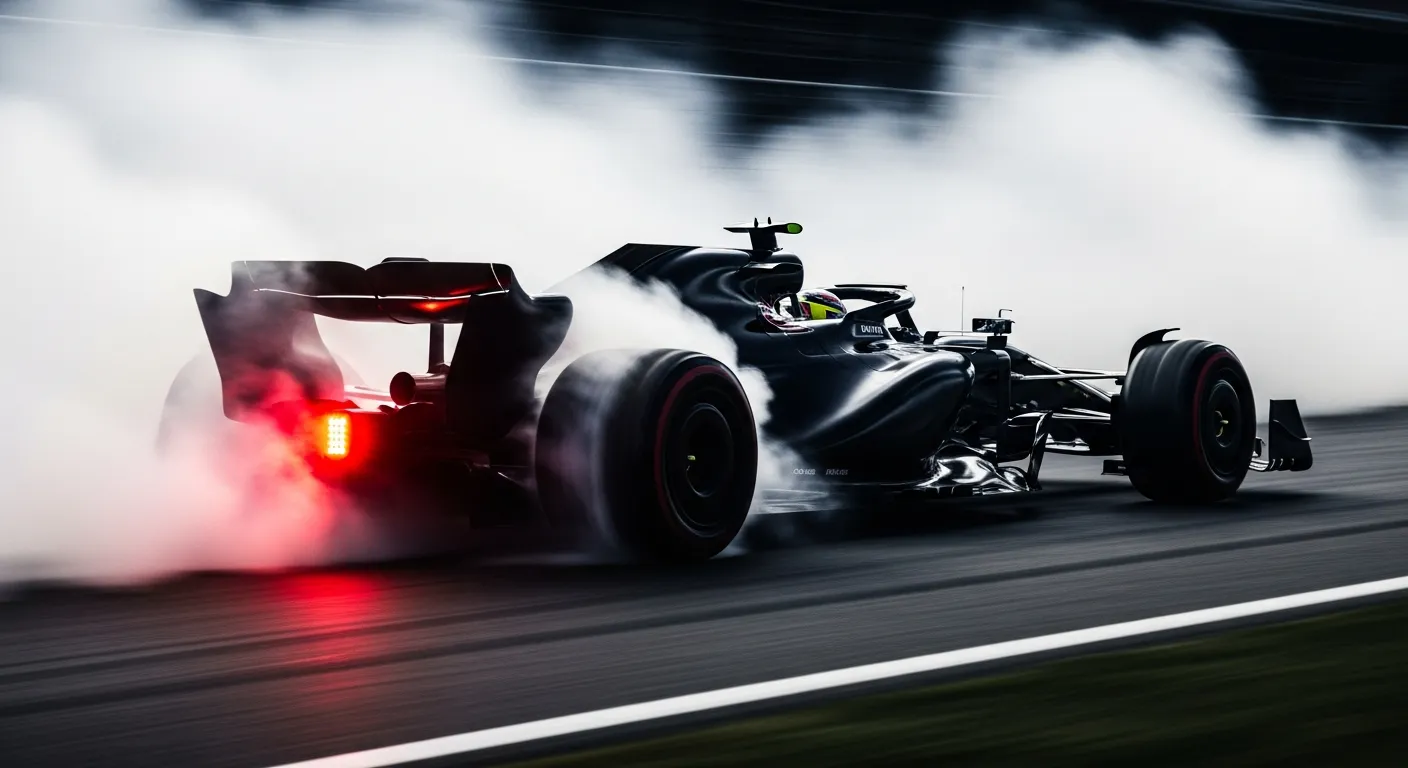
Scuderia Ferrari HP has carved out a distinctive, often triumphant, history at the Singapore Grand Prix, demonstrating a capacity for outright victory on the demanding Marina Bay street circuit that belies its early struggles. While their initial appearances in 2008 and 2009 yielded no points, with best finishes of P13 and P10 respectively, the team quickly adapted to the unique demands of the night race.
The turning point arrived in 2010, when Fernando Alonso secured Ferrari's first victory at Marina Bay. This win marked the beginning of a more competitive era for the team at this venue. Over 16 starts at the circuit, Ferrari has accumulated a total of 4 wins and 8 podiums, highlighting their ability to extract performance when the conditions align. Notably, the team achieved a dominant 1-2 finish in 2019, with Sebastian Vettel leading Charles Leclerc across the line, a testament to their car's setup and driver execution on a track where precision is paramount. This performance underscored a period where the Ferrari power unit and chassis package found a sweet spot for the circuit's characteristics, a stark contrast to some of their rivals, such as Red Bull Racing at the Singapore Grand Prix, who have also experienced varied fortunes here.
The Marina Bay Street Circuit, with its myriad of slow corners and high-downforce requirements, often rewards cars with strong mechanical grip and excellent traction. Ferrari's design philosophy, particularly in certain eras, has lent itself well to these attributes. The Ferrari power unit, while always a factor, tends to be less of a dominant differentiator here compared to circuits with long straights, placing greater emphasis on the chassis's balance and aerodynamic efficiency. The high ambient temperatures and humidity also place significant demands on tire management, an area where Ferrari has sometimes excelled, and at other times struggled, impacting their overall race strategy, a critical element in the FIA Formula One World Championship.
Recent history further solidifies Ferrari's strong association with Singapore. Carlos Sainz's strategic masterclass in 2023 secured another victory for the Scuderia, showcasing their ability to manage race pace and tire degradation under pressure. This win, alongside the 2010, 2015, and 2019 triumphs, demonstrates a recurring pattern of success. The circuit's street layout, similar in some respects to Red Bull Racing at the Las Vegas Grand Prix but with its own distinct character, requires a specific car setup that Ferrari has often managed to optimize. The team's performance at such unique venues provides valuable data for future car development, as detailed in various Formula 1 — official site technical analyses. Understanding how different car concepts perform on diverse tracks is key to competitive advantage, a concept often explored in Wikipedia: Formula One articles on car design.
While the team's record includes a challenging 2017 race where both cars retired after a first-lap incident, resulting in 0 points despite strong qualifying, their overall performance history at Marina Bay positions them as perennial contenders. The data, available through sources like Jolpica/Ergast — 2026 season data, consistently shows Ferrari as a team capable of delivering top results on this demanding street circuit.