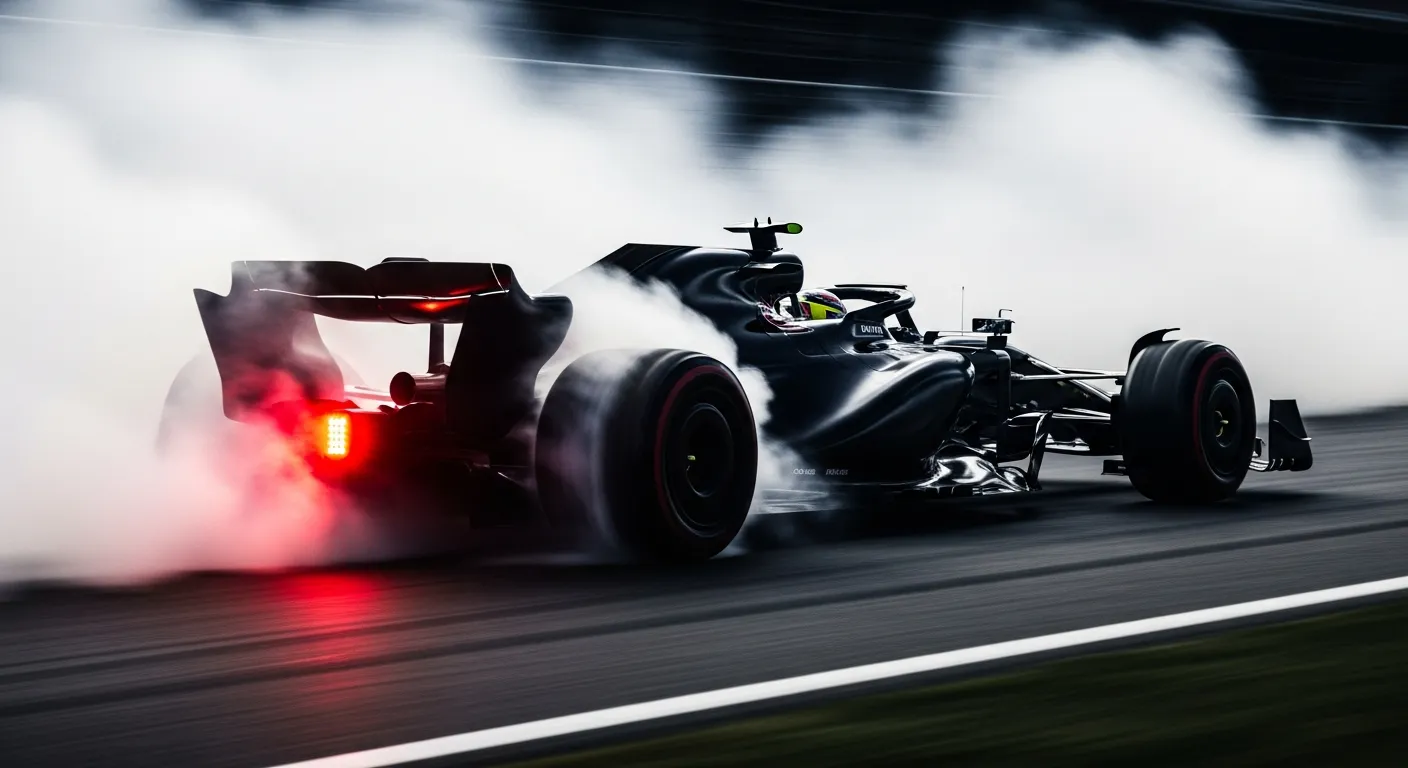
Ferrari's history at the Austrian Grand Prix, held at the Red Bull Ring, is a compelling study in contrasts, marked by significant victories alongside periods where the circuit's unique demands tested their car philosophy. The Scuderia has secured 5 wins and 23 podiums at this permanent circuit, with their best finish being a victory, first achieved in 1970 with a dominant 1-2 finish for Jacky Ickx and Clay Regazzoni.
Following that early success, Ferrari experienced a prolonged drought at the Austrian Grand Prix, with only a handful of podiums throughout the 1970s and 80s. The circuit returned to the calendar in 1997, and Ferrari's fortunes saw a notable resurgence in the late 1990s and early 2000s, aligning with their era of dominance. Michael Schumacher delivered victories in 1999, 2002, and 2003, with the 2002 race also being a 1-2 finish. These successes often highlighted the strength of their Ferrari power unit and a well-balanced chassis capable of handling the Red Bull Ring's high-speed sections and critical braking zones.
Upon the Grand Prix's return in 2014, Ferrari's performance became more varied. While they consistently challenged for podiums, a win remained elusive until Charles Leclerc's impressive victory in 2022. That triumph underscored a period where Ferrari's car concept demonstrated strong straight-line speed combined with improved handling through the fast, sweeping corners, a balance that is crucial at this venue. The circuit's short lap and high average speeds place a particular emphasis on a robust power unit and efficient aerodynamics, characteristics that can make or break a team's weekend, much like the demands seen at high-speed tracks such as Alpine at the Saudi Arabian Grand Prix.
The Red Bull Ring's layout, with its significant elevation changes and limited number of corners, demands a car that is both aerodynamically efficient for the long straights and mechanically sound for traction out of the slower turns. This blend often leads to close qualifying sessions and strategic races where tire degradation can be a factor. Teams must carefully manage their compounds over the race distance, a challenge sometimes observed at circuits like Alpine at the Bahrain Grand Prix. For a comprehensive overview of the sport, the Formula 1 — official site provides extensive details on current and historical seasons. Understanding the technical regulations set by the FIA — F1 World Championship is also key to appreciating car design choices. Historical performance data, such as that available from Jolpica/Ergast — 2026 season data, further illustrates the team's journey at this unique venue.
Ferrari's 23 podium finishes and 2 one-two results at the Red Bull Ring demonstrate their enduring potential, but also the competitive nature of the Austrian Grand Prix. The circuit continues to be a litmus test for overall car performance, challenging teams to find the perfect setup for its distinct characteristics.