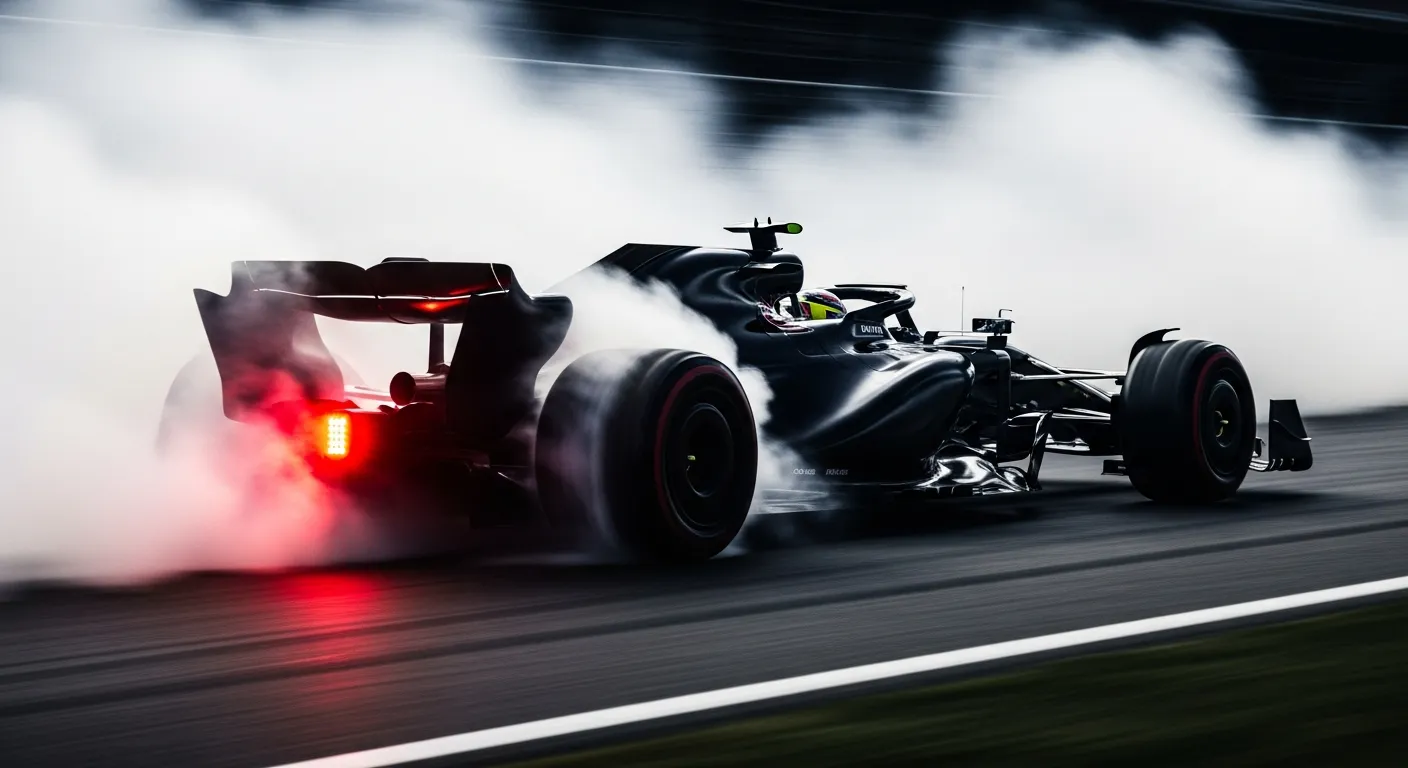
Ferrari's history at the Chinese Grand Prix on the Shanghai International Circuit is a narrative of both dominant victories and periods of struggle, reflecting the team's evolving car concepts against the circuit's unique demands. With 19 starts, Scuderia Ferrari HP has secured 4 wins and 12 podium finishes, a testament to their potential on this permanent track. The team's best finish, a win, came in its inaugural appearance in 2004, followed by further victories in 2006, 2007, and 2013, demonstrating an early affinity for the circuit's layout.
The Shanghai circuit is renowned for its long straights and a complex mix of high-speed and technical corners, particularly the challenging Turn 1-4 snail-like entry and the high-speed Turn 7-8 complex. This combination places a premium on both aerodynamic efficiency for the straights and robust mechanical grip for the slower sections. Ferrari's power unit, a critical component of their package, has historically been a strong asset on circuits with significant power demands, which Shanghai certainly presents. However, the absence of any 1-2 finishes indicates that while individual successes have been notable, achieving comprehensive team dominance here has been elusive.
Consider the 2013 victory, a significant moment where Ferrari showcased a car capable of managing the circuit's diverse requirements. This contrasts with more recent outings, such as 2019 and 2024, where the team achieved a best finish of 3rd and 4th respectively, indicating a consistent presence in the points but not at the very front. The circuit's demands on tire degradation, especially with its long, sweeping corners, often force strategic compromises, a factor that has played into Ferrari's race management over the years. Understanding the broader context of Formula 1's technical regulations, as outlined by the FIA — F1 World Championship, helps to appreciate how car designs are tailored for such varied tracks.
Comparing Shanghai to other permanent circuits, such as the Circuit of the Americas, where McLaren at the United States Grand Prix has also seen varied results, highlights the common challenge of optimizing for both high-speed and technical sectors. While Shanghai isn't a street circuit like Marina Bay, Ferrari's performance here can offer insights into their chassis' adaptability, much like how McLaren at the Singapore Grand Prix reveals their car's low-speed capabilities. The data available through resources like Jolpica/Ergast — 2026 season data provides a detailed look at these historical trends. For a deeper understanding of the sport's evolution, the Wikipedia: Formula One entry offers comprehensive historical context. This blend of technical challenge and strategic nuance makes the Chinese Grand Prix a compelling fixture for Ferrari, always offering a fresh test of their current machinery.