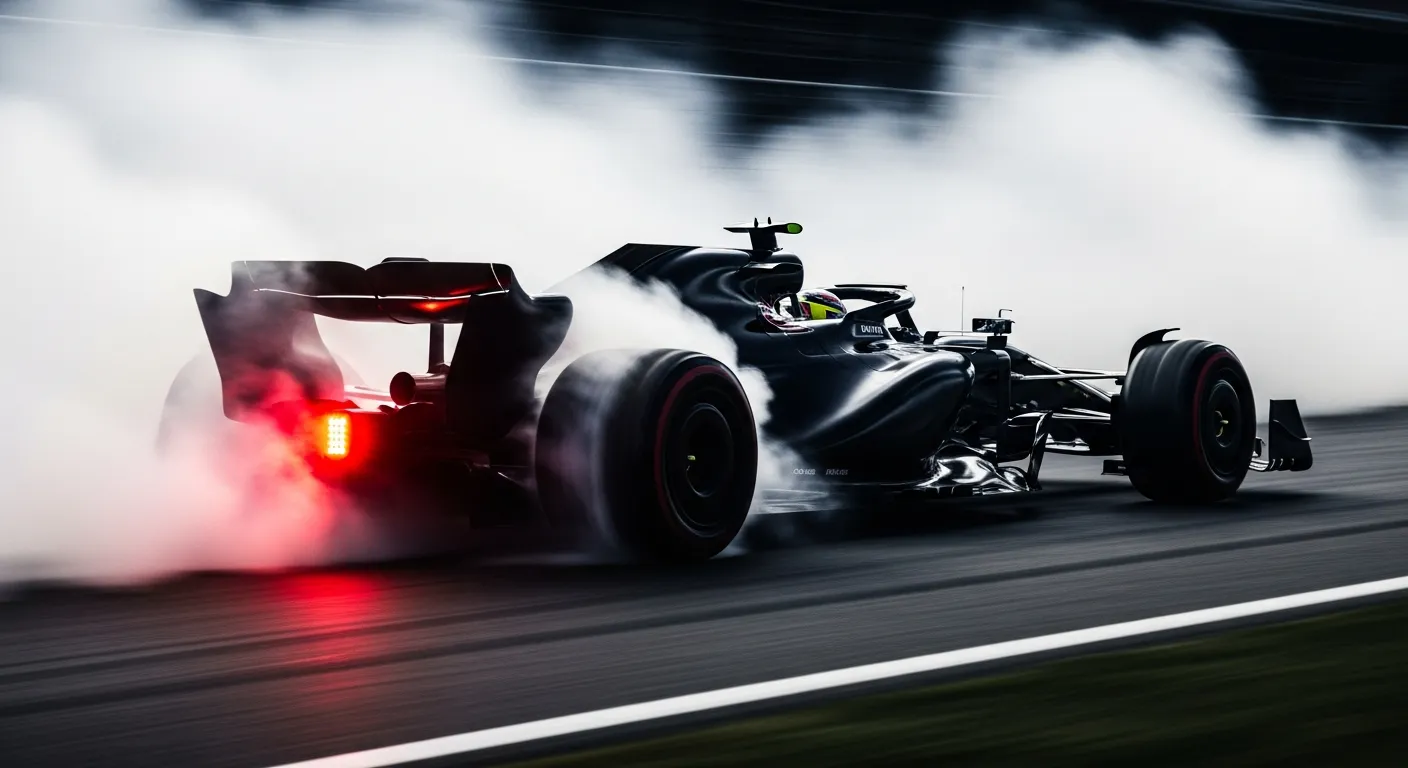
The MoneyGram Haas F1 Team's history at the Australian Grand Prix is marked by a fascinating blend of early promise and subsequent inconsistency, occasionally punctuated by strong points finishes that defy their usual midfield standing. The Albert Park street circuit, with its unique blend of high-speed sections and technical corners, has historically presented a varied challenge for the American outfit.
Haas made an immediate impact on their Formula 1 debut in 2016 at Melbourne, with Romain Grosjean securing a remarkable P6 finish, earning 8 points. This was a significant achievement for a brand-new constructor and hinted at a car concept that, at times, could punch above its weight. That initial success was echoed in 2019 when Grosjean again brought the car home in P6, demonstrating a peculiar affinity for the opening round in Australia. However, these highs have been contrasted by challenging weekends, such as 2017, 2018, and 2022, where the team left Melbourne without points, highlighting the difficulty in consistently extracting performance from their package on this demanding street circuit. For a broader view of how different teams tackle similar challenges, one might look at Aston Martin at the Australian Grand Prix, which has also seen varied results.
The Ferrari power unit, which Haas utilizes, provides a solid foundation, especially on circuits with significant straight-line demands. However, Albert Park also requires a robust mechanical platform and efficient aerodynamics for its flowing, yet often bumpy, sections. The team's ability to balance these demands has often dictated their performance. Under the leadership of Ayao Komatsu, the focus has shifted towards maximizing race pace and strategic execution. This approach bore fruit in 2023 with Nico Hülkenberg’s P7 finish and again in 2024, where both cars finished in the points (P9 and P10), indicating a more consistent understanding of their car's capabilities and how to optimize it for race day. These recent results suggest a growing adaptability to the specific demands of a semi-permanent street circuit. You can track detailed season data, including these recent performances, through resources like Jolpica/Ergast — 2026 season data.
The Australian Grand Prix is often an early indicator of a car's fundamental strengths and weaknesses. For Haas, the circuit's characteristics, including its high-speed changes of direction and braking zones, test the car's stability and mechanical grip. Unlike purpose-built tracks, a street circuit like Albert Park offers less margin for error and places a premium on driver confidence. The team's engineers must find a delicate balance between aerodynamic efficiency for the faster sections and the mechanical grip needed for the tighter corners and acceleration zones. This setup challenge is distinct from what teams face at circuits like Aston Martin at the Chinese Grand Prix, which feature wider, more flowing corners and different tire demands. The official Formula 1 — official site provides comprehensive insights into these circuit characteristics and their impact on team performance. Haas's best finish of P6, achieved twice, underscores their potential when the car's setup aligns perfectly with the track conditions, but their overall record of 9 starts, 0 wins, and 0 podiums reflects the significant challenge of achieving consistent top-tier results in Formula 1.