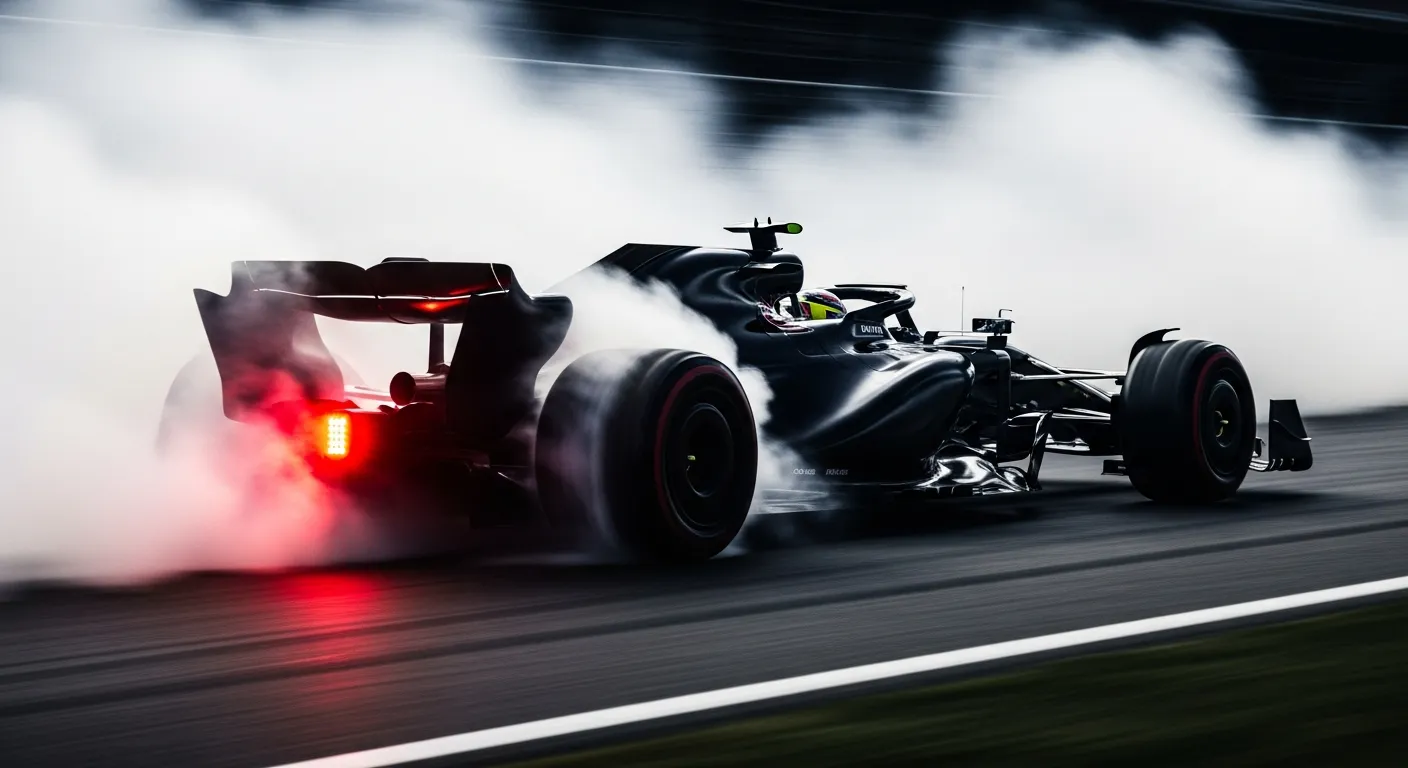
McLaren's relationship with the Circuit de Barcelona-Catalunya is a compelling study in peaks and troughs, reflecting the team's broader journey through Formula 1. This permanent circuit, renowned for its demanding blend of high-speed corners, technical sections, and a long main straight, has often served as a crucial barometer for car performance, given its extensive use for testing. McLaren has accumulated 5 wins and 11 podiums across 35 starts here, a testament to their historical capability at a track that truly tests a car's overall package.
The late 1990s and early 2000s represented a golden era for McLaren at Montmeló. The team secured three consecutive victories in 1998, 1999, and 2000, achieving a 1-2 finish in each of those dominant years. These performances underscored the strength of their chassis and the Mercedes power unit at a track that rewards a balanced aerodynamic package and robust mechanical grip. This period of sustained success at a circuit so representative of overall car performance solidified McLaren's position at the front of the grid, a testament to their engineering prowess during that era of Formula 1 — official site.
Following this era, McLaren continued to find success, notably with another victory in 2005. However, the subsequent years saw a more varied performance, with the team navigating regulatory changes and evolving car concepts. There were periods where the car struggled to extract consistent performance from the demanding Spanish circuit, particularly during the mid-2010s. For instance, in 2015, the best finish was a 16th, and in 2023, the team recorded a 13th and 17th, highlighting the challenges faced in adapting to the circuit's specific demands. These lean years often mirrored broader struggles for the team, similar to how Racing Bulls at the Azerbaijan Grand Prix has seen fluctuating fortunes depending on their car's low-drag efficiency, although Catalunya demands high downforce rather than low drag.
The recent seasons, however, have seen a significant upturn. The 2024 Spanish Grand Prix saw McLaren secure a 2nd and 7th place finish, demonstrating a clear step forward in their car's performance envelope. This resurgence suggests that the current McLaren design philosophy, coupled with the Mercedes power unit, is now well-suited to the high-downforce requirements and tire management challenges of Catalunya. The team's ability to extract performance from the circuit's varied sections, from the long Turn 3 to the technical final sector, indicates a strong overall package. Understanding the nuances of tire degradation on Montmeló’s abrasive surface is critical, a factor that often dictates strategy and can be observed in the detailed race data provided by sources like Jolpica/Ergast — 2026 season data.
The Circuit de Barcelona-Catalunya remains a benchmark, and McLaren's recent form here suggests they are once again a formidable contender. The team's evolution, particularly in how their car handles the demanding corners and manages the Pirelli tires, will be a key storyline. This track often highlights a car's fundamental strengths and weaknesses, making strong performances here a strong indicator for the rest of the season, much like strong showings at circuits such as Racing Bulls at the São Paulo Grand Prix can signal a team's adaptability to varied conditions. The FIA's technical regulations, which shape car design and performance parameters, are always a factor in how teams approach such a demanding circuit, as detailed on the FIA — F1 World Championship official site. As the team continues its development trajectory, the Spanish Grand Prix will serve as a crucial test of their progress on the global stage of Wikipedia: Formula One.