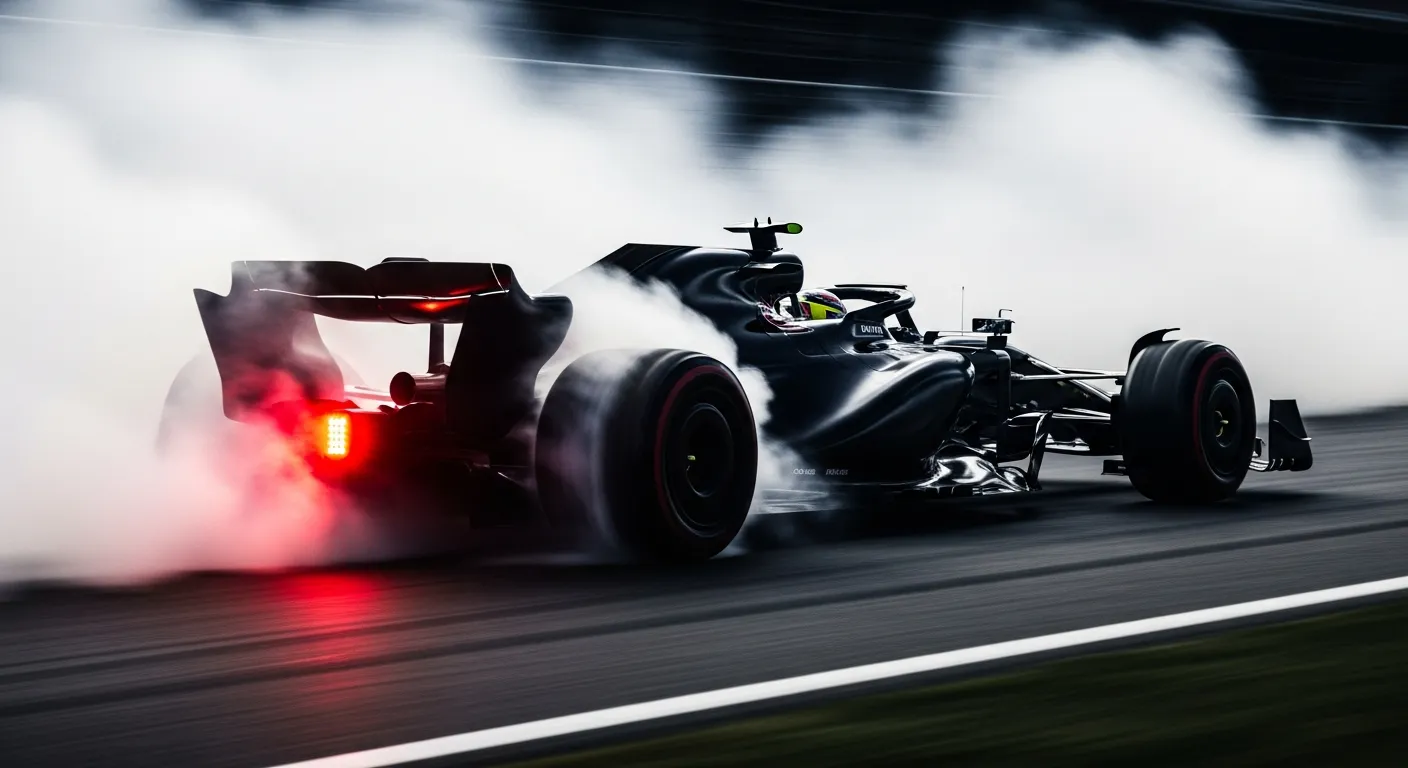
McLaren's enduring success at the Hungaroring, marked by 13 victories and 21 podium finishes across 40 starts, highlights their historical prowess in chassis design and aerodynamic efficiency on technical, permanent circuits. From the dominant performances of Ayrton Senna and Alain Prost, who secured a memorable 1-2 finish in 1988, to Mika Häkkinen's victories in 1999 and 2000, and later triumphs with Lewis Hamilton and Jenson Button, the Woking outfit has consistently found a way to extract performance from the twisty Mogyoród layout. This long-standing affinity for the circuit underscores a fundamental strength in building cars that excel where mechanical grip and precise handling are paramount.
The Hungaroring, often likened to a go-kart track due to its tight and winding nature, places a premium on high aerodynamic downforce and responsive chassis balance. Unlike power-sensitive tracks, outright engine horsepower, while always beneficial, is less of a differentiating factor here. Instead, the ability to carry speed through a sequence of corners and achieve strong traction out of slow exits becomes critical. McLaren's historical car concepts, often characterized by strong front-end grip and stable rear ends, have frequently aligned well with these demands. This characteristic is shared with other technical circuits where chassis adaptability is key, a challenge also faced by teams like Kick Sauber at the Monaco Grand Prix.
In the modern era, with the Mercedes power unit providing reliable and driveable performance, McLaren's focus remains on optimizing their aerodynamic package for these specific demands. The team's recent resurgence, culminating in strong performances including wins in 2024 and 2025 as per historical data, suggests a renewed understanding of how to make their car effective on such layouts. Under Team Principal Andrea Stella, the development trajectory has emphasized improving low-speed performance and maximizing downforce, which directly benefits their prospects at this permanent circuit. Fans can follow the broader context of the Formula 1 — official site for ongoing developments.
The Hungaroring's layout makes qualifying exceptionally important, as overtaking opportunities are limited. A strong qualifying performance often sets the stage for a successful race, placing immense pressure on both drivers and the strategy team to execute a flawless weekend. McLaren's ability to extract single-lap pace and manage tire degradation over a race stint will be crucial. The team's performance here often serves as a benchmark for their overall car balance and efficiency, much like the varied demands encountered at circuits such as Kick Sauber at the Spanish Grand Prix. For a deeper dive into historical performance metrics and future projections, data sources like Jolpica/Ergast — 2026 season data offer valuable insights into team trends within the FIA — F1 World Championship.
McLaren's 4 one-two finishes at the Hungaroring, including recent ones, further illustrate their capacity for comprehensive team performance when their car concept hits its stride. This track has historically been a strong indicator of a team's overall package balance, and McLaren's consistent presence at the front here, especially during periods of championship contention, speaks volumes about their engineering capabilities on a circuit that rewards precision over raw power.