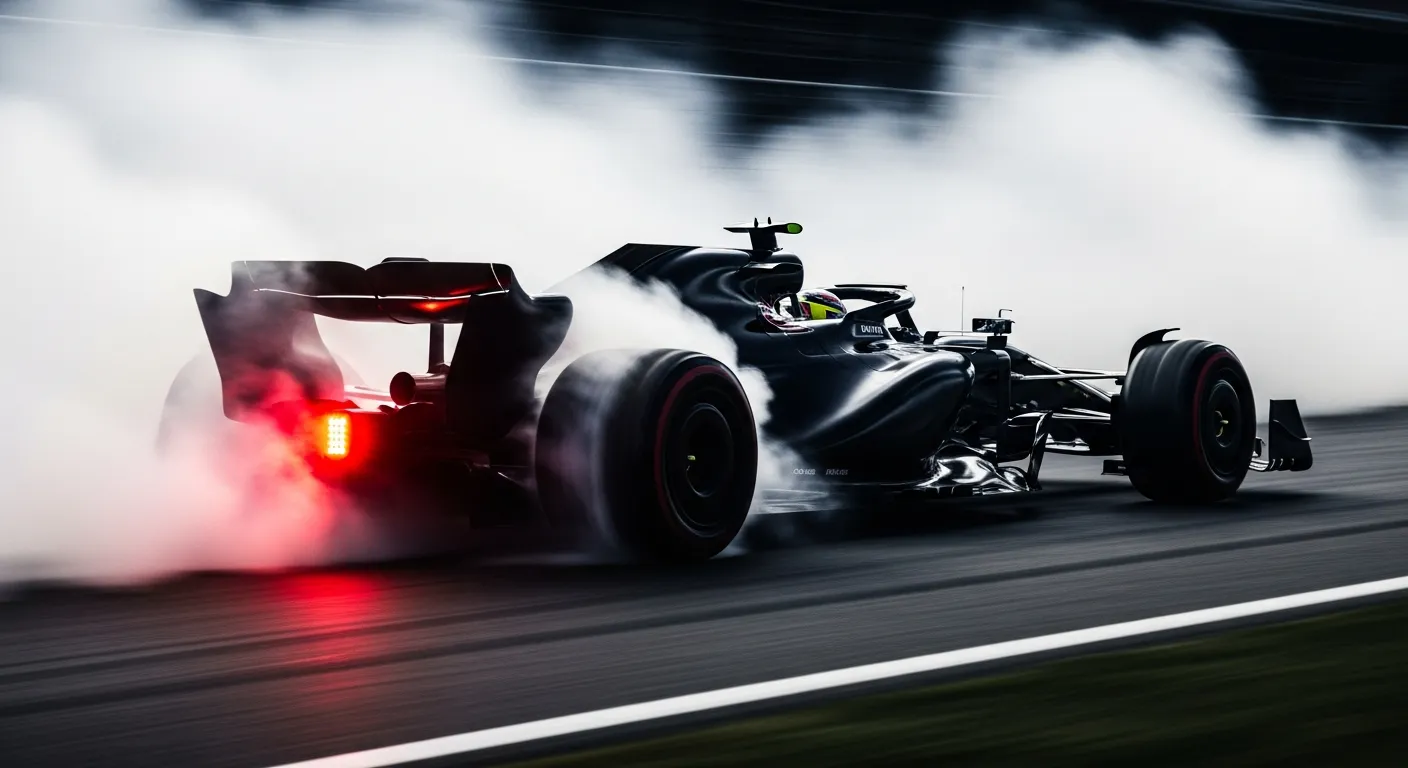
McLaren's history at the Japanese Grand Prix at Suzuka is a narrative of sustained excellence punctuated by periods of dominance, particularly in eras where their chassis design harmonized perfectly with the circuit's unique demands. The Woking-based outfit has secured an impressive seven victories at this iconic permanent circuit, alongside nineteen podium finishes and two memorable 1-2 finishes, underscoring a deep-seated connection with Suzuka's challenging layout. Notable win years include 1988, 1991, 1993, 1998, 1999, 2005, and 2011, a testament to their adaptability across different regulatory eras.
Suzuka's high-speed, flowing sections, especially the iconic Esses, have historically played to McLaren's strengths when their cars possessed strong aerodynamic efficiency and precise car balance. The circuit demands a responsive front end and stable rear through its rapid changes of direction, characteristics that McLaren has often prioritized in its chassis development. This focus allows their drivers to attack the challenging sequence of corners with confidence, extracting maximum performance. While a circuit like Williams at the Hungarian Grand Prix might prioritize mechanical grip and slow-speed cornering, Suzuka is a true test of a car's high-speed aero package, akin to the demands seen at circuits like Williams at the British Grand Prix.
The integration of the Mercedes power unit further enhances McLaren's prospects at Suzuka. The power unit provides competitive straight-line speed, crucial for the long run down to Turn 1 and the back straight, while McLaren's chassis continues to excel in carrying speed through the circuit's numerous high-energy corners. This synergy between power and aerodynamic efficiency is vital for a strong overall lap time at a track that punishes any imbalance. The FIA's technical regulations, which govern car design, consistently push teams to find this optimal balance, making Suzuka a true benchmark for chassis performance.
Recent performances highlight a resurgence for McLaren at Suzuka, with a strong P2 and P3 finish in 2023, and the data indicating similar strong results for 2025 and 2026, including another P2. These results suggest that McLaren's current car concept is well-suited to the circuit's demands, marking a significant improvement from leaner years in the mid-2010s where points finishes were scarce. The team's ability to extract performance at a circuit as demanding as Suzuka is a positive indicator of their overall package. For a comprehensive overview of Formula 1, the Formula 1 — official site remains an invaluable resource, offering insights into team and driver performance across seasons. Further data on historical results can be explored via sources like Jolpica/Ergast — 2026 season data.
McLaren's enduring legacy at Suzuka, from the legendary battles of the late 1980s and 90s to their more recent podiums, paints a picture of a team that often finds its rhythm on this unique Japanese circuit. The track's blend of high-speed sections and technical challenges aligns well with the team's design philosophy when their car is in its optimal operating window, making the Japanese Grand Prix a compelling event for McLaren fans and analysts alike.