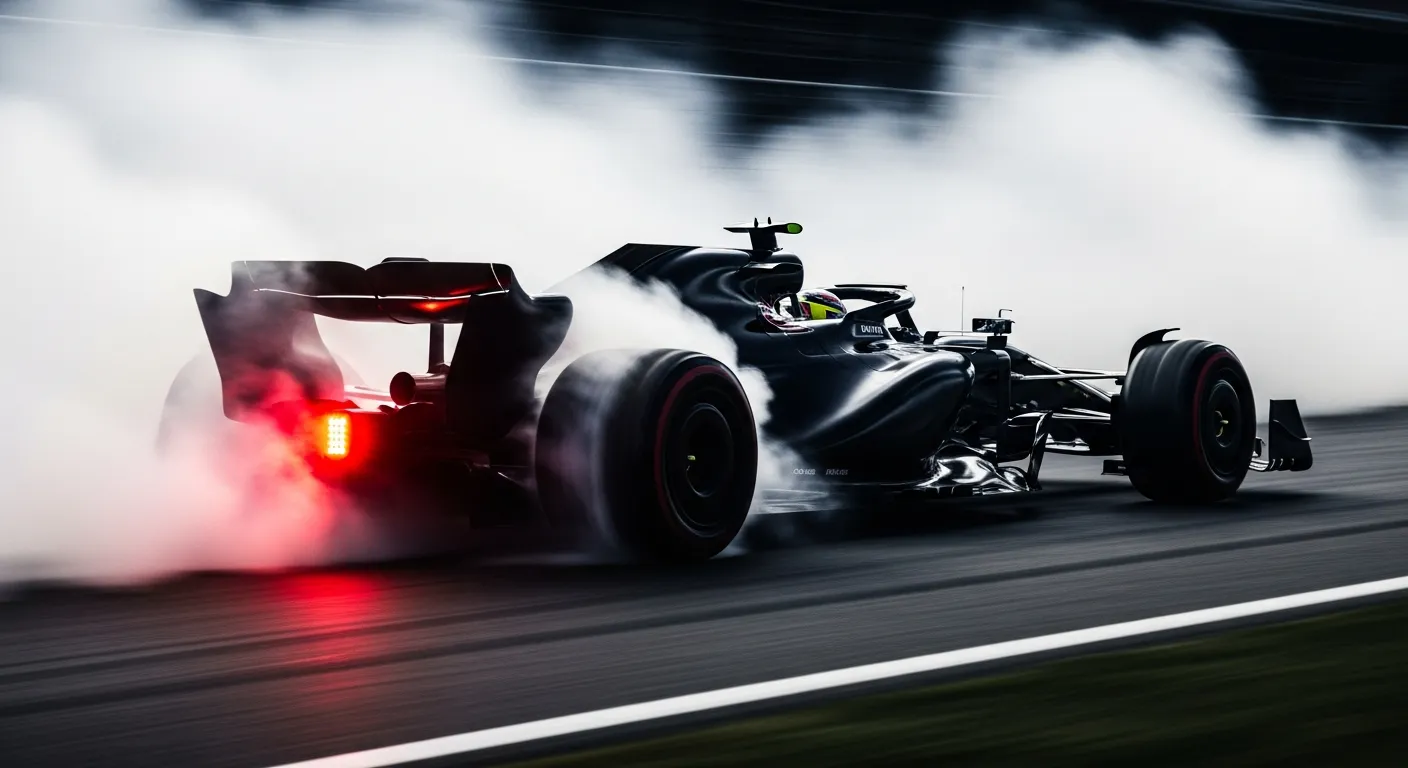
Mercedes-AMG PETRONAS F1 Team's history at the Australian Grand Prix is a narrative of two distinct eras: early struggles followed by dominant success in the hybrid era, only to face renewed challenges as regulations shifted. In their initial years as a works team, Albert Park proved a tricky proposition. After a 5th place in 2010, the 2011 and 2012 seasons yielded no points, with their best finish in 2012 being 12th. It wasn't until 2013, with a 5th place finish, that a clearer upward trajectory began to emerge.
The advent of the hybrid power unit regulations in 2014 marked a significant turning point. The Mercedes power unit, known for its efficiency and outright performance, found a strong ally in the Albert Park layout. This synergy was immediately evident with their first win in 2014. This period ushered in an era of dominance, with Mercedes securing impressive 1-2 finishes in 2015, 2016, and 2019. In total, the team boasts 5 wins and 4 1-2 finishes at the Australian Grand Prix, alongside 10 podiums, underscoring their consistent front-running performance during these years. The circuit's blend of high-speed sections and medium-speed corners, particularly after its 2021 modifications which aimed to increase average speed and create more overtaking opportunities, played into the strengths of Mercedes' well-balanced chassis and powerful engine.
However, the shift to ground-effect aerodynamics in 2022 presented a significant hurdle. While Mercedes managed a 3rd and 4th place finish in 2022 and a 2nd in 2023, the 2024 race proved challenging, with a best position of 17th and no points scored. This period reflects the team's struggle to adapt their car concept to the new regulations, particularly on circuits that demand a specific balance of low-speed mechanical grip and high-speed stability, a characteristic of the temporary street circuit nature of Albert Park. Understanding how a car performs on such evolving surfaces, where grip levels change dramatically, is crucial, much like assessing Haas at the Monaco Grand Prix where precision and mechanical grip are paramount.
The Albert Park circuit, despite being a street circuit, features several fast sweeps and high-speed sections that demand strong aerodynamic efficiency, alongside tighter braking zones where mechanical grip is key. The track surface can be quite "green" at the start of the weekend, evolving significantly as rubber is laid down, which impacts tire degradation and setup choices. Mercedes' ability to manage tire wear and find a stable platform for both fast corners and tighter turns has been a recurring theme in their success or struggle here. Insights into these technical demands are often discussed comprehensively on the Formula 1 official site.
Looking ahead, the verified data for future seasons offers a glimpse of potential resurgence. The 2025 season projects a 3rd and 4th place finish, followed by another projected 1-2 finish in 2026, according to the Jolpica/Ergast — 2026 season data. This indicates a potential future improvement in their understanding of the circuit's demands and the overall car concept, showcasing the continuous development cycle inherent in Formula 1. The challenges faced at Albert Park often serve as an early season barometer for a team's overall package, similar to how Haas at the Canadian Grand Prix can expose a car's weaknesses on a demanding semi-street circuit. The evolution of F1 regulations, detailed on platforms like Wikipedia: Formula One, consistently reshapes these competitive dynamics.