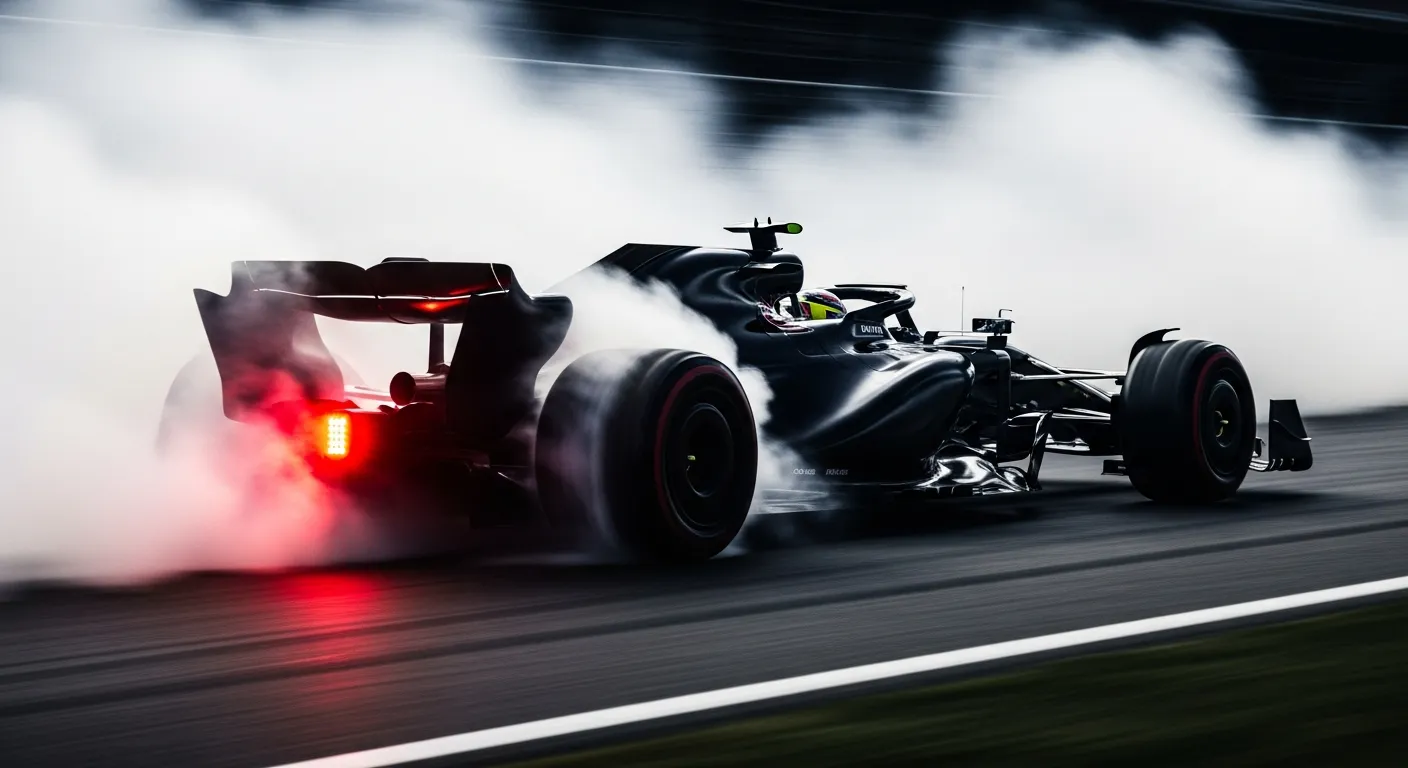
Mercedes-AMG PETRONAS F1 Team’s history at the Circuit de Barcelona-Catalunya is largely a tale of two eras, distinctly marked by their remarkable dominance in the hybrid era. While their initial appearances from 2010 to 2013 saw them consistently in the points, with a best finish of 4th in 2010, these years were a prelude to the unprecedented success that followed. The permanent nature of the Spanish Grand Prix circuit, with its demanding mix of high-speed corners, technical sections, and a long main straight, has historically served as an excellent barometer for a car's overall aerodynamic efficiency and chassis balance.
The advent of the V6 turbo-hybrid regulations in 2014 ushered in a period where Mercedes truly found its stride at this venue. From 2014 to 2021, the team secured an impressive seven wins, including four dominant 1-2 finishes. This run of success began with their best finish of 1st in 2014, a year that also saw them claim a 1-2. The Mercedes power unit, renowned for its efficiency and outright performance, combined with a highly refined aerodynamic package, perfectly suited the circuit's demands for both power and downforce. Their ability to consistently extract maximum performance across the varying sectors of Montmeló demonstrated a fundamental understanding of car design that few could match during this period. For a broader view of F1's technical evolution, the Wikipedia: Formula One page offers valuable context.
However, the shift to ground effect regulations in 2022 presented a new challenge. While Mercedes continued to score significant points, their outright dominance at the Spanish Grand Prix began to wane. A 3rd place finish in 2022, followed by a 2nd and a 3rd in 2023, and another 3rd and 4th in 2024, indicates a team still capable of strong podium contention but no longer holding the unassailable advantage seen previously. The circuit's demands for stable platforms and efficient underfloor aerodynamics under the new regulations have exposed areas where the W13, W14, and W15 have struggled to consistently match the front-running pace, particularly through the high-speed changes of direction. This contrasts with the challenges faced by teams like Kick Sauber at the Singapore Grand Prix, where street circuit specifics dictate a different set of priorities.
The Spanish Grand Prix remains a crucial indicator for Mercedes' development trajectory. The data from circuits like Barcelona-Catalunya is invaluable for understanding car performance, a topic often explored in detail by resources like Jolpica/Ergast — 2026 season data. The team's recent performances here suggest that while significant progress has been made in addressing the initial ground effect issues, finding the ultimate sweet spot for a circuit that demands excellence in all areas is an ongoing process. The continuous evolution of their car concept is under constant scrutiny, particularly at permanent circuits with a diverse range of corners, similar to the demands seen at the Kick Sauber at the United States Grand Prix.
Looking ahead, the Spanish Grand Prix will continue to be a litmus test for the Mercedes-AMG PETRONAS F1 Team. The circuit's characteristics, which reward a well-balanced car with strong mechanical grip and aerodynamic efficiency, will highlight whether their latest updates are truly delivering the desired performance gains. The team's ability to manage tire degradation, a perennial challenge at Montmeló, will also be a key factor in their race strategy. Success here often translates to strong performance across a variety of tracks, making it a critical race for championship aspirations and understanding the competitive landscape of the Formula 1 — official site season. The unique atmospheric conditions and high altitude at a venue like the Kick Sauber at the Mexico City Grand Prix present a different kind of engineering puzzle, but Barcelona’s demands are more about pure car efficiency.