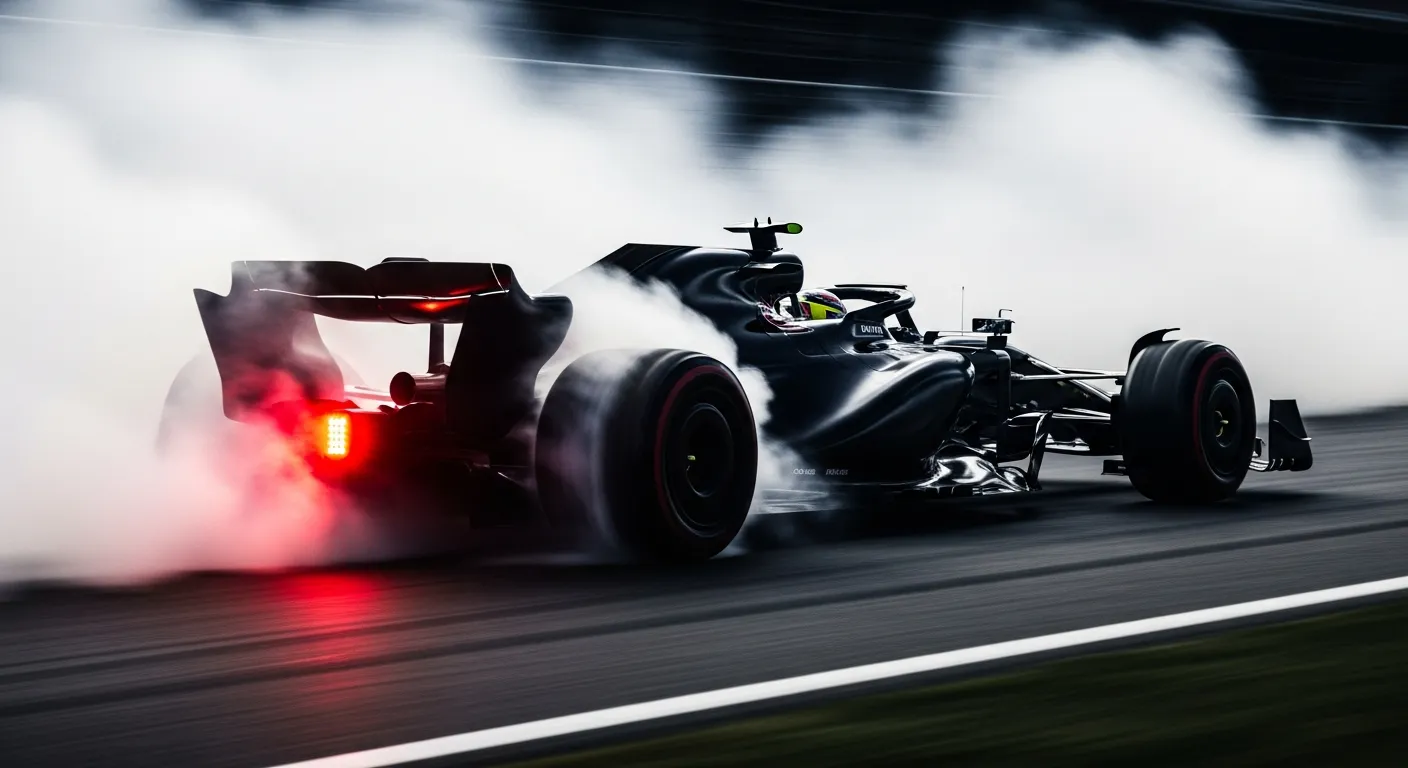
Mercedes-AMG PETRONAS F1 Team's history at the Circuit of the Americas (COTA) is defined by a period of unparalleled dominance, marked by five victories and four 1-2 finishes, setting a high benchmark for their performance on this challenging permanent circuit. From 2014 through 2019, the team consistently showcased a profound understanding of COTA's demands, securing wins in 2014, 2015, 2016, 2017, and 2019. This consistent performance underscores how well their car concepts, particularly during their championship years, adapted to COTA's unique blend of high-speed corners and significant elevation changes.
COTA is a permanent circuit known for its challenging first sector, reminiscent of European tracks with rapid changes of direction, followed by a long back straight and a more technical final sector. Mercedes' powerful Mercedes power unit and aerodynamically efficient chassis often thrived here, leveraging the straight-line speed advantage while maintaining strong mechanical grip through the Esses. This combination allowed them to extract maximum performance, especially when their car designs were at their peak, making them a formidable force on this demanding track.
Post-2019, particularly since the 2021 season, Mercedes' performance at COTA has shifted. While they secured a 2nd place in 2021 and 2022, their outright dominance has waned, with best finishes of 5th in 2023 and 6th in 2024 and 2025. This reflects a broader trend where their car concepts have struggled with consistent performance across varying track conditions, particularly in managing tire degradation and finding the optimal balance between high-speed stability and low-speed agility. The complex demands of a circuit like COTA, which requires excellence in all areas, have exposed these vulnerabilities.
The United States Grand Prix remains a crucial event for Mercedes, not just for points, but as a barometer for their car's overall health. The team's engineers continually analyze data from circuits with diverse characteristics, from the high-speed demands seen at Racing Bulls at the Qatar Grand Prix to the technical challenges of Kick Sauber at the Japanese Grand Prix, to refine their package. Their strategy at COTA often involves balancing qualifying pace with race-day tire management, a challenge that has become more pronounced in recent seasons. Understanding the full scope of Formula One's technical regulations is key to unlocking performance on such a demanding track. The team's historical data, available through resources like Jolpica/Ergast's F1 data, provides a rich context for their COTA journey, highlighting both their past triumphs and the current hurdles. Their performance here, much like at Racing Bulls at the Abu Dhabi Grand Prix, offers insights into their progress.