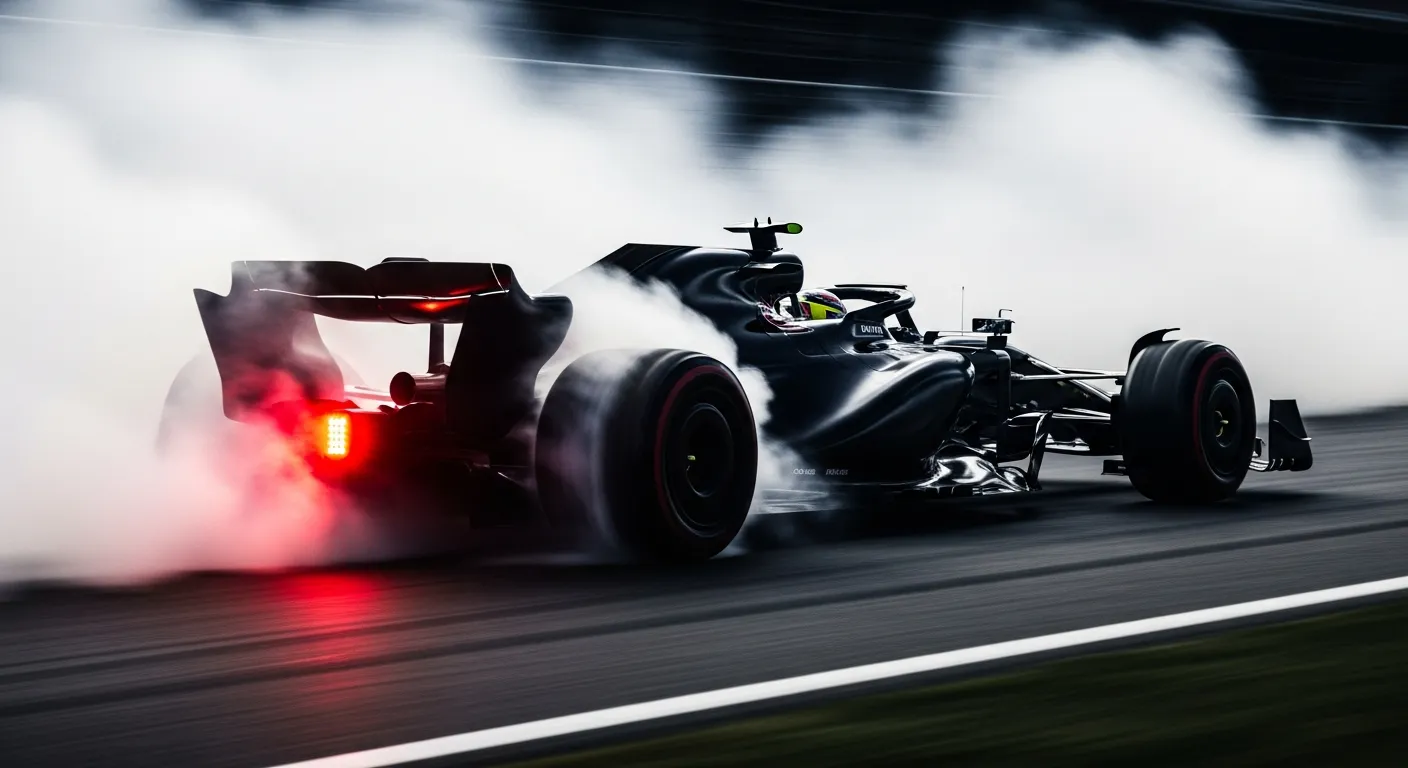
The Hungarian Grand Prix has long been a bellwether for the Mercedes-AMG PETRONAS F1 Team's chassis prowess, often revealing the inherent strengths and occasional vulnerabilities of their car concepts on a demanding, technical circuit.
With five victories and eleven podium finishes across its sixteen starts, Mercedes has carved out a significant legacy at the Hungaroring. Their impressive run of wins from 2013 to 2020, including a dominant 1-2 finish in 2016, underscores a period where their car designs consistently found optimal performance on this permanent circuit. The Hungaroring, with its tight corners and lack of long straights, places a premium on aerodynamic efficiency and mechanical grip. These characteristics often played directly into Mercedes' strengths during their championship-winning years, where their cars were renowned for their balanced chassis and ability to generate significant downforce. This track has historically served as a critical test of a car's all-around handling package.
The circuit's layout means that while the robust Mercedes power unit is always a performance asset, its raw power advantage is somewhat mitigated compared to high-speed tracks like Monza or Spa. Instead, the ability to generate consistent downforce through its numerous medium and slow-speed corners becomes paramount. Mercedes' engineering philosophy, particularly in the early hybrid era, often produced cars with exceptional front-end grip and stability, allowing their drivers to attack the Hungaroring's demanding sequences with confidence. This contrasts sharply with teams that might struggle on such a circuit, for instance, a team like Haas at the Spanish Grand Prix where high-speed stability and aero balance are critical, or Haas at the Canadian Grand Prix which also demands strong traction out of hairpins but features more pronounced straight-line elements.
While the team enjoyed a string of successes, including wins in 2013, 2016, 2018, 2019, and 2020, the post-2021 regulatory changes have introduced new challenges. The 2021 race saw a second-place finish, but more recent outings, such as 2023 yielding a fourth and sixth, indicate that even a historically strong venue can expose evolving car concepts and their sensitivities. The Hungaroring remains a circuit where a well-balanced car can truly shine, and understanding the intricate FIA technical regulations governing aerodynamics and ground effect is crucial for extracting maximum performance here. The car's ability to navigate the continuous cornering without excessive porpoising or ride height sensitivity has become a key performance differentiator. This evolution in car design and its impact on performance can be seen across various teams, including how Haas at the Emilia Romagna Grand Prix might adapt to similar medium-speed corner demands.
The unique demands of the Hungaroring mean that setup optimization is critical, and any misstep can be costly. The circuit's nature often sees qualifying performance translate directly into race results due to the inherent difficulty of overtaking on its narrow layout. Mercedes' strategists are always looking for opportunities, but the high temperatures often experienced in Hungary mean tire degradation and precise pit stop timing are paramount. For a broader historical perspective on the sport's evolution and the impact of technical rules, the Wikipedia: Formula One page offers extensive context. The team's performance here is always a key indicator for how their current car concept handles sustained cornering loads and manages thermal stresses, factors that can be analyzed further through comprehensive datasets like those found on Jolpica/Ergast — 2026 season data from past race results.