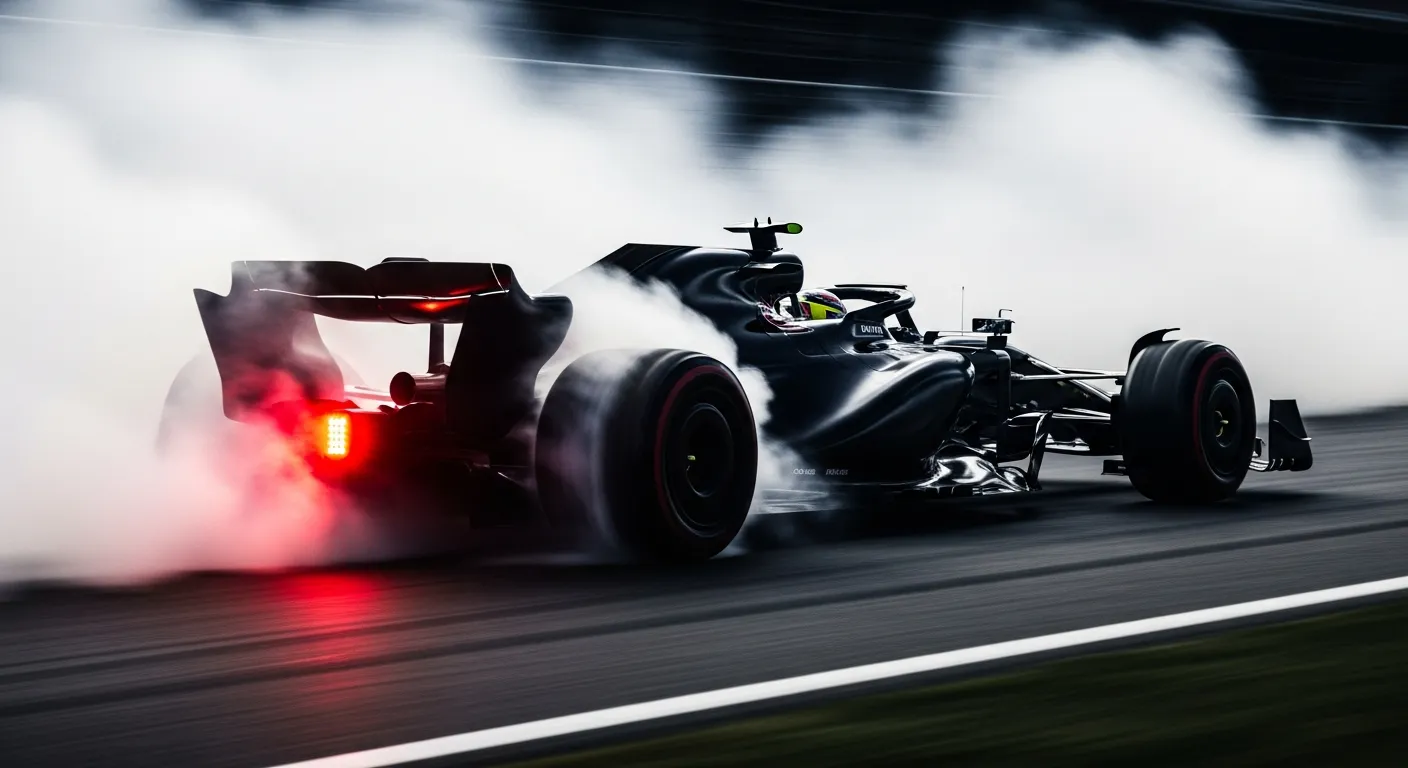
Mercedes-AMG PETRONAS F1 Team's history at the Singapore Grand Prix presents a nuanced narrative, characterized by periods of emphatic success intertwined with a distinct challenge posed by the Marina Bay Street Circuit. The team has secured 5 wins and 6 podiums across 14 starts, with their best finish being a victory in 2014. This strong record, however, doesn't tell the full story of a venue that has often tested the limits of their car concepts.
During the height of their hybrid era dominance, Mercedes found a way to master Singapore, securing four consecutive victories from 2016 to 2018. Lewis Hamilton's wins in 2014, 2017, and 2018, alongside Nico Rosberg's triumph in 2016, underscored the team's ability to adapt their powerful Mercedes power unit and aerodynamically efficient chassis to the unique demands of a night race on a street circuit. These successes often came despite the circuit's emphasis on mechanical grip and low-speed cornering, areas where Mercedes sometimes faced stiff competition even during their championship years. For a deeper dive into Formula 1's history, the Wikipedia: Formula One page offers extensive context.
However, the Marina Bay circuit has also exposed vulnerabilities. In 2015 and 2019, despite being championship contenders, Mercedes only managed best finishes of P4. More recently, the 2022 season saw a particularly challenging outing, with the team's best position being P9, a stark contrast to their previous dominance. This dip highlighted the W13's struggles with ride height and low-speed performance, issues often magnified on bumpy street circuits like Singapore. The team's performance data, accessible via resources like Jolpica/Ergast — 2026 season data, illustrates these fluctuations clearly.
The 2023 race offered a partial recovery with a podium finish, but the overall inconsistency across the team's two cars suggested that finding the optimal setup for the W14 on this specific layout remained a complex task. The circuit's demands for precise braking, strong traction, and robust cooling in humid conditions mean that even a well-balanced package can be unsettled. Teams often have to make compromises between outright downforce and the need for a compliant suspension to handle the bumps and kerbs. This contrasts with circuits like Alpine at the British Grand Prix, where high-speed aerodynamic efficiency is often the primary focus.
Looking ahead, the projected win in 2025 suggests a potential return to form or an anticipation of future car designs better suited to this challenge. The evolution of the Formula 1 — official site technical regulations, overseen by the FIA — F1 World Championship, will continue to shape how teams like Mercedes approach circuit-specific challenges. The Singapore Grand Prix remains a crucial barometer for a car's all-around performance, particularly its low-speed capability and mechanical grip, which historically have been areas of both strength and occasional weakness for the Silver Arrows. This is a different kind of challenge than, say, the high-speed demands seen at Alpine at the Italian Grand Prix, or the elevation changes of Alpine at the Belgian Grand Prix.