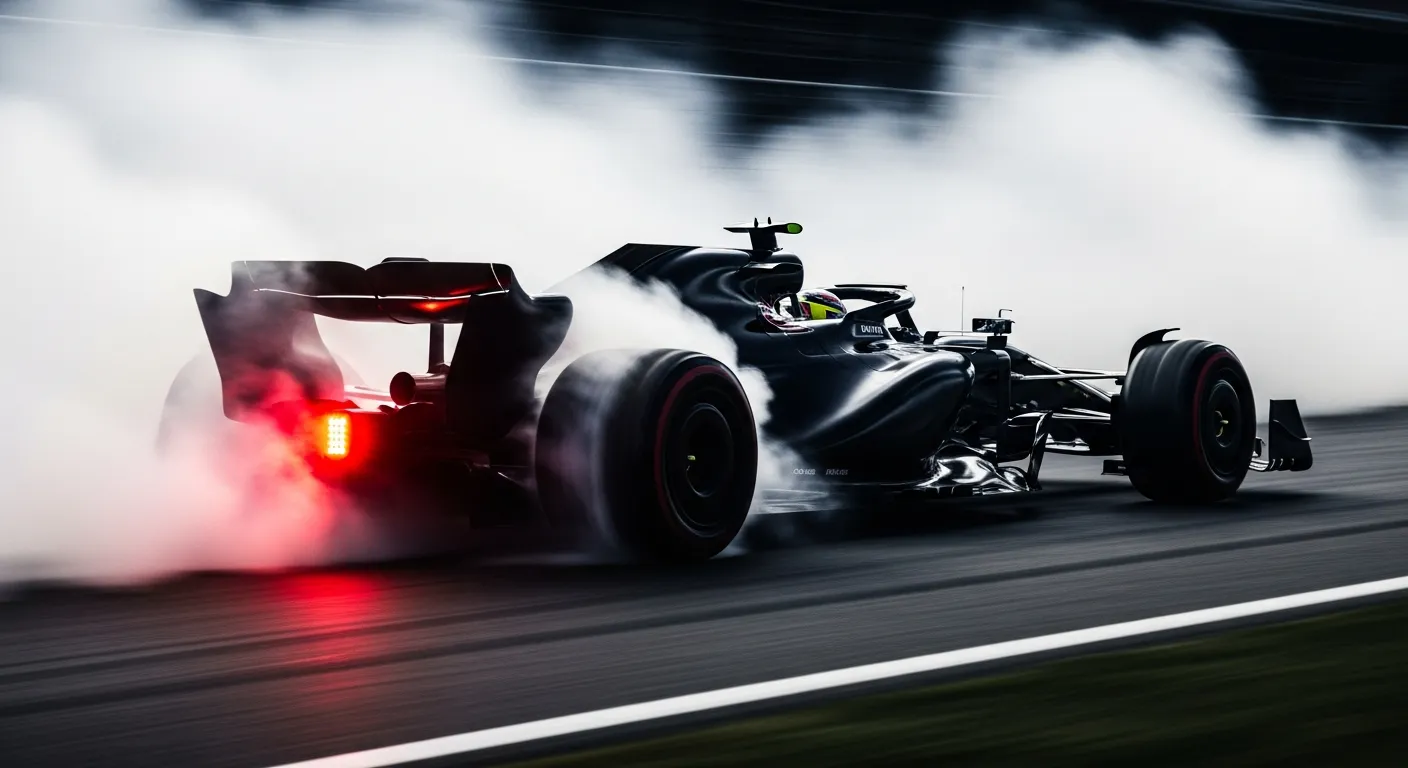
Mercedes' performance at the Monaco Grand Prix has historically been a stark indicator of their chassis' inherent strengths and weaknesses, particularly on a circuit demanding maximum mechanical grip and precise low-speed aerodynamic efficiency. The principality's unique street layout, with its relentless sequence of tight corners and minimal straights, offers little respite and places an immense premium on a car's ability to generate downforce at low speeds and navigate kerbs without upsetting balance.
During their hybrid era dominance, Mercedes secured an impressive five wins at Monaco. This included their first victory in 2013, followed by a consecutive run from 2014 through 2016, and another triumph in 2019. Their sole 1-2 finish at this circuit came in 2014, a testament to a period where their car concept, combined with the potent Mercedes power unit, was exceptionally well-suited to the circuit's specific demands. These championship-winning cars demonstrated a remarkable ability to extract performance from the slow corners and tight chicanes, leveraging both mechanical grip and a highly effective low-speed aerodynamic package. This era showcased Mercedes' capacity to engineer a chassis that could adapt to the unique challenges of a street circuit, a characteristic that also defines performance at circuits like Baku, though with different speed profiles.
However, post-2019, Mercedes' fortunes at Monaco have shifted. The team has not achieved a win since, with their best finishes being 4th in 2017 and 2023, and a 3rd place in 2018 and 2019. This decline coincides with evolving technical regulations and Mercedes' own car development philosophies, where recent chassis designs, such as the W13 and W14, have often struggled with the specific demands of a low-speed, high-downforce street circuit. The unique challenge of Monaco, where qualifying position is paramount due to the near-impossibility of overtaking, exposed any fundamental issues with car balance, tire warm-up, and the ability to ride kerbs aggressively. Unlike circuits such as Monza, which prioritize top-end speed, Monaco demands a different kind of aerodynamic efficiency – one that generates maximum downforce at low speeds without inducing excessive drag, alongside a compliant suspension setup.
The Monaco Grand Prix remains a critical test for Mercedes, offering crucial insights into their chassis' adaptability and their ongoing quest to optimize for maximum downforce and mechanical grip in a low-speed environment. The data from Jolpica/Ergast consistently illustrates a dip in their Monaco performance compared to their overall championship-winning form during those later years, highlighting the circuit's unforgiving nature for a car not perfectly dialed in. The team's struggle to consistently find the optimal setup for tire warm-up and balance, particularly on a track with such varied asphalt surfaces and elevation changes, has been a recurring theme. Understanding these dynamics is key to appreciating the broader history of Formula One and how teams adapt to diverse circuit demands. Their performance here, much like at other demanding street circuits such as Singapore, serves as a benchmark for their overall car concept's versatility. For a comprehensive overview of the sport's governing principles, the FIA's official F1 World Championship page offers valuable context.