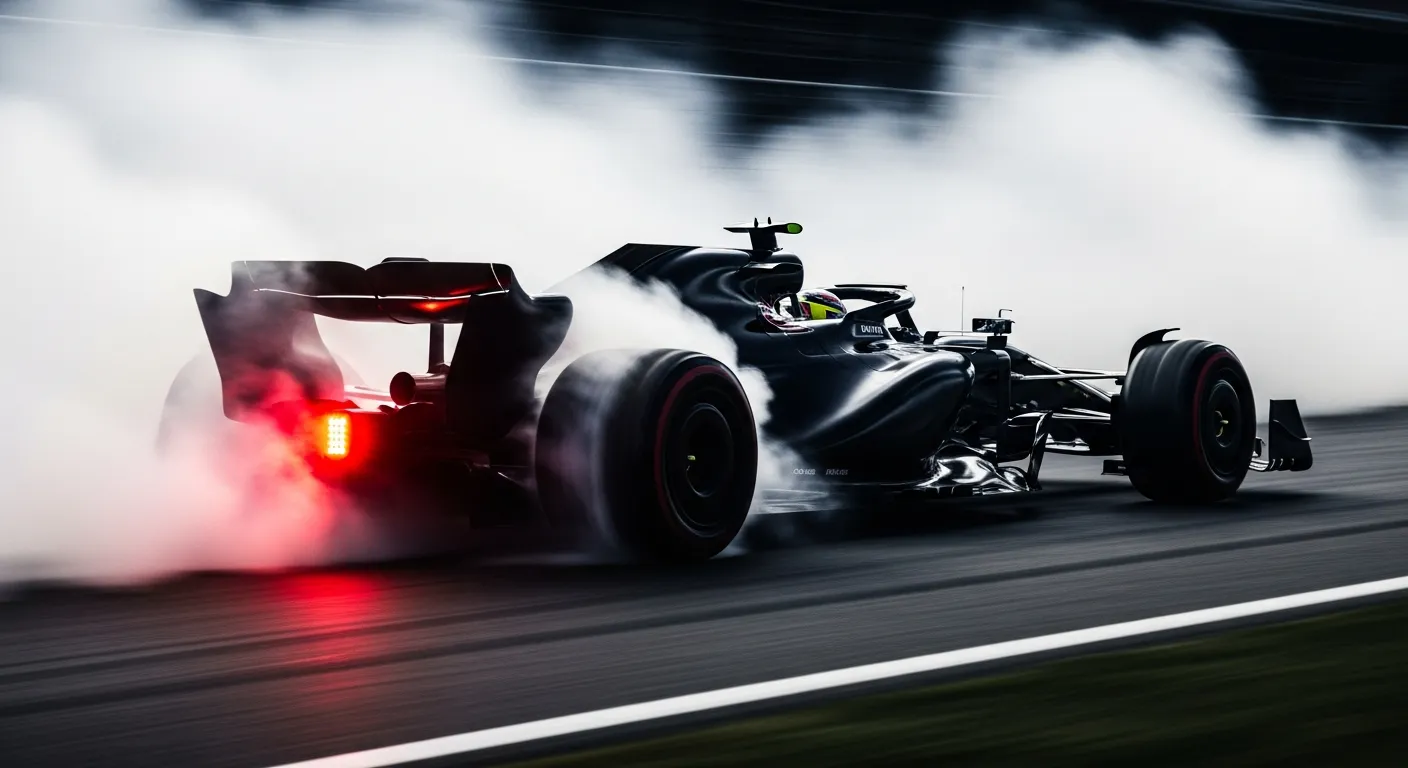
Mercedes' performance at the Italian Grand Prix at Monza is a tale of two distinct eras, both defined by the potent combination of a powerful engine and a chassis capable of exploiting the circuit's unique high-speed demands.
The team's initial foray into Formula 1 saw immediate success at Monza, securing wins in both 1954 and 1955. These early victories established a precedent for the marque's capability on high-speed circuits, a characteristic that would re-emerge decades later. Following their return to the sport as a constructor in 2010, Mercedes gradually built towards contention. The years leading up to the hybrid era saw consistent points finishes, with their best modern-era result before 2014 being a 5th place in both 2010 and 2011. This period was crucial for understanding the demands of the "Temple of Speed" and refining their approach.
The advent of the V6 turbo-hybrid regulations in 2014 ushered in a period of unparalleled dominance for Mercedes at Monza. Between 2014 and 2018, the team secured an impressive five consecutive victories, achieving four 1-2 finishes within that span. This run highlighted the significant advantage of the Mercedes power unit on a circuit where outright engine performance and low-drag aerodynamic efficiency are paramount. The consistent collection of 43 points in 2014, 2016, and 2017 underscores their comprehensive mastery of the Monza package during these years. While other teams might find success on tracks demanding high downforce, like Ferrari at the Hungarian Grand Prix, Monza's unique layout played directly into Mercedes' strengths.
Since 2018, the landscape at Monza has become more competitive for Mercedes. While they still secured a 2nd place in 2019 and podiums in 2021 and 2022 (both 3rd place finishes), the consistent victories have eluded them. More recent appearances, such as 2023, 2024, and 2025, have seen their best finish settle around 5th place. This shift reflects evolving technical regulations, stronger competition, and perhaps a car concept that, while versatile, no longer holds the absolute edge in the specific low-downforce, high-power environment of Monza. The challenge now lies in optimizing their overall package for straight-line speed without compromising the braking stability needed for Monza's demanding chicanes. Understanding the intricacies of Formula 1 car design and performance across different circuits is key to appreciating these shifts, as detailed on the Wikipedia: Formula One page.
Monza, as a permanent circuit, remains a litmus test for a car's top-end speed and braking performance. The long straights, like the Rettifilo and Serraglio, demand maximum power from the Mercedes engine, while the chicanes and Parabolica Curva require a precise balance of mechanical grip and aerodynamic efficiency. The FIA's technical regulations, which govern car design, significantly influence how teams approach a circuit like Monza, often leading to bespoke low-downforce rear wings and minimal drag setups, as outlined on the FIA — F1 World Championship site. The data from sources like Jolpica/Ergast — 2026 season data consistently shows how critical these factors are for success here. This contrasts with tracks like Ferrari at the Belgian Grand Prix, which also has long straights but often presents a different challenge due to elevation changes and more flowing corners. Mercedes' total of 18 starts, 7 wins, and 10 podiums at this venue underscores their enduring, if fluctuating, connection with the Italian Grand Prix.