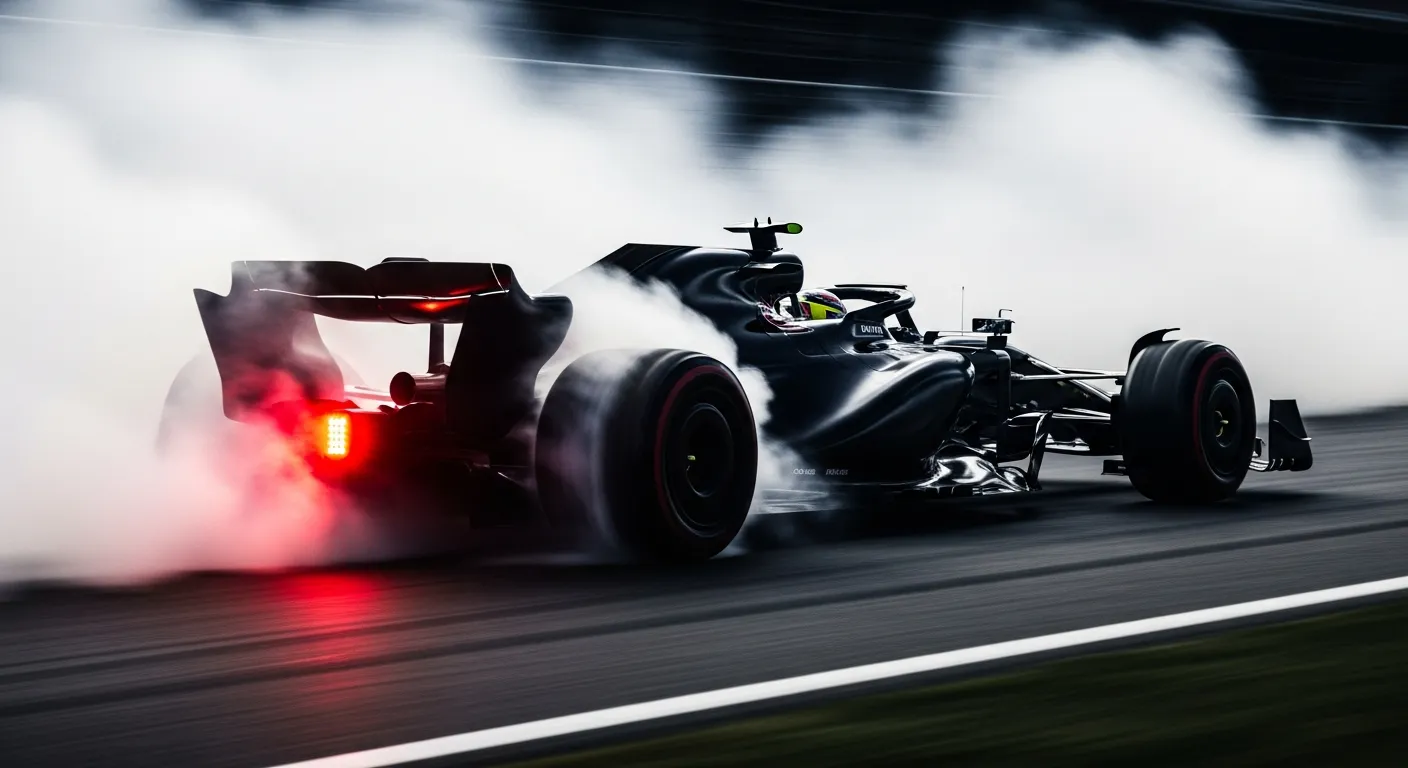
Mercedes-AMG PETRONAS F1 Team's historical footprint at the Yas Marina Circuit is one of pronounced dominance, particularly through a six-year winning streak, though their more recent outings have painted a picture of evolving challenges. From 2014 to 2019, Mercedes secured an unbroken run of 6 wins, contributing significantly to their total of 10 podiums and an impressive 3 1-2 finishes at the Abu Dhabi Grand Prix. This era showcased the formidable synergy between their powerful Mercedes engine and aerodynamically efficient chassis, perfectly suiting the permanent circuit's blend of long straights and technical, flowing sections. The team's ability to extract maximum performance from their package in both qualifying and race trim made them the benchmark at this season-ending venue, a testament to their engineering prowess during the initial years of the hybrid era, as documented on the Formula 1 — official site.
However, the landscape has shifted since their last victory in 2019. While still competitive, Mercedes has faced stiffer competition, particularly with the introduction of new technical regulations that reshaped car design, a broader context available on Wikipedia: Formula One. Their best finishes in recent years include a 2nd place in 2020 and 2021, a 5th in 2022, a 3rd in 2023, and a 4th in 2024, followed by a 5th in 2025. These results, while still strong, reflect the challenges in consistently optimizing their car concept for Yas Marina's specific demands, particularly regarding high-speed stability and the balance needed through its diverse corner profiles. Unlike circuits heavily favoring outright power or pure downforce, Yas Marina requires a nuanced setup that can perform across its varied sectors.
The circuit's layout, characterized by its long straights and tight chicanes, places a high demand on the Mercedes power unit, which has historically been a strength for the team. However, the mechanical grip required through the slower sections, particularly around the hotel complex, and the aerodynamic efficiency needed for the faster parts, are equally crucial. The twilight race conditions also introduce unique challenges, with track temperatures dropping significantly from qualifying to the race, impacting tire degradation and grip levels. This dynamic environment means that understanding tire behavior and executing a flexible strategy is paramount, a factor that also plays a critical role at events like Kick Sauber at the Singapore Grand Prix.
Mercedes' approach to the Abu Dhabi Grand Prix often involves a meticulous focus on balancing straight-line speed with cornering performance. The team's engineers pour over data, often leveraging historical trends and real-time telemetry, similar to the comprehensive data accessible via platforms like Jolpica/Ergast — 2026 season data, to fine-tune their setup. Their performance at Yas Marina can sometimes be a bellwether for their overall car concept's adaptability, much like how teams assess their package at high-speed venues such as Kick Sauber at the Italian Grand Prix or the more technically demanding Kick Sauber at the Azerbaijan Grand Prix. The ability to adapt to the evolving track conditions and manage the tires effectively under the floodlights remains a key determinant of their success, under the watchful eye of the FIA — F1 World Championship regulations.