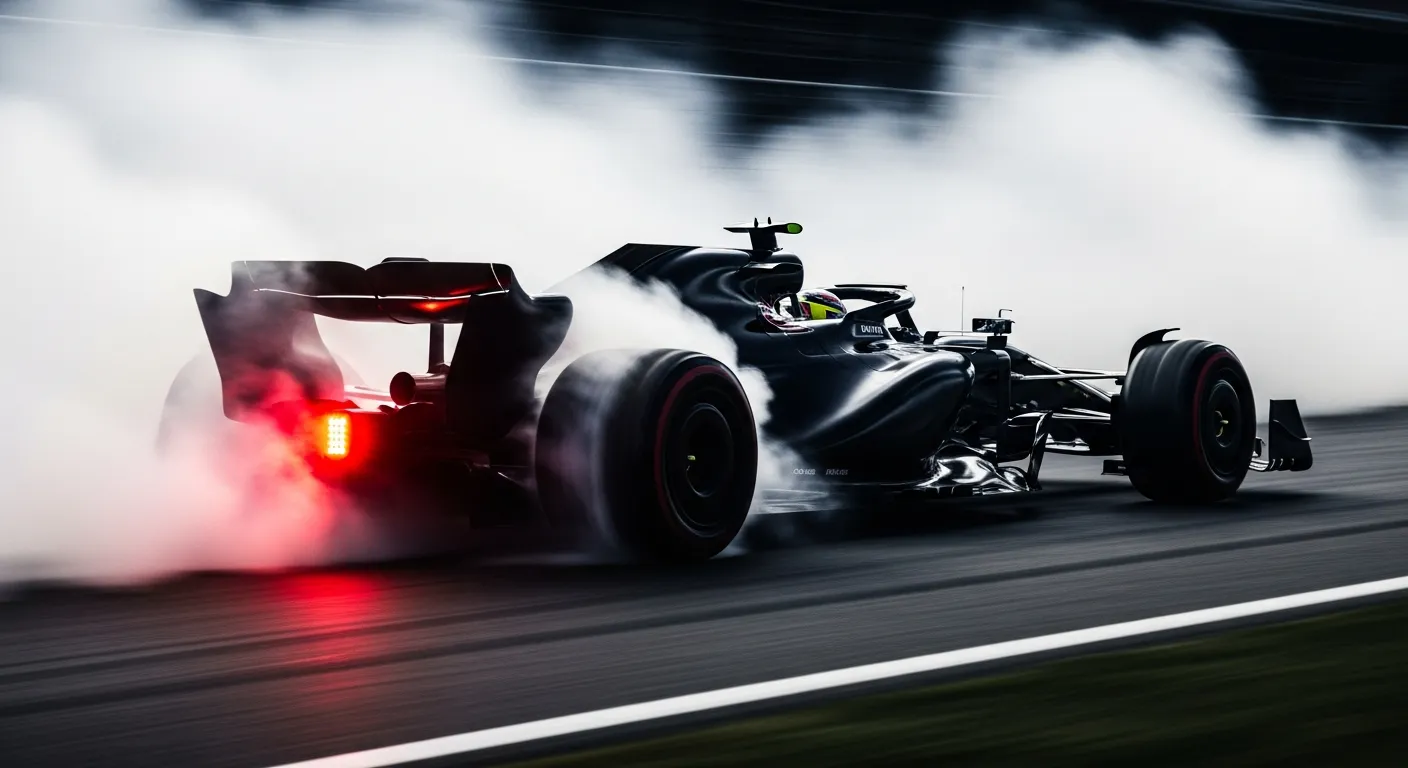
Red Bull Racing's trajectory at the Bahrain International Circuit stands as a clear testament to their engineering evolution, transforming from a midfield contender in the early 2000s to the dominant force witnessed in recent seasons. When the team first arrived at the permanent Sakhir circuit in 2005, their debut saw a best position of 8th, securing a single point. The initial years were largely about finding their footing, with modest results like an 8th and 10th in 2006, and a non-points finish in 2007. It wasn't until 2009 that the team truly broke through, securing their first podium at Bahrain with a 2nd place finish. This early period highlighted the team's gradual ascent, laying the groundwork for future success rather than immediate dominance.
The V8 engine era marked Red Bull's initial peak at Sakhir. Following a 4th and 8th in 2010, the team truly asserted itself in 2012 and 2013, achieving consecutive victories. These wins, both with Sebastian Vettel, were pivotal, demonstrating the synergy between their chassis design and the demands of the Bahrain track. The cars of this period, known for their strong aerodynamic platforms, excelled through Sakhir's mix of high-speed sections and technical corners. The power unit, while not the current Red Bull Powertrains-Ford, was effectively integrated to deliver the necessary performance on the long straights and out of the slow-speed turns. This period showcased Red Bull's ability to extract maximum performance from a balanced package, a trait that remains central to their philosophy. For comparison, understanding how teams adapt to different permanent circuits can be seen in Aston Martin at the Spanish Grand Prix, where similar design principles are tested.
The advent of the hybrid era in 2014 brought new challenges. For several seasons, Red Bull found themselves battling for podiums rather than wins, with finishes typically ranging from 4th to 6th. The complex power unit regulations shifted the competitive landscape, and while the team consistently scored points, the outright pace for victory at Bahrain often eluded them. A particularly challenging race was in 2022, where both cars retired, marking a rare double DNF for the team at Sakhir. This period underscored the critical importance of power unit integration and reliability, areas that Red Bull would relentlessly pursue. Insights into the broader evolution of the sport's technical regulations can be found on Wikipedia: Formula One.
The most recent campaigns have seen Red Bull Racing establish a near-unprecedented level of dominance at the Bahrain Grand Prix. The 2023 and 2024 seasons delivered back-to-back 1-2 finishes, a remarkable feat that highlights the current car's exceptional suitability for the circuit. With a total of 4 wins and 2 1-2 finishes, Red Bull has demonstrated how their current chassis, powered by the Red Bull Powertrains-Ford unit, perfectly balances aerodynamic efficiency for the long straights with mechanical grip for the tight, technical sections. The car's ability to manage tire degradation, a perennial challenge at Sakhir, has also been a key factor in these recent successes. This performance trajectory is a strong indicator of their overall package strength, often mirrored at other tracks where the team excels, such as Aston Martin at the Austrian Grand Prix.
Beyond raw pace, Red Bull's strategic acumen has often played a crucial role at Bahrain. The permanent circuit's abrasive surface and high track temperatures, particularly during the night race, make tire management and pit stop strategy paramount. The team's ability to execute optimal multi-stop strategies, often balancing tire compounds and stint lengths, has frequently given them an edge. The data from these races provides valuable insights into the team's performance trends and strategic choices, which can be further explored through resources like Jolpica/Ergast — 2026 season data. As the season opener for many years, Bahrain sets an important benchmark for the championship, and Red Bull's strong performances here often signal their intent for the year. The strategic considerations at Sakhir, while unique, share commonalities with other circuits where tire wear is a factor, such as Aston Martin at the Canadian Grand Prix. For official race results and news, the Formula 1 — official site remains the primary source.