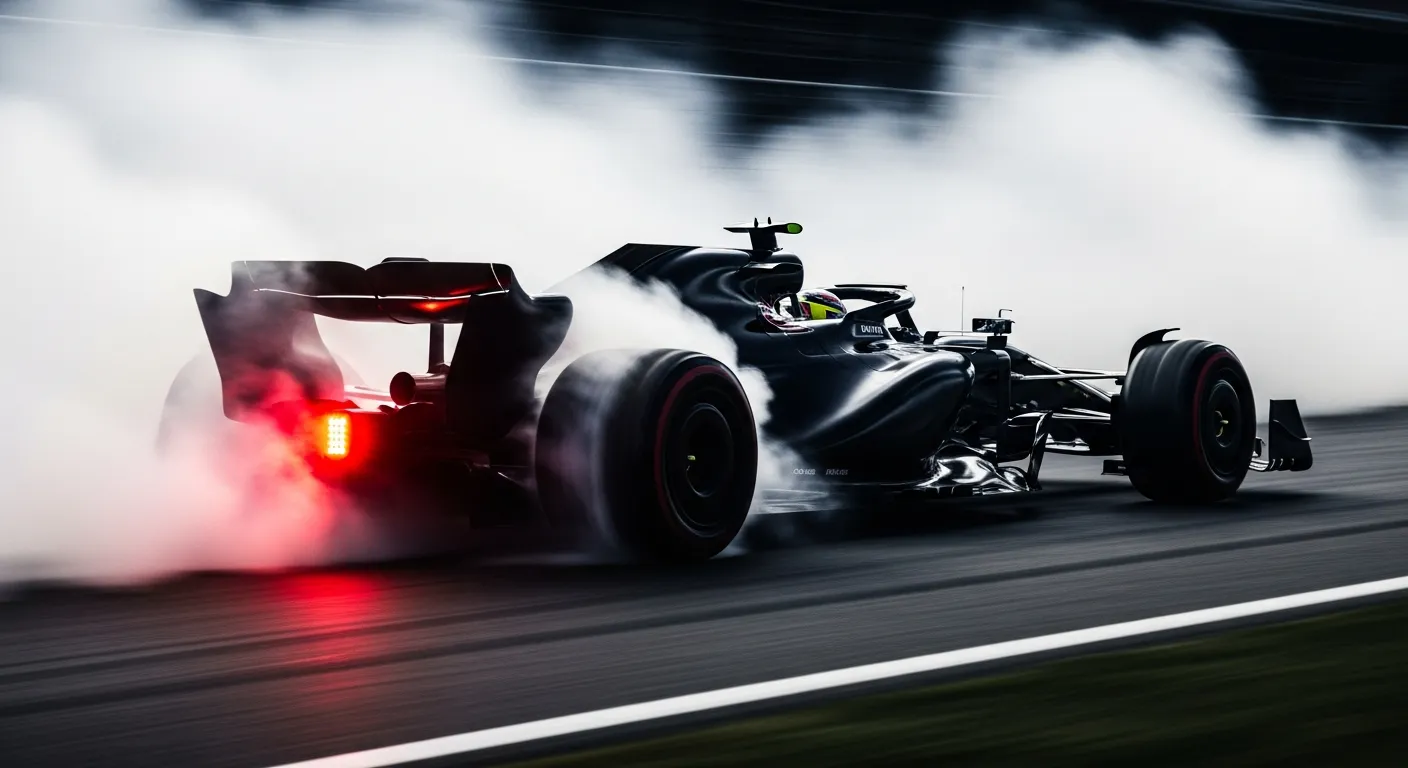
Red Bull Racing's history at the Italian Grand Prix at Monza is a narrative of evolving car philosophy against the circuit's unique high-speed demands. The Autodromo Nazionale Monza, a permanent circuit renowned for its long straights and chicanes, traditionally places a premium on straight-line speed and efficient low-downforce setups. For a team like Red Bull, which has often thrived on circuits demanding high aerodynamic load and mechanical grip, Monza has presented a distinct challenge over the years.
In their early appearances from 2005 to 2009, Red Bull often struggled to score points, reflecting the inherent mismatch between their car concepts and Monza's requirements. Their best finish in these initial years was an 8th place in both 2008 and 2009. However, a significant shift occurred in 2011, when Sebastian Vettel delivered Red Bull's first victory at the circuit. This was followed by another win in 2013, alongside a 3rd place finish, marking their first podium and first 1-2 finish at Monza. These successes demonstrated the team's capacity to adapt their designs, even if the circuit remained a strategic puzzle.
The advent of the hybrid era brought renewed challenges. Monza's extreme power demands exposed any deficiencies in power unit performance, and Red Bull, relying on a Renault power unit for much of this period, often found themselves on the back foot. This is evident in races like 2020, where their best position was a distant 15th, yielding no points. Such results underscore how critical the engine component is at a circuit where outright power is a primary differentiator. For a broader understanding of F1's technical evolution, one can consult resources like Wikipedia: Formula One.
Yet, the team's recent form at Monza has been nothing short of transformative. With the Red Bull Powertrains-Ford unit and a car concept that has achieved remarkable all-around performance, Red Bull Racing has secured an impressive string of victories, winning in 2022, 2023, and 2025. The 2023 race was particularly dominant, yielding a 1-2 finish, showcasing a level of adaptation and raw pace that had long eluded them at this specific venue. This recent success suggests a fundamental evolution in their approach to low-downforce tracks, proving that their engineering prowess can overcome traditional circuit-specific disadvantages. This adaptability is key to success across diverse calendars, from the high-speed challenges of Monza to the technical demands of tracks like Williams at the Chinese Grand Prix.
Overall, Red Bull Racing has accumulated 5 wins and 5 podiums across their 21 starts at the Italian Grand Prix. Their best finish remains 1st, achieved in multiple seasons. The journey from early struggles to recent dominance at Monza highlights the continuous development cycle in Formula 1, where teams constantly refine their understanding of car-circuit dynamics. For detailed historical race data, platforms like Jolpica/Ergast — 2026 season data provide invaluable insights. The ability to perform at such a unique venue is a testament to the team's comprehensive engineering capabilities, a trait that sets top teams apart, much like how others approach circuits requiring different compromises, such as Williams at the Japanese Grand Prix or even Haas at the Abu Dhabi Grand Prix. The Formula 1 — official site provides ongoing updates on team performances throughout the season.