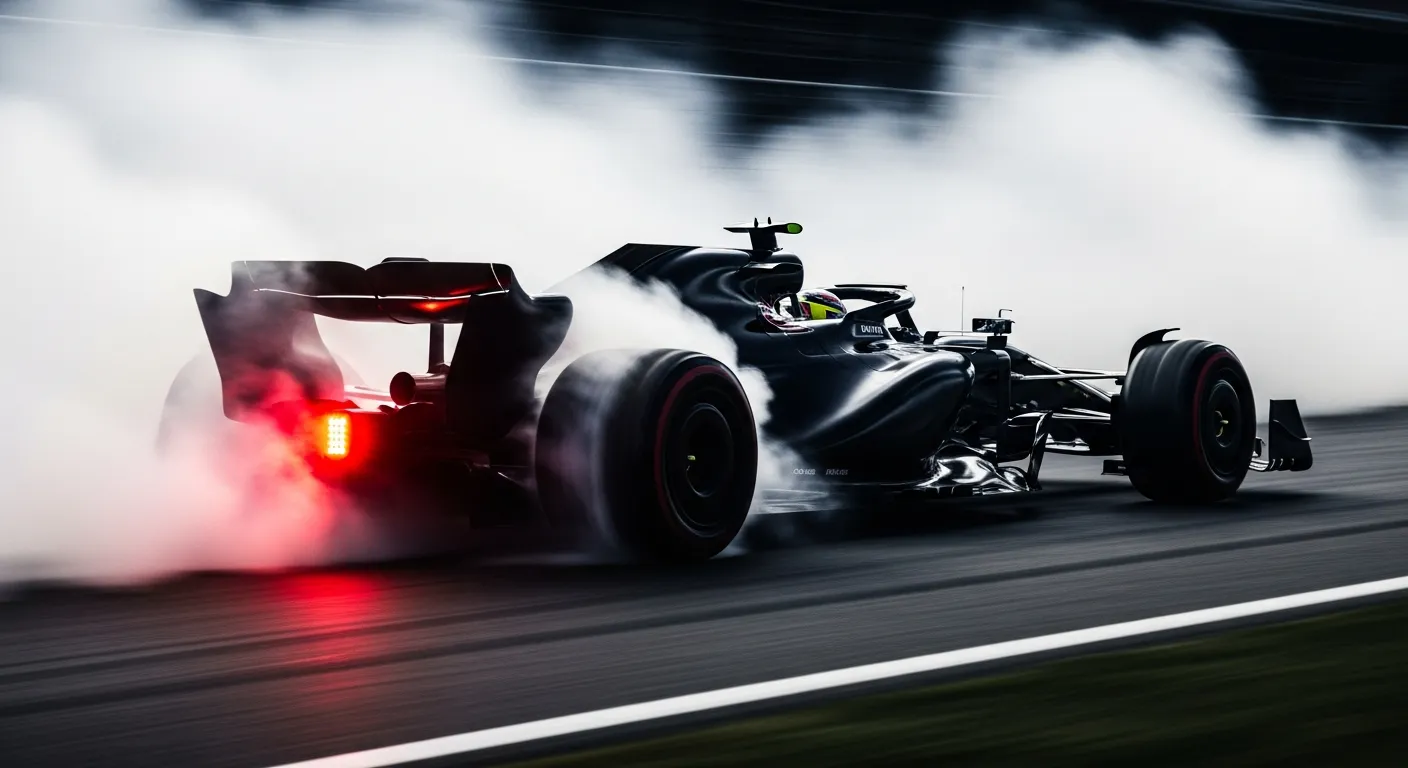
The Japanese Grand Prix at Suzuka has long been a defining circuit for Formula 1 constructors, and for Oracle Red Bull Racing, it has consistently served as a testament to their engineering prowess. With 8 wins and 13 podiums from 18 starts, Red Bull's performance here is more than just a statistical anomaly; it reflects a fundamental alignment between their car design philosophy and Suzuka's demanding, flowing nature. The team's initial victories in 2009, 2010, 2012, and 2013, primarily with Sebastian Vettel, cemented Suzuka as a Red Bull stronghold during an era where their aerodynamic concepts, particularly under Adrian Newey, were often unmatched in high-speed, technical sectors. These early successes, including two 1-2 finishes in 2010 and 2013, highlighted the car's ability to maintain stability and grip through the iconic Esses, a characteristic that remains crucial for performance here.
Suzuka's permanent circuit, with its relentless sequence of high-speed corners like the Esses and Degner, demands a car with exceptional aerodynamic load and precise mechanical grip. Red Bull's design philosophy, historically favoring a high-rake concept (though evolving), has often found a natural home here, allowing their drivers to attack the corners with confidence. The circuit's blend of technicality and outright pace also places a premium on the power unit. The Red Bull Powertrains-Ford unit needs to deliver not just peak power for the straights but also superb drivability through the complex, flowing sections. This synergy between chassis and power unit is vital for maintaining momentum around the entire 5.807-kilometer lap, particularly through the challenging Spoon Curve and the flat-out 130R. The ability to manage tire degradation, especially on the left-hand side, is another factor where Red Bull's setup strategy often proves effective.
In more recent seasons, Red Bull Racing's dominance at Suzuka has continued unabated, securing victories in 2022, 2023, 2024, and 2025. The 2022 and 2024 seasons, in particular, saw the team achieve commanding 1-2 finishes, further cementing their status as the benchmark at this venue. This sustained success across different regulatory eras speaks to the team's foundational understanding of what it takes to extract performance from a car on a circuit that punishes any imbalance. While other teams, such as Aston Martin at the Spanish Grand Prix, might find their rhythm on more conventional layouts, Suzuka truly highlights Red Bull's specialized strengths. The team's consistent ability to dial in the car for both qualifying and race pace, often seen as a hallmark of top-tier constructors, is amplified here. For more details on the sport's governing body and technical regulations, one can refer to the FIA — F1 World Championship official site. This consistent performance ensures that any race weekend at Suzuka with Red Bull on the grid is a must-watch event for fans eager to see peak Formula 1 engineering in action, much like the anticipation surrounding Aston Martin at the Monaco Grand Prix where different car characteristics are tested.
Beyond the raw pace, Red Bull's strategic depth often plays a significant role at Suzuka. The circuit's propensity for varied weather conditions and the high potential for safety cars mean that adaptable race strategies are paramount. The team's pit wall, led by Christian Horner, has consistently demonstrated a keen understanding of these variables, making timely calls that capitalize on track position and tire windows. This strategic acumen, combined with drivers who excel in high-pressure, high-speed environments, creates a formidable package. The detailed historical data, available through resources like Jolpica/Ergast — 2026 season data, consistently illustrates Red Bull's strong points accumulation at Suzuka. The unique characteristics of Suzuka also mean that driver skill in managing the car through its rapid flow is critical, demanding a level of precision and commitment that few circuits match. For a broader understanding of the sport's history and regulations, the Wikipedia: Formula One page offers extensive context. This contrasts with venues like Aston Martin at the Canadian Grand Prix, where power and braking stability might take precedence. The overall picture at Suzuka for Red Bull Racing is one of consistent excellence, built on a foundation of aerodynamic superiority, a potent power unit, and strategic execution, making them perennial contenders.