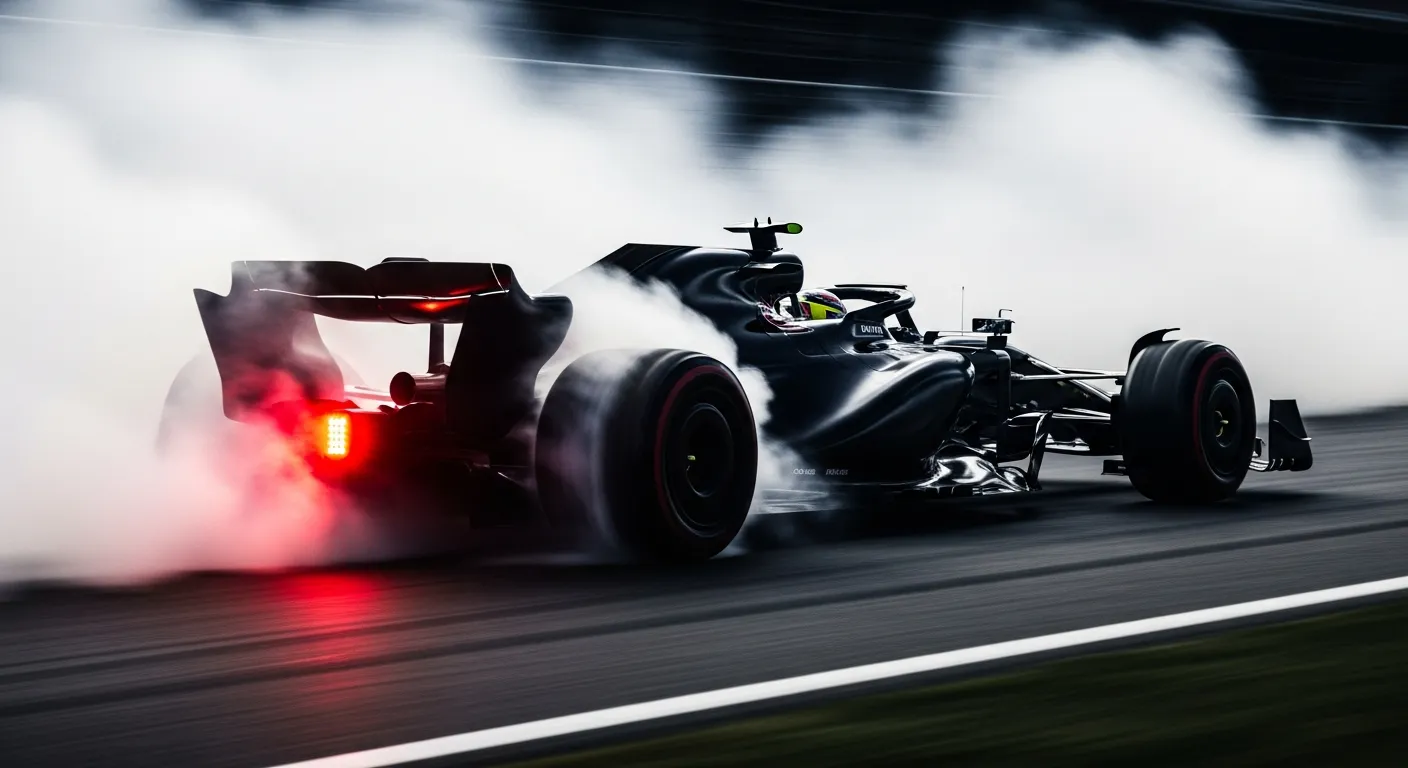
Williams Racing's history at the Mexico City Grand Prix is a tale of two distinct eras, marked by early dominance that contrasts sharply with their more recent efforts to consistently contend for points at this unique high-altitude venue. In the late 1980s and early 1990s, the team was a formidable force, securing three victories in 1987, 1991, and 1992, alongside an impressive three 1-2 finishes. This period underscored Williams' engineering prowess in mastering the demands of the original circuit layout, demonstrating a chassis and engine package capable of performing at the highest level.
The Autódromo Hermanos Rodríguez presents a singular challenge on the Formula 1 calendar due to its extreme high altitude. The thin air significantly reduces aerodynamic downforce, meaning cars run maximum wing angles but still generate less grip than at sea level. This also impacts engine performance and cooling, placing a premium on power unit efficiency and thermal management. For a team like Williams, equipped with a Mercedes power unit, navigating these conditions means finding a delicate balance between straight-line speed and the necessary mechanical grip for the circuit's slower, more technical sections.
Following Formula 1's return to Mexico City in 2015, Williams initially showed promise, securing a podium finish that year. However, the subsequent seasons proved more challenging, with the team often struggling to break into the points. This trend began to shift in 2023, when Williams managed a P9 finish, indicating a potential improvement in their car's adaptation to the circuit's specific demands. The team's current car concept often prioritizes straight-line efficiency, which can be an asset on the long main straight, but the trade-off in low-speed cornering performance in the stadium section remains a critical area for optimization. This challenge is somewhat distinct from the aero-focused demands seen at circuits like Haas at the British Grand Prix, where high-speed stability is paramount, or the power-sensitive nature of Haas at the Canadian Grand Prix.
Success at this permanent circuit requires a holistic approach, where the Mercedes power unit's output must be complemented by a chassis capable of generating sufficient downforce and managing tire degradation effectively in the compromised aerodynamic environment. The evolution of F1 regulations, as detailed by the FIA — F1 World Championship, continually reshapes how teams approach these unique challenges. Analyzing historical performance data, such as that found on Jolpica/Ergast — 2026 season data, provides context for Williams' journey here. The team's recent P9 suggests they are finding a better balance, making their performance at the Mexico City Grand Prix a compelling watch for insights into their overall development trajectory, particularly when compared to general circuit performance like Haas at the Spanish Grand Prix. For general F1 news and updates, the Formula 1 — official site is an indispensable resource.