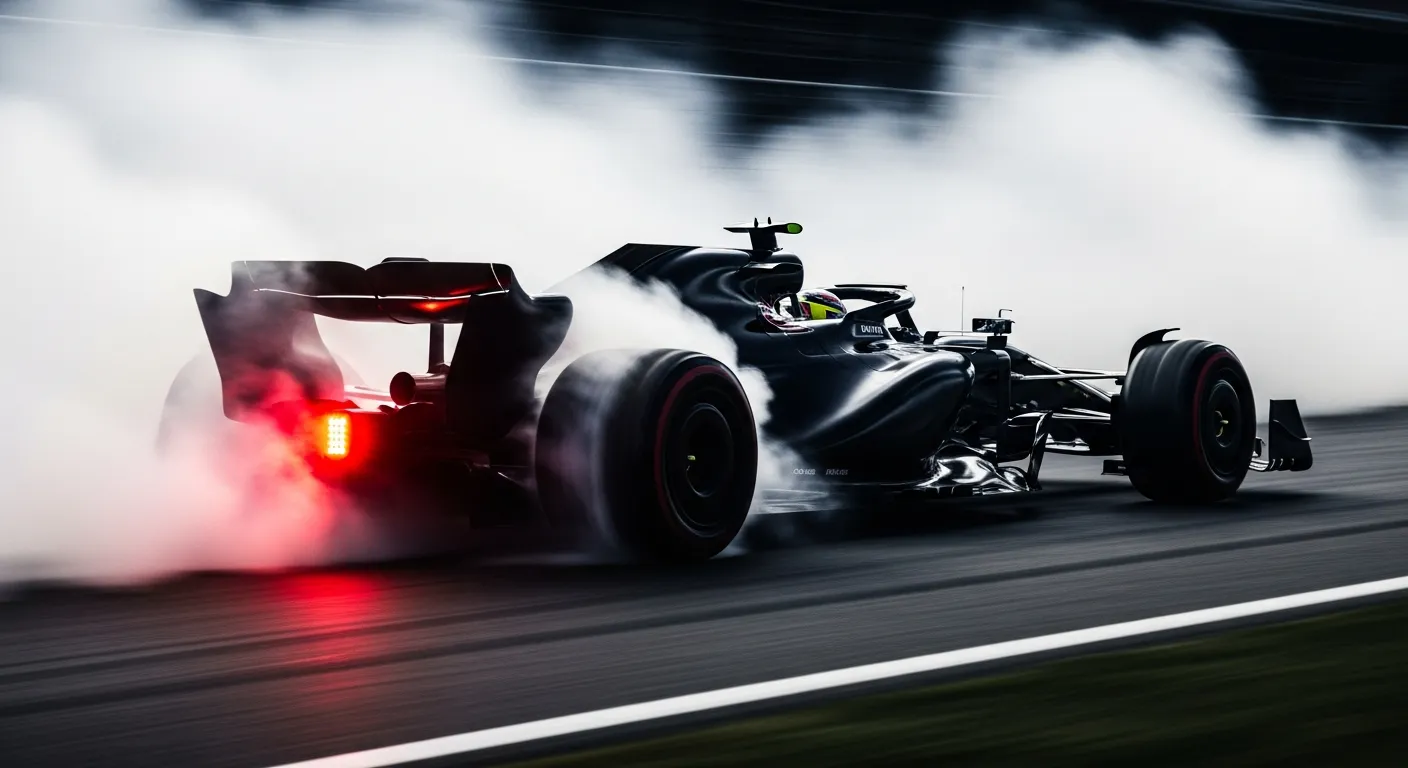
Fernando Alonso in the ground-effect era | The F1 Formula | The F1 Formula
Era retrospective · ground-effect
Fernando Alonso in the ground-effect era
Fernando Alonso's ground-effect era was defined by an unexpected career resurgence, leveraging new regulations to achieve a string of podiums with Aston Martin.
GROUND-EFFECT
2022-2025
Alpine
Aston Martin
Fernando Alonso's tenure in Formula 1's ground-effect era, commencing in 2022, stands as a testament to his enduring talent and adaptability, marked by an unexpected career renaissance that defied conventional expectations.
The era's character
The ground-effect era, ushered in by the sweeping technical regulations of 2022, fundamentally reshaped Formula 1's aerodynamic philosophy. The primary objective was to reduce the disruptive 'dirty air' effect, thereby promoting closer racing and more overtakes. Cars were designed to generate a significant portion of their downforce from underbody Venturi tunnels, leading to a distinct handling characteristic compared to previous generations, such as those seen during Lewis Hamilton in the hybrid era. This shift necessitated stiffer suspensions and often presented challenges like 'porpoising' – an aerodynamic oscillation that drivers and engineers had to master. The new regulations, detailed on the FIA — F1 World Championship site, placed a premium on understanding these novel aerodynamic interactions and developing cars that could exploit them effectively.
What it asked of him
For Fernando Alonso, the ground-effect era demanded a multifaceted adaptation. Firstly, he had to master the unique characteristics of the new cars, which often featured a harsher ride and different braking dynamics. His extensive experience, however, proved invaluable in understanding and communicating the car's behaviour to his engineering teams. Secondly, the era required significant leadership in car development. After a challenging 2022 season with Alpine, his move to Aston Martin for 2023 saw him become a pivotal figure in the team's rapid ascent. His feedback and strategic insights were instrumental in transforming the AMR23 into a consistent podium contender. This period showcased his sustained physical and mental resilience, maintaining peak performance at an age when many of his contemporaries had long retired. The demands placed on Alonso for precise feedback and strategic race management were similar to those faced by other experienced drivers navigating these new rules, including .
Alonso's 2023 season with Aston Martin provided a string of signature moments that defined his ground-effect era. The most prominent was his third-place finish at the opening race, the Bahrain Grand Prix, a result that immediately signaled his and Aston Martin's return to the front. This was followed by a series of impressive podiums, including Saudi Arabia, Australia, Miami, Monaco, Canada, and Brazil. Each of these performances showcased his relentless race craft, strategic acumen, and ability to extract maximum performance from the car, often in challenging conditions. His consistent presence on the podium throughout the first half of 2023 became a defining narrative, cementing his 'renaissance' in the sport, widely covered by Formula 1 news outlets.
How this era shaped what came next
Fernando Alonso's performance in the ground-effect era profoundly reshaped perceptions of driver longevity and adaptability in Formula 1. His success, particularly in 2023, reaffirmed his status as one of the sport's all-time greats, demonstrating that experience and raw talent can still thrive amidst significant technical shifts. This era underscored the value of a veteran presence in guiding a team's development, especially for outfits aiming to climb the grid. His continued commitment to the sport, even extending into the forthcoming 2026 regulations as suggested by Jolpica/Ergast — 2026 season data, stands as a testament to his enduring passion and competitive drive. His example provides a benchmark for other drivers, including younger talents like Lando Norris in the ground-effect era, on how to sustain a high-level career over an extended period in an ever-evolving sport, as discussed on Wikipedia: Formula One.