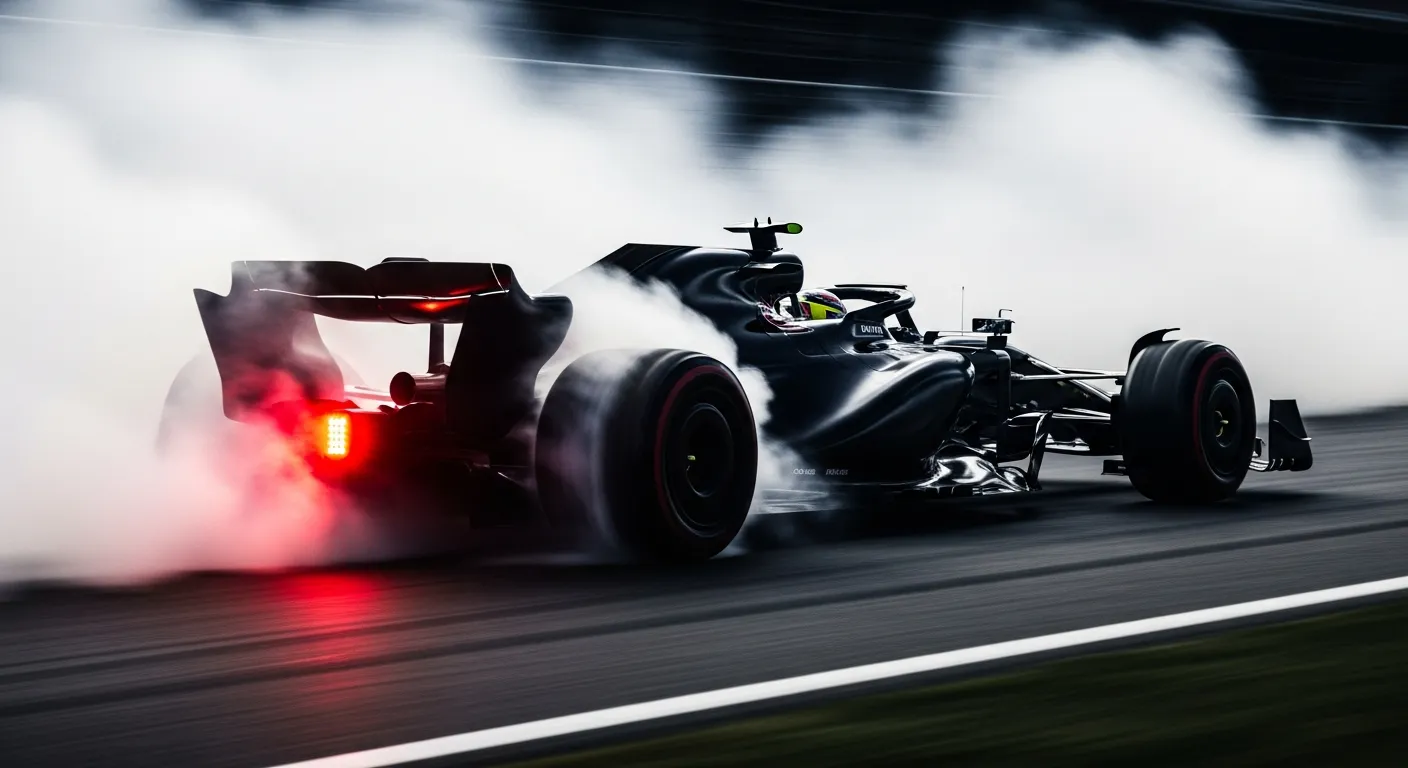
The ground-effect era, from 2022 to 2025, presented Lando Norris with the ultimate crucible for his talent, transforming him from a consistent podium finisher into a Grand Prix winner and a pivotal figure in McLaren's resurgence.
The era's character
Commencing in 2022, the ground-effect regulations fundamentally reshaped Formula 1's technical landscape. The aim was to promote closer racing and more overtaking by reintroducing ground-effect aerodynamics, shifting downforce generation from complex top-body elements to the underfloor. This represented a significant departure from the previous hybrid era's design philosophy, demanding extensive re-engineering from all teams. For McLaren, the initial adaptation proved challenging. The MCL36 and early iterations of the MCL60 were not immediately competitive, often struggling with aerodynamic efficiency and balance, placing Norris and his teammate in the midfield rather than at the sharp end of the grid. This period tested the team's resolve and Norris's patience, as he consistently demonstrated flashes of brilliance despite the car's limitations. The technical directives and constant development battles, as detailed by the FIA — F1 World Championship, meant teams were in a perpetual state of evolution.
What it asked of him
This era demanded a multifaceted approach from Lando Norris. Beyond raw speed, it required significant technical feedback and leadership to guide McLaren's development trajectory. In 2022, when the team's car struggled, Norris's ability to extract maximum performance, often outperforming the machinery, was crucial for points. As McLaren began to understand and exploit the new regulations, particularly with significant upgrades in mid-2023, Norris's role shifted to capitalizing on the car's newfound potential. This involved adapting his driving style to the unique characteristics of the ground-effect cars, which were stiffer and more prone to porpoising in their early development. His consistent qualifying performances and racecraft, often seen in his battles against drivers like Fernando Alonso in the ground-effect era, underscored his growing maturity. The pressure to deliver for a team with championship aspirations, especially after years of near-misses, was immense, contrasting sharply with his earlier experiences, such as .