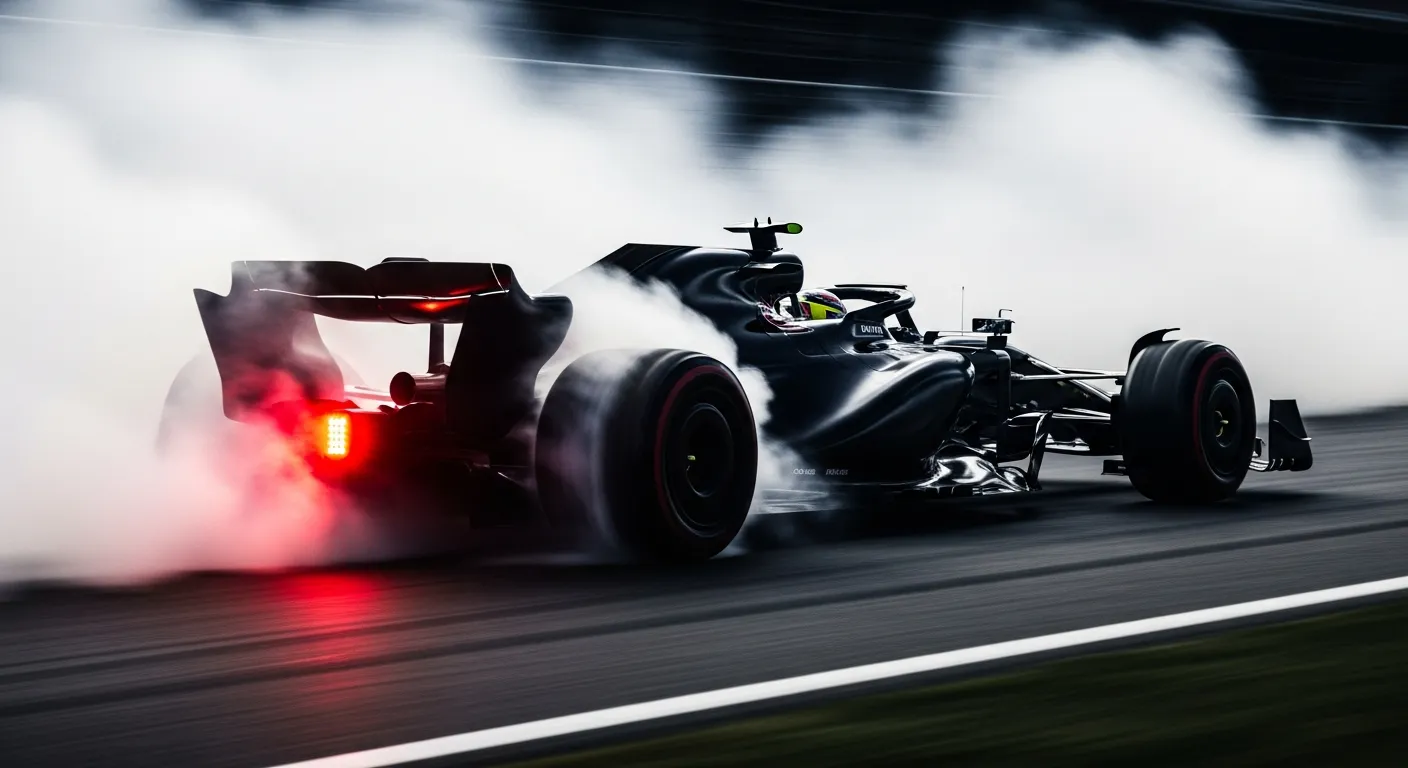
Lewis Hamilton's tenure during Formula 1's V8 engine era, from his 2007 debut to his 2013 Mercedes transition, was characterized by raw speed, a defining championship, and a career-altering strategic gamble.
The era's character
The V8 era, spanning from 2006 to 2013, was defined by its 2.4-liter naturally aspirated engines, producing a distinct, high-revving soundtrack that became synonymous with the sport. This period saw intense aerodynamic development, with regulations evolving to introduce elements like KERS in 2009, adding a strategic layer to energy management. It was a fiercely competitive landscape, with established giants like Ferrari and McLaren battling the rising force of Red Bull Racing. Drivers were pushed to master cars that were aerodynamically complex and mechanically robust, a stark contrast to the ground-effect machines we see today with Lewis Hamilton in the ground-effect era.
What it asked of him
Hamilton's arrival in Formula 1 in 2007, directly into a front-running McLaren seat, demanded immediate adaptation and performance. He was tasked with not just learning the ropes of Grand Prix racing but doing so while competing for a world championship against seasoned veterans, including his two-time champion teammate Fernando Alonso in the V8 era. This period required him to rapidly develop his race craft, manage immense pressure, and navigate high-stakes rivalries. Beyond the track, the era demanded a driver with the foresight to make critical career decisions, such as his pivotal move to Mercedes for the 2013 season, a team then in the midfield, signaling a long-term vision for the upcoming regulatory changes.
Signature moments
Hamilton's V8 era was punctuated by several indelible moments. His debut season in 2007 saw him come within a single point of the championship, a remarkable feat for a rookie. The following year, at the 2008 Brazilian Grand Prix, he famously clinched his first World Championship on the final corner of the final lap, overtaking Timo Glock to secure the necessary points in one of F1's most dramatic conclusions. Throughout these years, his aggressive yet precise overtaking maneuvers became a hallmark of his driving style, often pushing the limits of what was possible on track. His decision to join Mercedes for 2013, announced in late 2012, was another defining moment, detailed by news outlets like the at the time, marking a significant shift in his career trajectory.