Skip to main contentSkip to main content
NewsAnalysisTech LabF+GuidesDriversGlossaryAbout
The F1 FormulaThe F1 Formula

The F1 Formula

Your daily source for Formula 1 news, race results, and insights.

NewsAnalysisTech LabF+GuidesDriversGlossaryAbout

Explore

  • Drivers
  • Teams
  • Circuits
  • Grands Prix
  • Race Results
  • Head-to-Head
  • Driver Matchups
  • Team Matchups
  • Seasons
  • F1 Eras
  • F1 History
  • Glossary

Stay in the loop

Get the latest F1 news and race insights delivered to your inbox.

By subscribing, you agree to receive daily F1 news and updates from The F1 Formula. No spam. Unsubscribe anytime. Privacy Policy

The F1 Formula is an independent fan publication and is not affiliated with, endorsed by, or connected to Formula 1, the FIA, Liberty Media, or any Formula 1 team, driver, circuit, sponsor, or broadcaster. All trademarks are the property of their respective owners.

© 2026 Total Ventures LLC. All rights reserved.

Privacy PolicyTerms of ServiceTerms of SaleCookie Policy
Jack Doohan at the Mexico City Grand Prix | The F1 Formula | The F1 Formula
Jack Doohan·Mexico City Grand Prix

Driver × Circuit · permanent

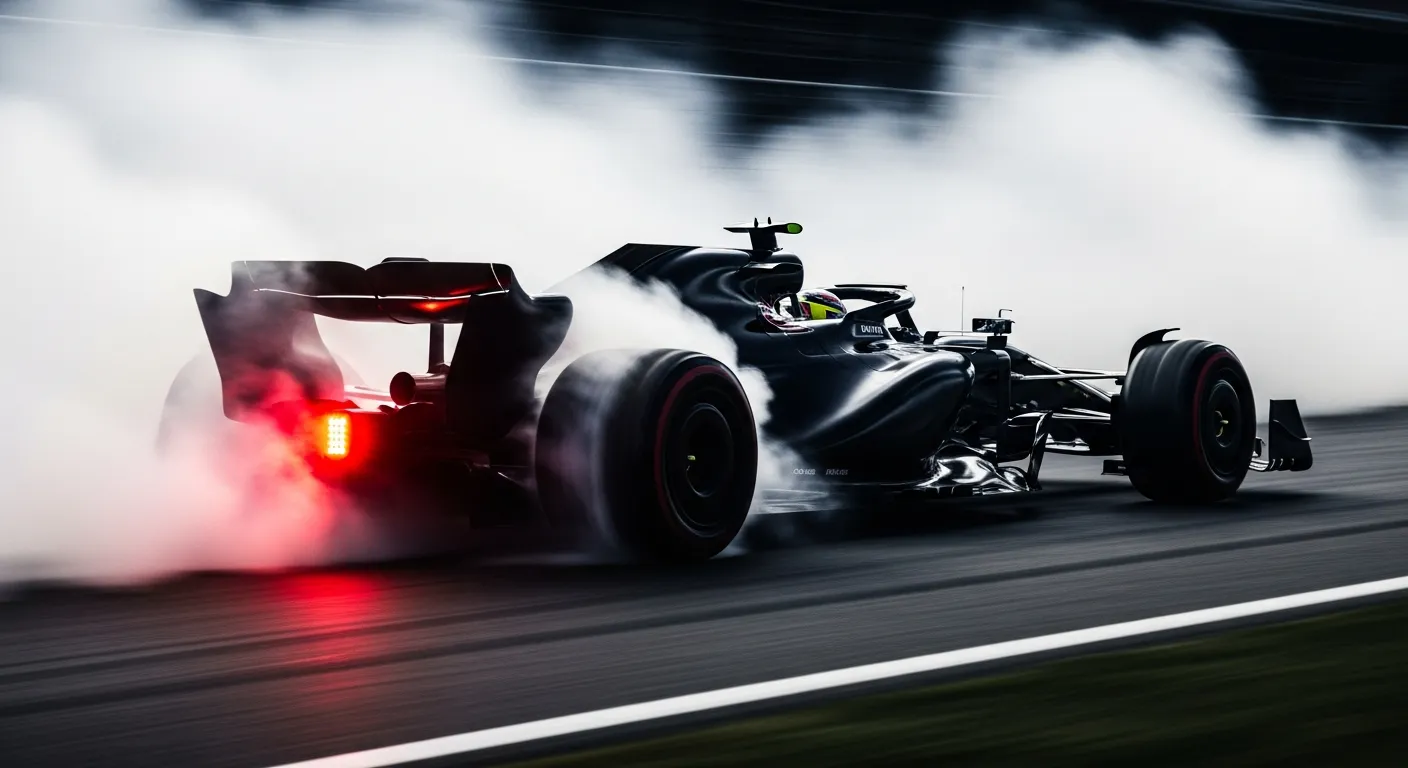
Jack Doohan at the Mexico City Grand Prix

Jack Doohan's potential competitive debut at the Mexico City Grand Prix presents a unique challenge, demanding precision and adaptability on a high-altitude, permanent circuit.

  • permanent
  • Mexico City
  • Jack Doohan

In this matchup

Parent pages

Jack Doohan's potential competitive outing at the Mexico City Grand Prix would mark a significant milestone, placing him on a circuit renowned for its unique atmospheric and technical demands. With no prior Formula 1 race starts at this venue, Doohan would face a steep learning curve on a permanent circuit that punishes even minor errors, particularly given the high-altitude conditions that fundamentally alter vehicle dynamics.

The Autódromo Hermanos Rodríguez, nestled over 2,200 meters above sea level, forces teams to run maximum downforce settings while still grappling with significantly reduced aerodynamic grip. This environment tests a driver's ability to manage a car that feels inherently lighter and less planted, requiring a nuanced touch on corner entry and exit. For a driver like Doohan, who has demonstrated strong qualifying pace and a methodical approach in his Formula 2 career, adapting to this sensation quickly will be paramount. The circuit's layout, featuring long straights followed by heavy braking zones, demands both outright power and exceptional brake management. This balance is crucial, and understanding how the Alpine A526 (or whatever iteration he might drive) responds under these specific conditions will be key to unlocking performance.

Doohan's experience in development roles and Free Practice sessions, while not directly competitive, would have provided him some exposure to the intricacies of F1 machinery. However, translating that into a full race weekend performance at a venue as idiosyncratic as Mexico City is a different proposition. The circuit's stadium section, with its slow, technical corners and passionate crowd, adds another layer of pressure, requiring absolute focus and precision. This contrasts with other North American circuits like the United States Grand Prix at COTA, which, while also permanent, don't present the same altitude challenges. The FIA's technical regulations for Formula 1 cars are designed to push the limits of engineering, and the Mexico City circuit often highlights how teams interpret these rules under extreme conditions, as detailed on the FIA — F1 World Championship official site.

DriverJack Doohan
  • CircuitMexico City Grand Prix
  • Tyre degradation, particularly with the thinner air leading to less cooling, will be another critical factor. Doohan's ability to preserve the Pirelli compounds over a race stint, a skill honed in F2, will be rigorously tested. Drivers often find themselves managing overheating brakes and tyres simultaneously, a challenge that requires both physical stamina and strategic thinking. Comparing this to the demands of another high-altitude, permanent circuit like São Paulo's Interlagos, the Mexico City track still maintains its unique character through its specific sequence of high-speed and low-speed sections. The overall history and evolution of Formula 1, as documented on Wikipedia: Formula One, shows how drivers and teams have continuously adapted to such diverse challenges across the globe. For a deep dive into specific season data, resources like Jolpica/Ergast — 2026 season data provide invaluable context for understanding performance trends.

    Ultimately, a strong showing from Doohan at the Mexico City Grand Prix would underscore his adaptability and readiness for a full-time F1 seat, especially if he can extract performance from the Alpine package in such demanding circumstances. It would be a crucial test of his race craft and strategic acumen against established competitors, similar to the challenges faced by other young talents like Oliver Bearman at the Mexico City Grand Prix when making their mark.

    Common questions

    What makes the Mexico City Grand Prix challenging for a debutant?
    The high altitude significantly impacts engine performance and aerodynamic grip, demanding unique car setup and driver adaptation, making it a tough venue for a first competitive F1 outing.
    How does Jack Doohan's F2 experience prepare him for Mexico City?
    His F2 background provides a foundation in aggressive braking, tyre management, and adapting to varying track conditions, skills that are crucial for the Autódromo Hermanos Rodríguez's demands.
    Free download

    Track-by-track driver matchups are our favorite race-week prep. Grab the free 2026 Cheat Sheet for all 24 circuits.

    Get the free cheatsheet →
    Written by The F1 Formula Editorial Team, Race-week editors + sport historians
    Last reviewed June 2, 2026