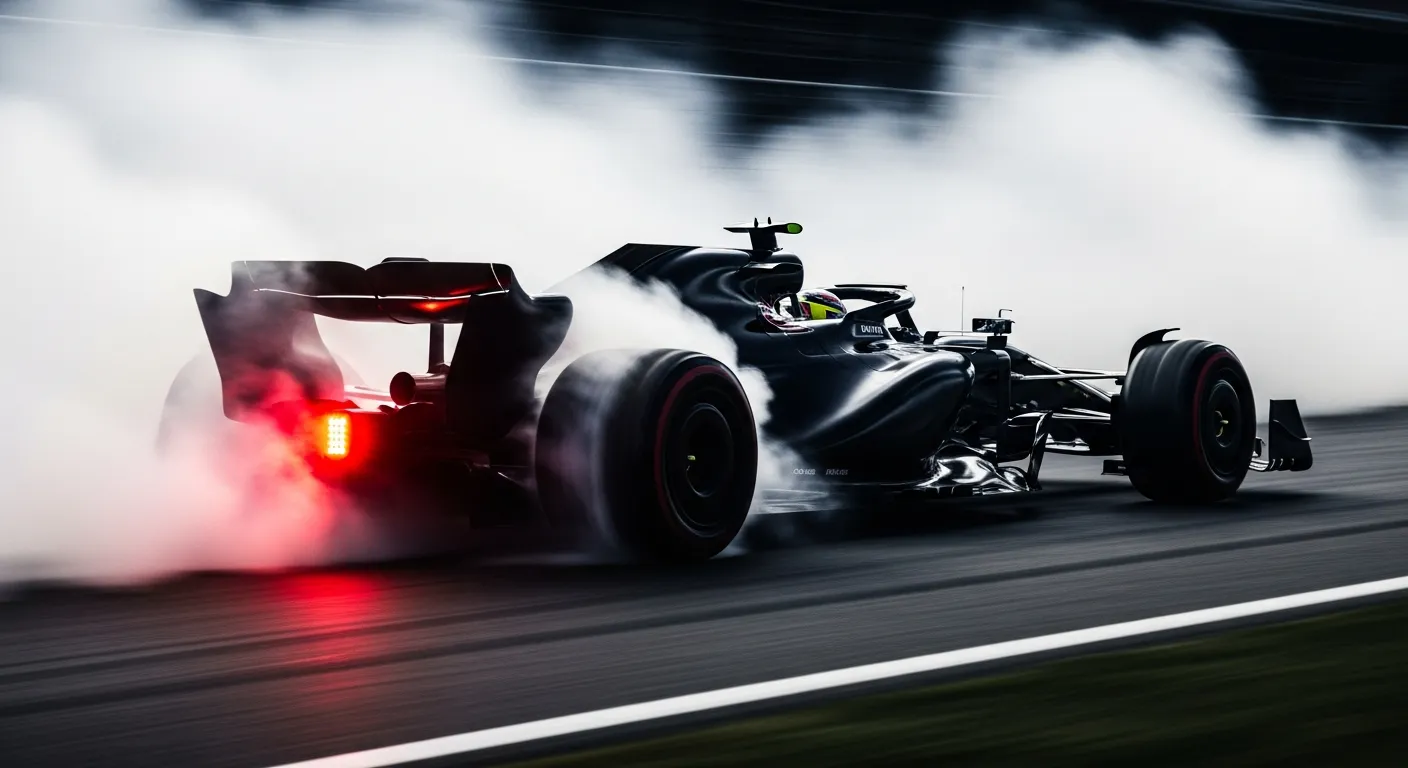
Jack Doohan's engagement with the Austrian Grand Prix at the Red Bull Ring has, to date, been primarily through Free Practice sessions, providing him valuable F1 car experience on a circuit known for its intense, short-lap demands. While he has yet to make a competitive F1 race start at this permanent circuit, his appearances in FP1 sessions for Alpine have been crucial for his development within the team's academy, allowing him to acclimate to the specific characteristics of an F1 machine under race weekend conditions. These sessions are not merely about raw pace but about understanding car balance, tyre behaviour, and providing precise feedback to engineers, all vital steps for any aspiring F1 driver.
The Red Bull Ring is a unique challenge, characterized by its brevity, high average speed, and significant elevation changes. Its layout features only ten corners, but these range from high-speed sweeps like Turn 1 to heavy braking zones into Turn 3 and Turn 4, demanding a versatile driving approach. The circuit's short nature means that traffic management can be a significant factor, even in practice, and precision through the rapid Esses section (Turns 6-7) is paramount for lap time. For a driver like Doohan, who has honed his craft in junior categories, translating that experience to the higher downforce and power of an F1 car on such a specific track requires immense focus and immediate adaptation. The tight, undulating layout also places a premium on consistent braking performance and managing tyre temperatures over a short, intense lap. Comparing it to other European permanent circuits, the Red Bull Ring's demands for immediate performance and strong braking differ from the more flowing nature of a track like Lance Stroll at the British Grand Prix, for instance, which emphasizes sustained high-speed cornering and aerodynamic efficiency through a series of interconnected bends.
Doohan's driving style, often noted for its aggressive yet controlled nature in Formula 2, aligns well with the Red Bull Ring's emphasis on strong braking and decisive turn-in. The circuit rewards drivers who can attack the kerbs effectively, particularly through the final two corners, and carry speed through its few but critical corners without compromising exit. For Alpine, utilizing Doohan in these sessions is a strategic investment, allowing him to gather data and build confidence in an F1 environment. His ability to adapt quickly to different car setups and track conditions, a skill vital for any F1 driver, is particularly tested here given the circuit's demanding nature and the tight margins for error. This experience is fundamental for his long-term prospects, much like how other young drivers gain critical mileage at circuits like , which offers a broad range of corner types for comprehensive learning and car development. The Red Bull Ring's specific challenges, such as its limited runoff in certain areas, also demand a high level of car control and respect for the circuit limits, which Doohan would be acutely aware of.