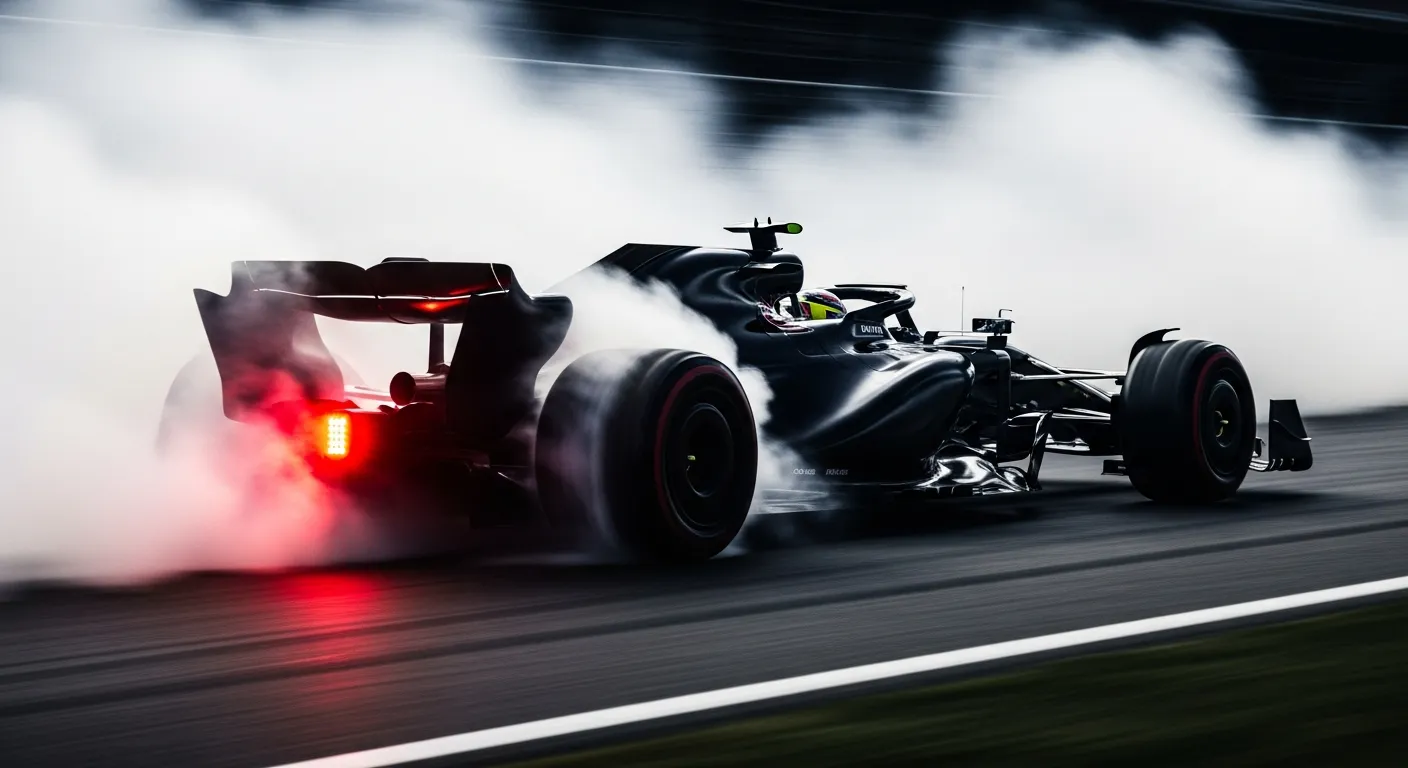
Lewis Hamilton's record at the Australian Grand Prix, with two wins and ten podiums from eighteen starts, showcases a complex relationship with the Albert Park street circuit, marked by both dominant performances and unexpected challenges. From his debut podium in 2007 to his most recent appearances with Ferrari, his journey at this season-opening or early-season staple has been a narrative of adapting to evolving regulations and team dynamics.
His initial years at Albert Park with McLaren were particularly strong. He secured a podium finish in his very first Formula 1 race in 2007, a remarkable start to his career. The following year, 2008, he clinched his first victory at the circuit, starting from pole position, setting a precedent for his prowess on this demanding layout. This early success underscored his ability to quickly master new circuits and extract maximum performance from his machinery, a trait that would define much of his career. However, the 2009 event saw a rare misstep, where he was disqualified after misleading stewards, highlighting the intense scrutiny and pressure of the F1 paddock, even for a reigning champion.
The Mercedes era brought a new level of consistency, though outright wins at Albert Park proved more elusive than his numerous pole positions might suggest. After another win in 2015, Hamilton often found himself on the second step of the podium, securing second place finishes in 2016, 2017, 2018, and 2019. These results, while strong, often came after intense battles, demonstrating the competitive nature of the Australian Grand Prix. The circuit's blend of fast, flowing sections and tight chicanes requires a finely balanced car and precise driving, often leading to close contests, much like the strategic demands seen at circuits such as the Monaco Grand Prix, another street circuit where precision is paramount.
Albert Park, as a semi-permanent street circuit, presents unique challenges. Its low-grip surface, especially early in the weekend, and its unforgiving walls demand absolute focus. Hamilton's driving style, characterized by his ability to carry speed through corners and exceptional tire management, has generally suited this track. However, the circuit's evolution, including layout changes, and the inherent unpredictability of the Australian weather have also played their part. The 2014 race saw him retire from pole due to a power unit issue, a reminder that even the best can be thwarted by mechanical reliability, a factor that can dramatically alter race outcomes, as detailed in official Formula 1 — official site records.
His move to Ferrari for the 2025 season marked a significant shift. His 10th place finish in 2025 and 4th in 2026 with the Scuderia suggest a period of adaptation, both for Hamilton and the team, as they seek to unlock the car's full potential at this specific venue. The data, available through sources like Jolpica/Ergast — 2026 season data, provides a clear picture of this transition. While the outright dominance of his Mercedes years at Albert Park might be behind him, his experience and race craft remain formidable assets. Observing his approach to tire degradation and his ability to navigate the often-chaotic restarts at this circuit will be key, similar to the strategic considerations at the Bahrain Grand Prix, another early-season event where tire strategy is crucial. The nuanced demands of street circuits, whether high-speed like the Saudi Arabian Grand Prix or more technical like Albert Park, consistently test a driver's adaptability and skill, a core tenet of Wikipedia: Formula One history.