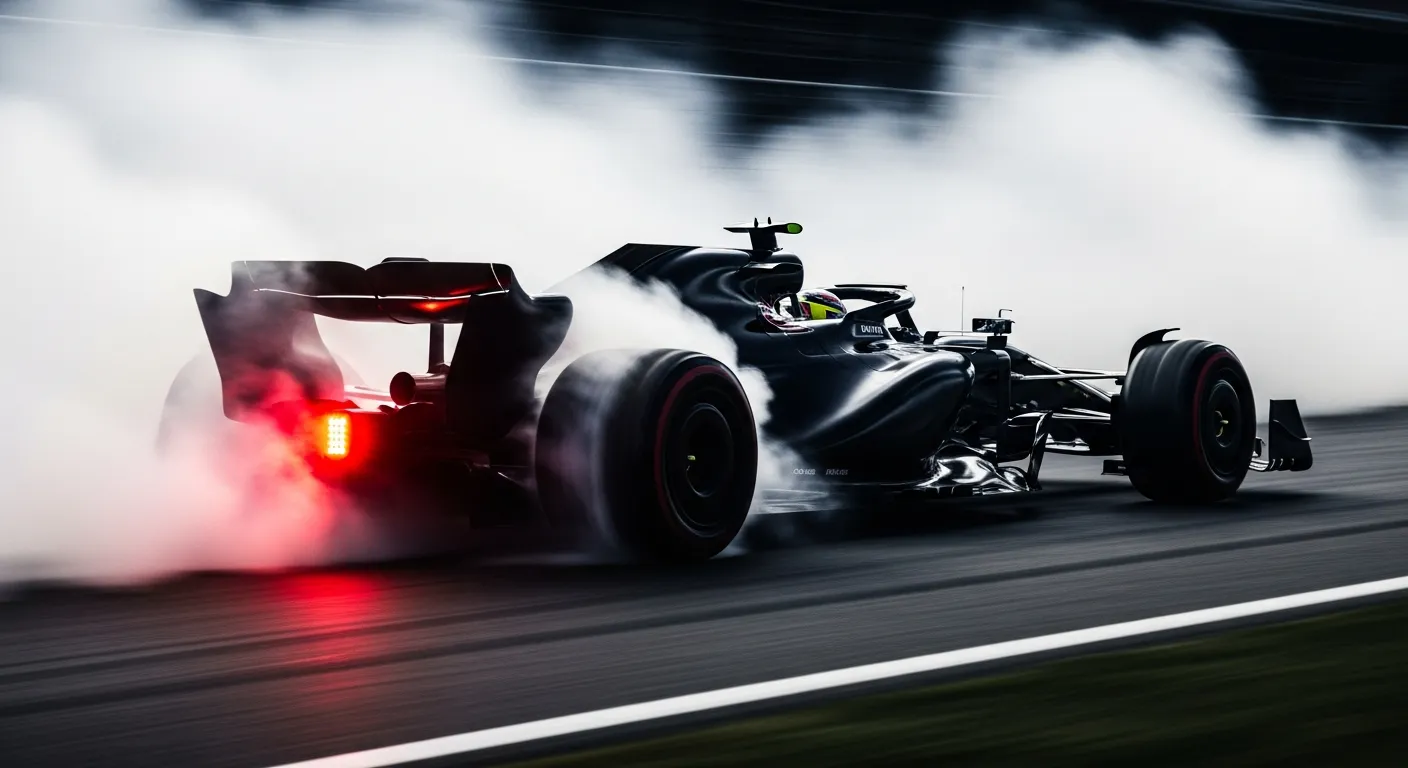
Nico Hülkenberg's career at the Italian Grand Prix at Monza is marked by a pattern of solid, yet often unspectacular, points finishes, punctuated by a standout qualifying performance in 2013. That year, driving for Sauber, Hülkenberg sensationally qualified 3rd on the grid, converting it into a 5th place finish on race day. This result stands as his joint-best finish at this historic permanent circuit, a testament to both his skill and the occasional flashes of potential in midfield machinery.
Monza's unique characteristics, with its long straights and heavy braking zones, often reward drivers who can manage their tyres and maintain precise lines through the chicanes. Hülkenberg's driving style, known for its smoothness and technical precision, has generally suited these demands. He secured points in five of his twelve starts at Monza, including a 7th place in his debut season with Williams in 2010 and another 7th with Force India in 2015. His most recent strong performance came in 2019 with Renault, where he again finished 5th, demonstrating a consistent ability to extract performance when the car allowed.
However, Monza has also presented challenges. His 2012 race with Force India ended in a DNF due to brakes, highlighting the mechanical stresses this high-speed circuit places on the cars. More recently, with Haas F1 Team in 2023 and 2024, Hülkenberg's finishes have been outside the points, reflecting the competitive landscape and the specific performance envelopes of those cars. Understanding the technical nuances of Formula 1, including how different car designs interact with track layouts, is crucial for any driver, as detailed on the Formula 1 — official site.
When considering Hülkenberg's performances, it's interesting to draw parallels with other drivers adapting to specific track types. For instance, the demands of a high-speed circuit like Monza differ significantly from the tight, unforgiving nature of a street circuit like the one explored in Andrea Kimi Antonelli at the Monaco Grand Prix. A driver's ability to adapt their technique for maximum straight-line speed versus cornering grip is paramount. Similarly, the setup challenges at Monza, optimizing for low downforce while maintaining stability under braking, can be as intricate as those seen at circuits with elevation changes, much like the considerations for Andrea Kimi Antonelli at the Austrian Grand Prix. For a comprehensive overview of the sport's history and technical evolution, the Wikipedia: Formula One entry provides valuable context.
Looking ahead to future Italian Grand Prix events, particularly with his move to Kick Sauber for 2025, Hülkenberg's experience at Monza will be invaluable. The data from previous seasons, such as that available through Jolpica/Ergast — 2026 season data, consistently shows that while raw pace is key, strategic race management and avoiding errors in the chicanes are equally important for a strong finish at the 'Temple of Speed'. His consistent points finishes, even without a podium, underscore a methodical approach that could serve Kick Sauber well in their development phase, contrasting perhaps with the aggressive learning curve expected of a rookie at a demanding track like Andrea Kimi Antonelli at the Spanish Grand Prix.