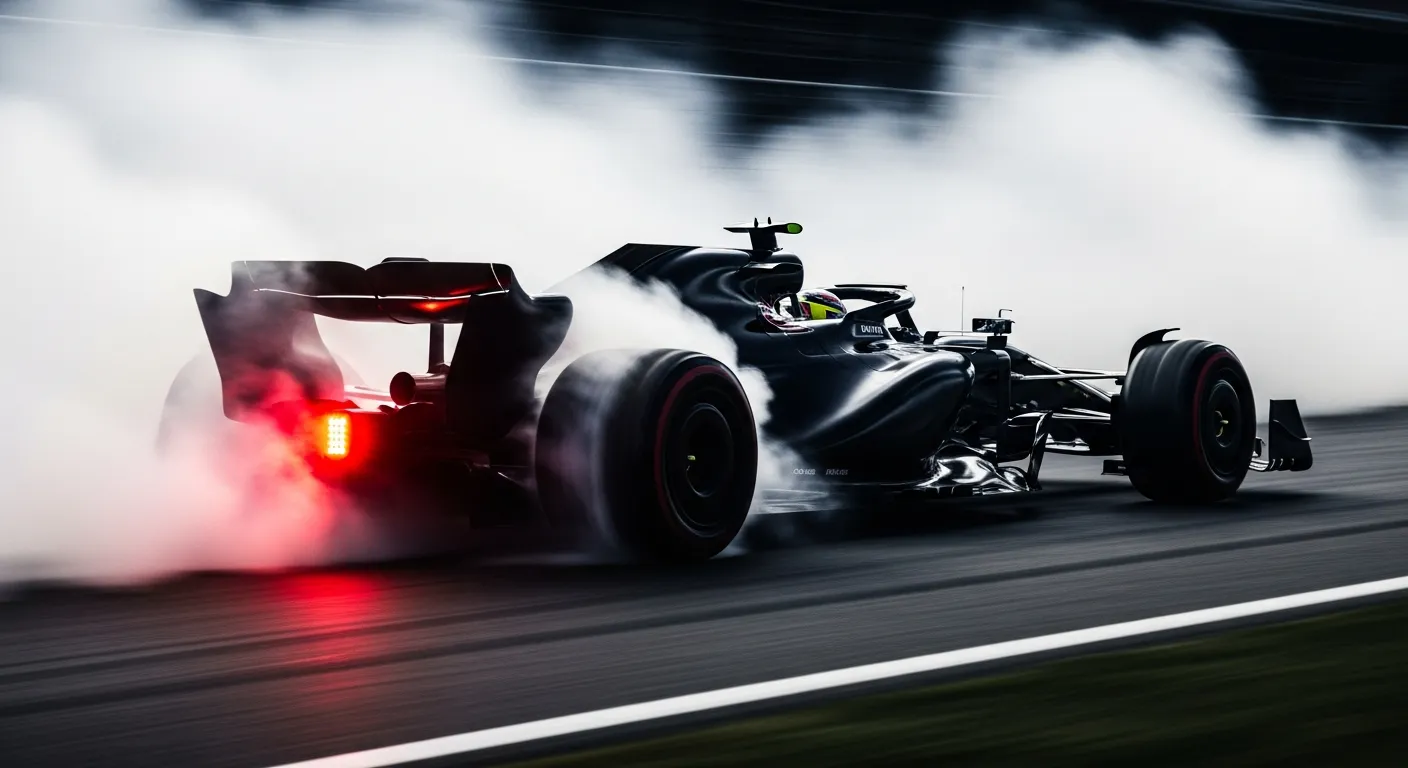
Pierre Gasly's tenure at the Bahrain Grand Prix is a compelling narrative of peaks and troughs, reflecting both his inherent talent and the fluctuating fortunes of his machinery. His record at the Sakhir International Circuit, a permanent fixture on the Formula 1 calendar, is far from linear, marked by a standout fourth-place finish in 2018 with Toro Rosso and a strong P7 in 2025 with Alpine, contrasting with several challenging outings. This circuit often serves as the season opener, making early performance here a critical indicator.
The 2018 Bahrain Grand Prix remains a highlight for Gasly, where he secured his best finish of 4th from a fifth-place grid start. This performance with Toro Rosso underscored his potential, demonstrating a remarkable ability to extract maximum performance from a midfield car on a track known for its abrasive surface and demanding braking zones. Such a result, particularly early in his career, hinted at the strategic acumen and consistent pace that would define his better performances. However, his subsequent appearances have seen a more varied outcome. His 2019 race with Red Bull Racing yielded an 8th place finish after starting 13th, a solid recovery but not the front-running result expected in a top car.
Gasly's time with AlphaTauri at Bahrain also saw mixed results. In 2020, he secured a respectable 6th place from an 8th-place grid slot. Later that year, at the unique Sakhir Grand Prix on the shorter outer circuit layout, he finished 11th. The 2021 season opener, however, proved frustrating; despite qualifying 5th, a suspension issue forced him to finish 17th, illustrating how quickly fortunes can turn at this demanding venue. The 2022 event brought further disappointment with a power unit failure leading to a DNF, highlighting the reliability challenges that can plague even the most skilled drivers. For a broader context on how drivers manage these early-season challenges, one might consider George Russell's performances at the Qatar Grand Prix, another circuit where tire management and reliability are paramount.
The shift to Alpine brought new challenges and opportunities. His 2023 Bahrain Grand Prix was a testament to his resilience, as he fought from a 20th-place grid start to finish 9th, earning points in a difficult debut for the team. This kind of recovery drive on a permanent circuit like Sakhir, which offers fewer opportunistic safety car periods than a street circuit, speaks volumes about his race craft and ability to manage tire degradation over long stints. This contrasts with the unpredictable nature often seen at events like the George Russell at the Las Vegas Grand Prix, where track evolution and unique conditions play a larger role. Conversely, the 2024 race saw him finish 18th, again starting from 20th, underscoring the ongoing development curve for Alpine and the competitive nature of the field. The 2025 season brought a more promising start, with a 4th place grid start converting into a 7th place finish, demonstrating a return to stronger form for both driver and team.
Bahrain's layout, with its long straights and heavy braking zones, demands a car that is both aerodynamically efficient and stable under braking. The night race conditions also introduce a dynamic element, as track temperatures cool, affecting tire grip and balance. Gasly's history here suggests that when his car provides a stable platform, he can deliver strong results, particularly in managing the abrasive surface. Understanding the technical regulations that govern car design and performance, as detailed by the FIA — F1 World Championship, helps contextualize these fluctuations in team performance. The granular data available from sources like Jolpica/Ergast — 2026 season data further illustrates the year-on-year variations in performance. His ability to adapt to varying car characteristics, from the Toro Rosso to Red Bull and then to AlphaTauri and Alpine, shows a consistent effort to maximize performance, a trait also observed in drivers like George Russell at the Abu Dhabi Grand Prix where circuit demands can vary significantly across a race weekend. His experience across different eras of F1, as chronicled on sites like Formula 1 — official site and Wikipedia: Formula One, provides a rich backdrop to his Bahrain performances.