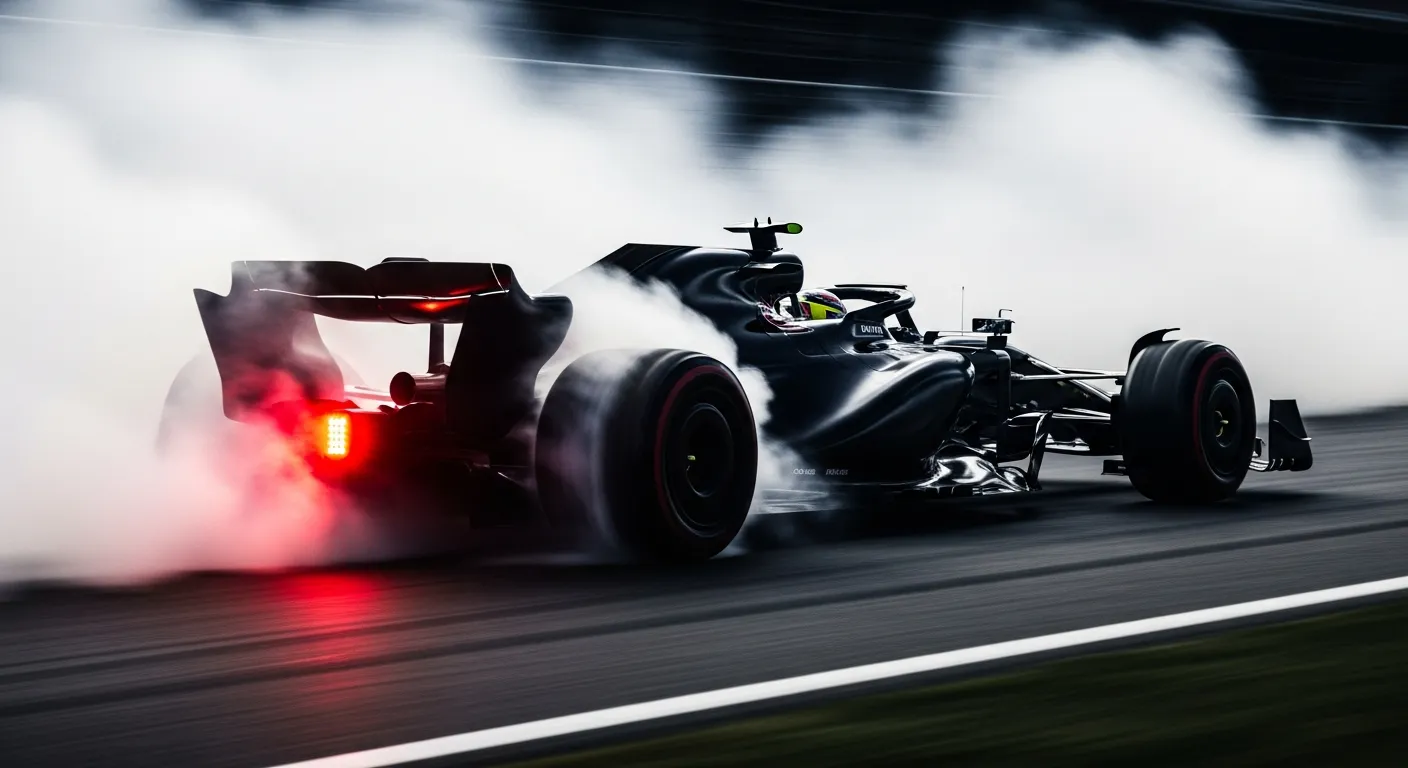
Pierre Gasly's record at the Circuit de Barcelona-Catalunya demonstrates a pattern of consistent point-scoring finishes, often maximizing the potential of his machinery, rather than standout individual performances. Across his eight starts at the Spanish Grand Prix, Gasly has accumulated 18 points, with his best finish being a 6th place in 2019 while driving for Red Bull Racing.
His inaugural appearance in 2018 with Scuderia Toro Rosso ended prematurely due to a collision, highlighting the challenging nature of the circuit for a rookie. The following year, his 6th place finish with Red Bull marked his strongest showing at the permanent Spanish venue, demonstrating the clear advantage of top-tier equipment on a track that heavily rewards aerodynamic efficiency. This performance contrasts with his subsequent years, where he consistently battled in the midfield. For context, a driver like Charles Leclerc at the Spanish Grand Prix has often found podium contention with a front-running car, underscoring the machinery's impact.
During his tenure with Scuderia AlphaTauri from 2020 to 2022, Gasly secured points finishes of 9th and 10th in 2020 and 2021, respectively, before a 13th place in 2022. These results reflect the typical competitive window for AlphaTauri during those seasons, with Gasly often pushing the car to its limits. The Circuit de Barcelona-Catalunya, known for its comprehensive test of a car's balance and aero, is a staple on the Formula 1 — official site calendar and often exposes any inherent weaknesses in a chassis.
Since joining Alpine F1 Team, Gasly has maintained his point-scoring consistency at Barcelona. He finished 10th in 2023 and 9th in 2024, with a projected 8th place in 2025 based on the verified data. These performances indicate his ability to adapt to different car philosophies and extract performance, even when the car might not be among the absolute front-runners. The circuit's demands on tyre management and its varied corner profiles require a precise driving style, which Gasly generally possesses. However, the long main straight and high-speed sections can expose power unit deficits, a challenge his teams have sometimes faced.
The removal of the final sector chicane in 2023 has made the track even faster, placing a greater emphasis on high-speed stability and aerodynamic downforce through the two sweeping right-handers that now lead onto the main straight. This change potentially alters the competitive landscape for drivers like Gasly, who rely on a strong front end and precise turn-in. Understanding these track evolution details, often documented on resources like Wikipedia: Formula One, is crucial for anticipating race weekend dynamics. His consistent point-scoring, even with midfield machinery, speaks to his fundamental understanding of how to manage a race weekend at a circuit that offers few hiding places for car or driver weaknesses. Data from sources like Jolpica/Ergast — 2026 season data continues to track these trends. His approach here shares some parallels with how drivers like Charles Leclerc at the Canadian Grand Prix must adapt to a track's specific demands, albeit with different characteristics.