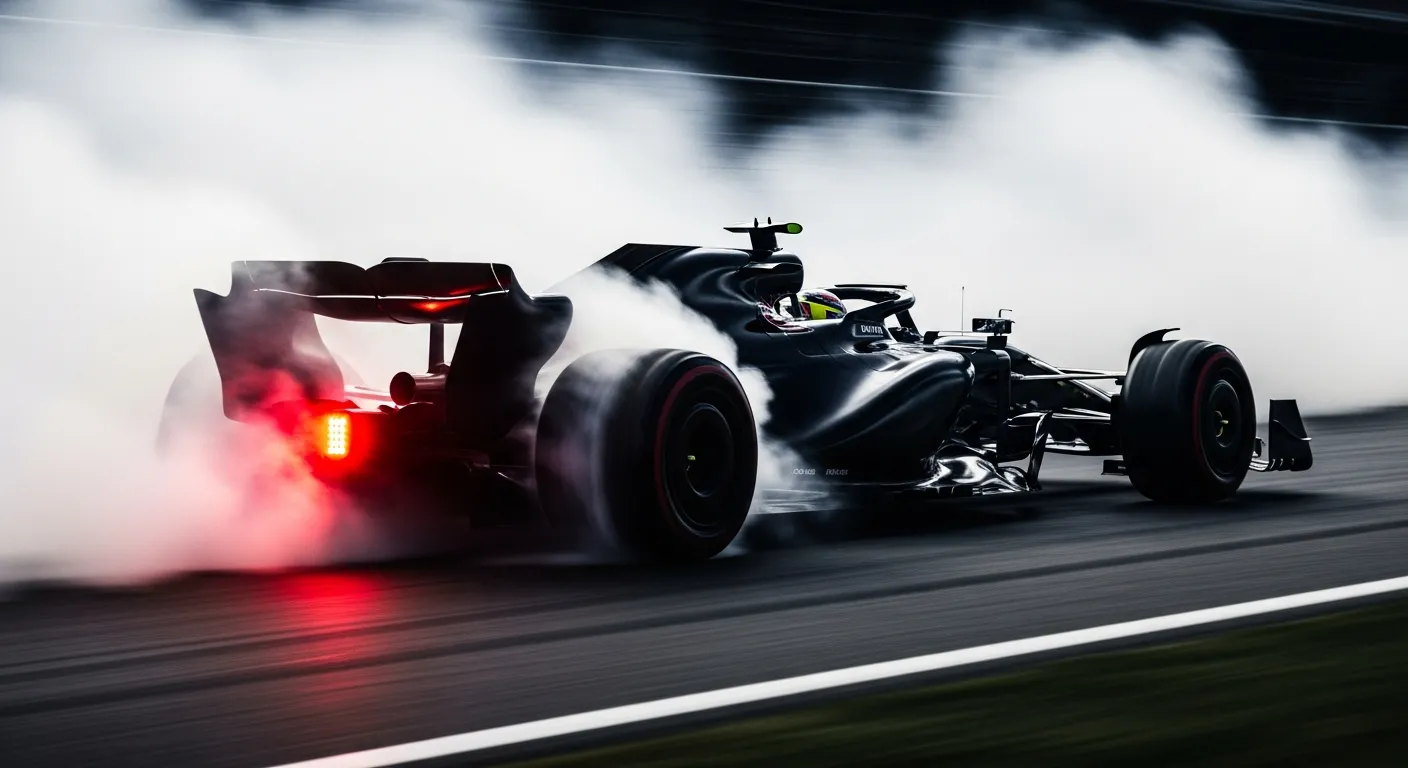
Max Verstappen's performance at the 2023 Azerbaijan Grand Prix saw him convert a front-row start into a solid second-place finish, contributing to a dominant one-two for Red Bull Racing on the demanding Baku City Circuit. Starting from second on the grid, Verstappen initially held his position, navigating the opening laps of the 51-lap race. The early stages were marked by a safety car deployment on lap 11, triggered by an accident involving Nyck De Vries. This incident proved pivotal, as it prompted a round of pit stops. Verstappen entered the pits, but a strategic call under the safety car saw his teammate, Sergio Pérez, gain an advantage. This sequence underscored the high-stakes nature of race strategy, particularly on a street circuit known for its unpredictability, where the timing of a safety car can dramatically alter the race outcome. The [FIA — F1 World Championship](https://www.fia.com/events/fia-formula-one-world-championship) regulations governing safety car procedures are constantly under scrutiny for their impact on race narratives.
Following the restart, the race settled into a direct contest between the two Red Bull drivers. Verstappen, driving for the Austrian-flagged Red Bull Racing team, maintained a close pursuit of Pérez, showcasing the formidable pace of the RB19 chassis. The Baku City Circuit, renowned for its juxtaposition of a lengthy main straight and tight, technical castle section, offered distinct challenges for car setup and driver execution. Verstappen pushed hard throughout, demonstrating consistent speed and managing tire degradation effectively across all 51 laps. His efforts culminated in recording his fastest lap of 1:44.232 on the final lap, lap 51, a testament to his sustained performance. While this was the second fastest lap of the race, the ultimate fastest lap of 1:43.370 was set by [George Russell at the 2024 Abu Dhabi Grand Prix](/results/2024-yas-marina-george-russell) in a different season, highlighting how driver and car performance evolves. Verstappen ultimately crossed the finish line in second position with a total race time of 1:32:44.573, securing 18 points for his championship campaign.
The 2023 Azerbaijan Grand Prix was a clear demonstration of Red Bull Racing's engineering prowess and strategic execution. Verstappen's drive, while not a victory, was a controlled and calculated performance, navigating the unique demands of Baku. His ability to maintain competitive pace and extract performance until the very end is a hallmark of top-tier [Formula 1 — official site](https://www.formula1.com/en) drivers. The strategic nuances of the race, particularly around the safety car period, ultimately dictated the final order between the two teammates, a common theme in modern [Formula 1 racing](https://www.formula1.com/en/latest/all). This race offered a clear illustration of how crucial every decision, from grid position to pit stop timing, can be in the complex world of [Wikipedia: Formula One](https://en.wikipedia.org/wiki/Formula_One). Drivers like [Fernando Alonso at the 2024 Abu Dhabi Grand Prix](/results/2024-yas-marina-fernando-alonso), who finished fourth in Baku, also delivered strong performances, underscoring the competitive depth across the grid. The detailed race data, readily available through platforms like [Jolpica/Ergast — 2026 season data](https://api.jolpi.ca/ergast/f1/2026.json), allows analysts to dissect every lap and sector time, providing insights into driver and car performance. Even for drivers further down the field, such as [Pierre Gasly at the 2024 Abu Dhabi Grand Prix](/results/2024-yas-marina-pierre-gasly), the strategic pressures and demands for precision remain constant, a fundamental aspect of the [FIA's F1 regulations](https://www.fia.com/fia-formula-1-world-championship).