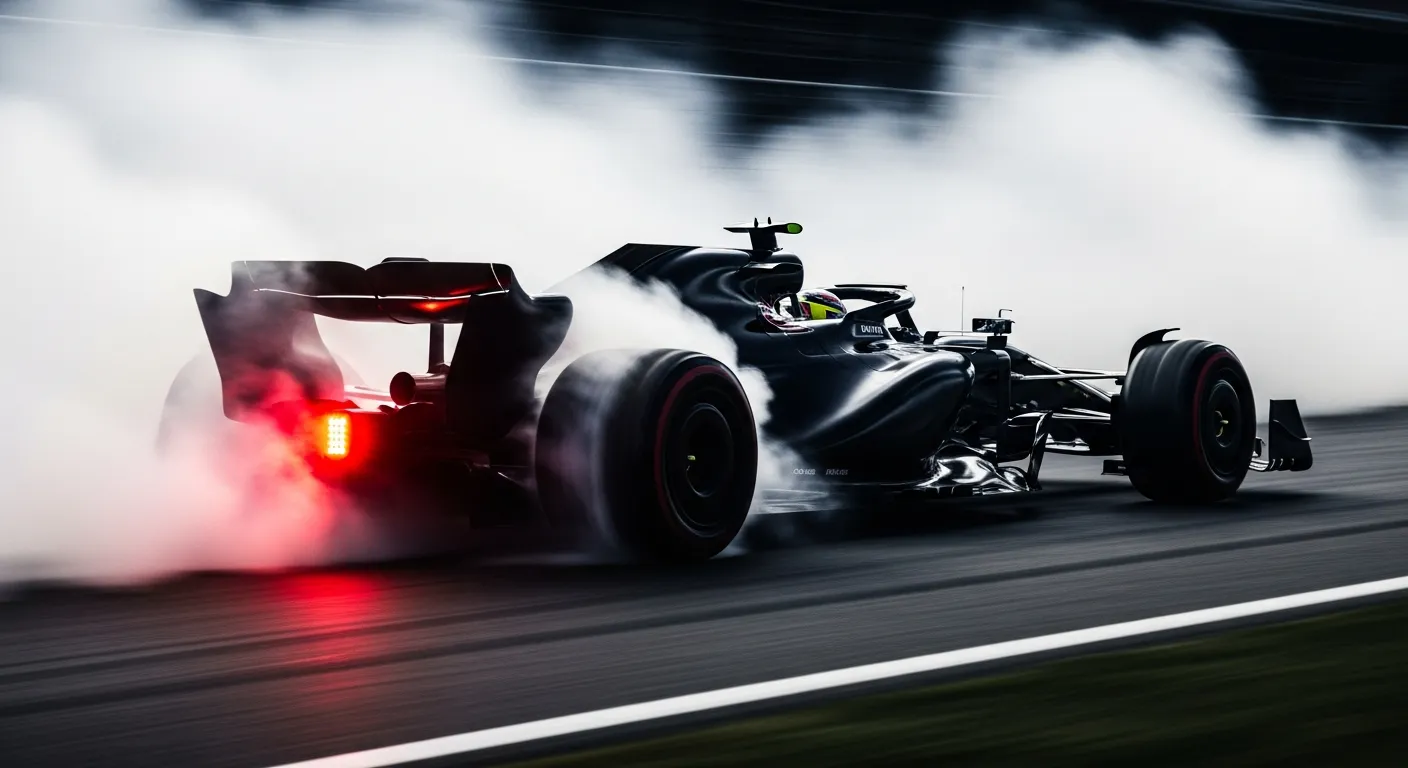
Ferrari's relationship with the Italian Grand Prix at Monza is uniquely defined by a deep-seated connection to its home circuit, where the pursuit of victory is not just a sporting goal but a cultural imperative, reflected in their substantial record of 20 wins and 54 podiums. The "Temple of Speed" is more than just a track for Scuderia Ferrari HP; it is hallowed ground where the roar of the Tifosi provides an unparalleled backdrop to their efforts. Over 75 appearances, Ferrari has secured 20 victories, 54 podium finishes, and an impressive 8 one-two finishes, a testament to their enduring legacy and the profound significance of this event. This consistent performance, particularly across different eras of Formula 1, underscores Ferrari's historical ability to adapt and triumph on a circuit that demands a very specific car philosophy.
Monza's character, with its long straights and fast chicanes, places a premium on outright power and aerodynamic efficiency. The Ferrari power unit, developed in-house, is often engineered with a focus on maximizing straight-line speed, a critical attribute for the circuit's high-speed sectors. However, this pursuit of top-end velocity must be carefully balanced with the need for stability under heavy braking and effective traction out of the slower corners. Achieving this delicate compromise is a perennial engineering challenge for Principal Frédéric Vasseur's team. Unlike high-downforce circuits that reward intricate aerodynamic packages, Monza requires a streamlined approach, making the setup window for optimal performance quite narrow. The constant evolution of Formula 1 technical regulations means Ferrari must continually refine its interpretation of low-drag concepts, a task that has seen varied success over the decades.
Recent history at Monza for Ferrari has been a mix of triumph and tribulation. The memorable victory in 2019 by Charles Leclerc, a highly emotional win for the Tifosi, demonstrated the potential when the car concept aligns perfectly with the circuit's demands. Similarly, the 2024 season saw another Ferrari driver stand atop the podium, further cementing this bond. Yet, there have been leaner years, such as 2020, where the team struggled to find pace, resulting in no points scored. This variability highlights the fine margins at play; even small deviations in car performance or setup can have significant consequences on a track where every tenth of a second is amplified. The pressure to perform at home is immense, a factor that can sometimes influence strategic decisions or driver performance, distinguishing it from events like Haas at the Azerbaijan Grand Prix where the focus is purely on navigating a challenging street circuit.
Strategy at Monza is often a straightforward affair, typically favoring a one-stop race due to lower tire degradation compared to other permanent circuits. However, the potential for safety cars or virtual safety cars, particularly after incidents in the chicanes, can quickly throw conventional strategies into disarray. Ferrari's strategists must be agile, ready to capitalize on these opportunities or mitigate their impact. The team's ability to execute clean pit stops and manage tire wear, especially on the harder compounds, becomes paramount in securing a strong finish. This contrasts sharply with the multi-faceted strategic challenges seen at tracks like Haas at the Singapore Grand Prix, where tire management and safety car timings are often the dominant factors.
The enduring appeal of Ferrari at Monza lies not just in the numbers, but in the narrative woven between the team and its passionate supporters. Each year, the Italian Grand Prix serves as a crucial benchmark for the Scuderia, a place where their car's inherent strengths and weaknesses are laid bare. Understanding the historical context of Formula 1, as detailed on Wikipedia: Formula One, helps appreciate the longevity of this relationship. For fans, it's a pilgrimage, and for Ferrari, it's a chance to reaffirm their identity. The data from Jolpica/Ergast — 2026 season data provides a numerical backbone to this narrative, allowing us to track the ebb and flow of their performance over decades. The unique dynamic of Ferrari racing at home is a spectacle that continues to define their presence in the sport, setting it apart from even other home races, such as the more recent addition of Haas at the Italian Grand Prix, where the local support, while present, doesn't carry the same weight of history.