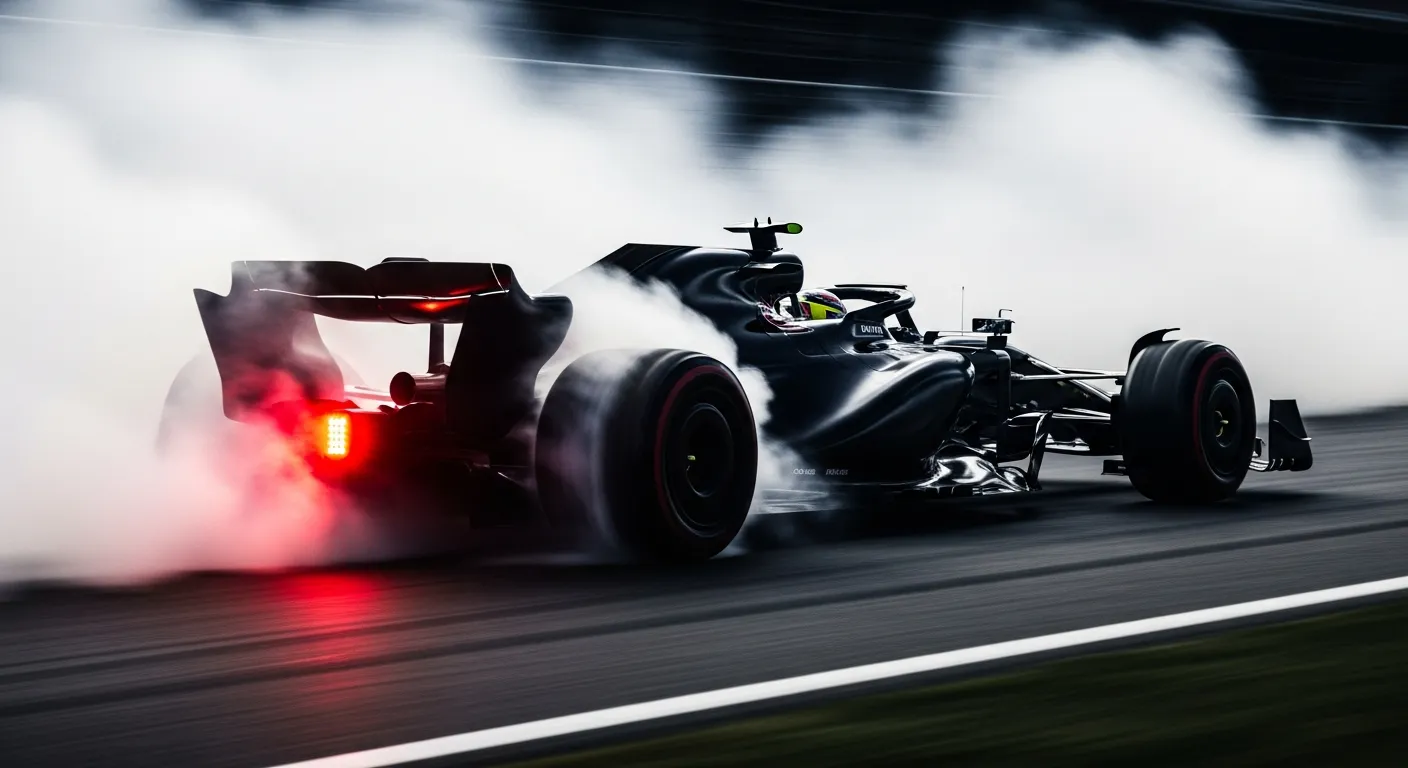
Scuderia Ferrari HP boasts a long and often successful history at the Dutch Grand Prix at Zandvoort, marked by periods of significant dominance, particularly in the early decades of Formula 1. The team has contested 34 Dutch Grand Prix events, securing an impressive 8 victories and 18 podium finishes, including 5 one-two results. Their inaugural win at Zandvoort came in 1952, establishing a strong early connection with the challenging permanent circuit. This early success, with additional wins in 1953, 1961, 1971, 1974, 1977, 1982, and 1983, underscores Ferrari's historical ability to master the unique demands of this venue.
The Zandvoort circuit, with its undulating terrain, high-speed sections, and distinctive banked corners like Hugenholtzbocht and Arie Luyendykbocht, places a premium on both aerodynamic efficiency and robust mechanical grip. For Ferrari, whose power unit is integral to its overall package, the circuit's blend of flowing curves and tight chicanes rigorously tests the car's balance between outright pace and cornering agility. Historically, the Scuderia often found a way to optimize their machinery for these specific challenges. The high lateral loads and the ever-present potential for sand from the nearby dunes to affect track conditions, as detailed on Wikipedia: Formula One, mean tire management is frequently a critical factor, an area where Ferrari has sometimes faced strategic complexities in recent seasons.
In the modern era, since the Dutch Grand Prix rejoined the calendar in 2021, Ferrari's performances have been more varied. After securing a P5 and P7 finish in 2021, they achieved a podium in 2022 with a P3 and P8. The 2023 event saw only one car in the points with a P5, while the 2024 race brought another strong showing with a P3 and a P5 finish. This recent record suggests that while the current Ferrari concept can extract significant performance, particularly in qualifying, consistency across both cars and throughout the race distance remains a key area for Frédéric Vasseur's team. Similar to the challenges faced by teams like Racing Bulls at the Australian Grand Prix on other permanent circuits, Zandvoort demands a finely tuned, all-around package.
Ferrari's engineers will be meticulously analyzing data from previous years, utilizing comprehensive race results from sources like Jolpica/Ergast — 2026 season data, to refine their setup for Zandvoort's specific characteristics. The circuit's tight, flowing nature, coupled with its elevation changes, requires a car that is both aerodynamically efficient and mechanically agile. This contrasts significantly with the demands of more open, power-sensitive tracks, highlighting the need for a versatile car concept. The team's ability to optimize their package for these specific traits will be crucial for adding to their impressive tally of 8 wins and 18 podiums at this historic venue. The strategic decisions made by Scuderia Ferrari HP during the Dutch Grand Prix weekend, from tire choices to pit stop timings, will be under scrutiny as they aim to maximize their points haul, much like the strategic considerations seen at other demanding venues such as Williams at the São Paulo Grand Prix. For a broader understanding of the season, the official Formula 1 — official site offers detailed championship standings and news.