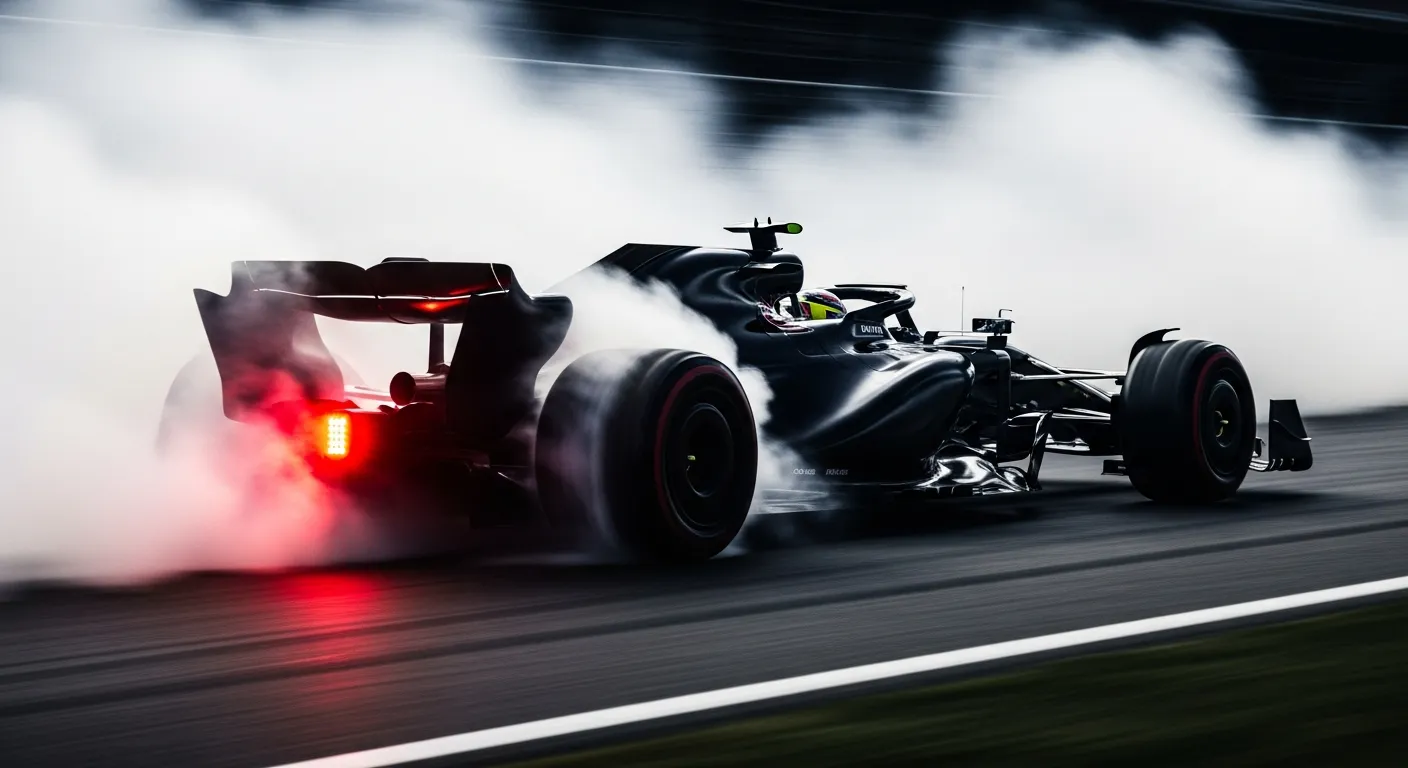
Haas's history at the Mexico City Grand Prix, marked by the Autódromo Hermanos Rodríguez's unique high-altitude demands, has been a challenging but ultimately progressive narrative, culminating in a significant fourth-place finish in 2025. The circuit's location, approximately 2,200 meters above sea level, presents a distinct challenge for every team on the Formula 1 — official site grid. The thin air drastically reduces aerodynamic downforce and engine power, forcing teams to run maximum wing angles while still generating less actual downforce than at sea-level tracks. This environment requires a specific car setup and power unit calibration to mitigate losses and maximize performance.
In their 9 starts at this permanent circuit, Haas initially found points hard to come by. Early appearances, such as 2016 where their best position was 19th, and subsequent years like 2018, 2019, 2021, 2022, and 2023, largely saw them finish outside the points. A notable breakthrough came in 2017 with an 8th place finish, securing 4 points, which was a strong showing for the team at that stage. This result hinted at the potential for the car to perform when conditions aligned, despite the inherent difficulties of the track.
The more recent seasons have shown a clear upward trajectory for the MoneyGram Haas F1 Team. In 2024, they secured 8 points with a 7th and 9th place finish, demonstrating improved adaptability. This progression was further highlighted in 2025, where the team achieved its best-ever result at the circuit with a 4th place finish, adding 14 points to their overall tally. This consistent improvement, contributing to their total points of 26 at this venue according to Jolpica/Ergast — 2026 season data, suggests a deeper understanding of how to optimize their car, particularly the Ferrari power unit, for the high-altitude environment.
Haas's car concept, often focused on mechanical grip, faces a stern test here. While the slower, technical stadium section might play to strengths in mechanical adhesion, the long main straight demands strong top-end speed, which can be compromised by the need for high downforce wings to compensate for the thin air. Unlike circuits such as Alpine at the Italian Grand Prix, where pure straight-line speed dictates much of the setup, Mexico City demands a more nuanced approach to balancing aero efficiency with the unique atmospheric conditions. Similarly, while Alpine at the Hungarian Grand Prix emphasizes maximum downforce, the unique atmospheric conditions in Mexico City mean that 'maximum' downforce still results in less actual grip, requiring a different engineering philosophy. The performance of the Ferrari power unit at altitude is a critical factor, as all engines lose power, but how efficiently the turbocharger and ERS systems compensate can make a significant difference in a team's overall competitiveness at a circuit that demands a blend of power and precise handling, much like Alpine at the United States Grand Prix requires a balanced approach to its diverse sectors.