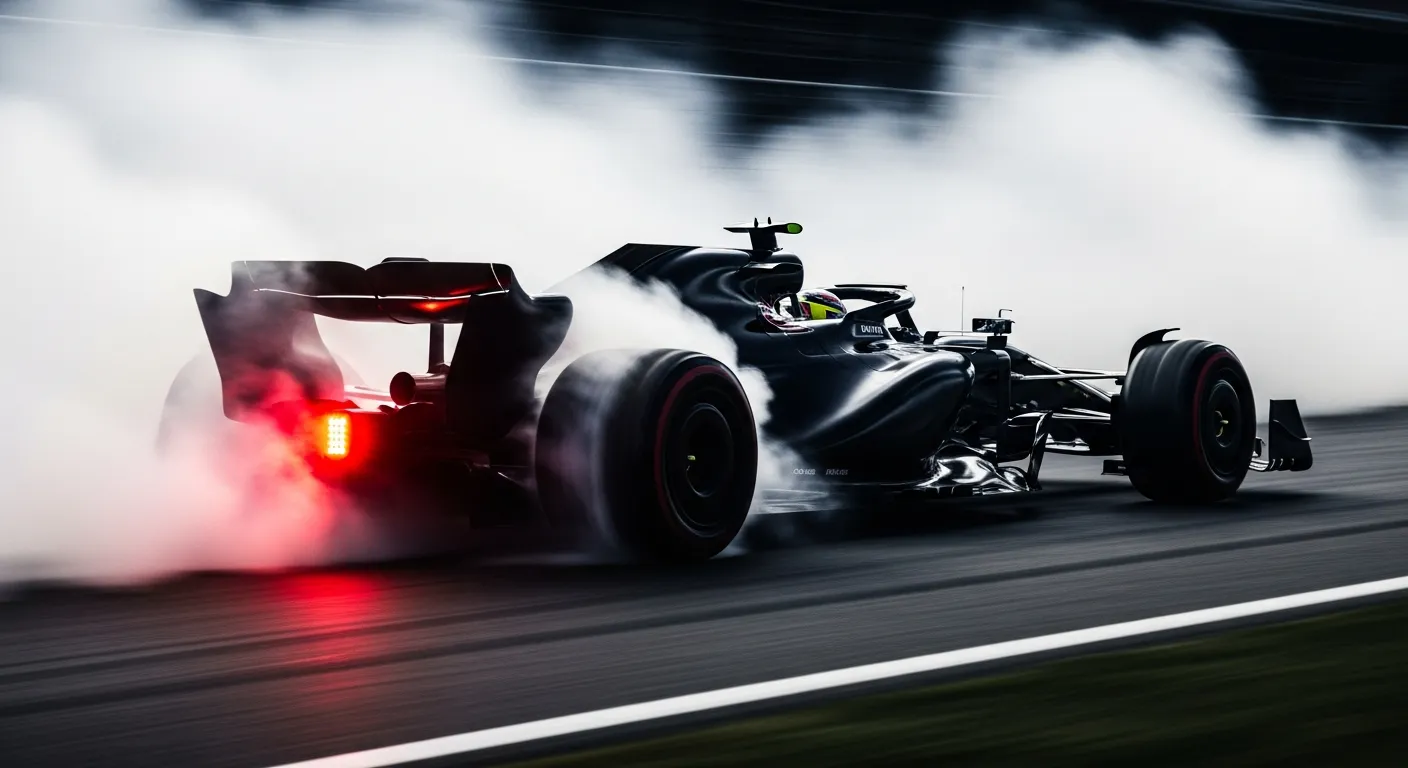
McLaren's enduring legacy at the Belgian Grand Prix is built on a remarkable 13 victories at Spa-Francorchamps, a testament to their historical strength on high-speed, flowing circuits. Across 42 starts at this permanent circuit, the Woking-based squad has also secured 21 podium finishes and six distinct 1-2 finishes, with their inaugural win dating back to 1968. This record places McLaren among the most successful constructors at Spa, a venue that consistently rewards a car's aerodynamic efficiency and raw power.
The circuit's unique blend of long straights, such as the run from Eau Rouge up to Les Combes, and high-speed corners like Pouhon, demands a finely balanced car. Historically, McLaren's chassis designs have often excelled in these conditions, allowing drivers to exploit the track's natural flow. The team's numerous wins, particularly during dominant periods in the late 1980s and early 1990s (1987, 1988, 1989, 1990, 1991), and again around the turn of the millennium (1999, 2000, 2004, 2005), highlight their ability to adapt to Spa's specific challenges. The most recent wins in 2010 and 2012 further cement this affinity, even as the technical regulations evolved across the FIA Formula One World Championship eras.
In the modern era, the Mercedes power unit, which McLaren utilizes, provides a strong foundation for performance at Spa. The circuit's power-sensitive nature means that a robust engine package is crucial for competitive lap times, particularly in the first and third sectors. However, the middle sector, with its more technical and flowing sections, requires a chassis that can generate consistent downforce without excessive drag. This balance is often a key differentiator for teams, much like at other high-speed venues such as Alpine at the Italian Grand Prix, where aero efficiency is paramount.
Recent performances have seen McLaren navigate varying levels of competitiveness at Spa. While the team has continued to score points, with a 4th place in 2021 and a 7th in 2023, the outright dominance of past decades has been a more elusive target. The challenge for Andrea Stella's team is to optimize their current car concept to maximize both straight-line speed and cornering grip, a task that often requires difficult setup compromises. The data from previous seasons, accessible through resources like Jolpica/Ergast's F1 season data, provides a granular view of how different car generations have performed. This contrasts with more street circuit-focused setups, for instance, which might prioritize mechanical grip over outright aero efficiency, as seen in races like Alpine at the Azerbaijan Grand Prix.
Looking ahead, McLaren's consistent development trajectory suggests they will continue to be a significant contender at Spa. The circuit's demands align well with a philosophy that values a strong power unit and a stable, aerodynamically sound platform, a characteristic also relevant when considering performance at tracks like Alpine at the United States Grand Prix. The team's historical success provides a benchmark, and their ongoing efforts to refine their package for circuits like Spa remain a focal point of their championship aspirations, as detailed on the Formula 1 — official site.