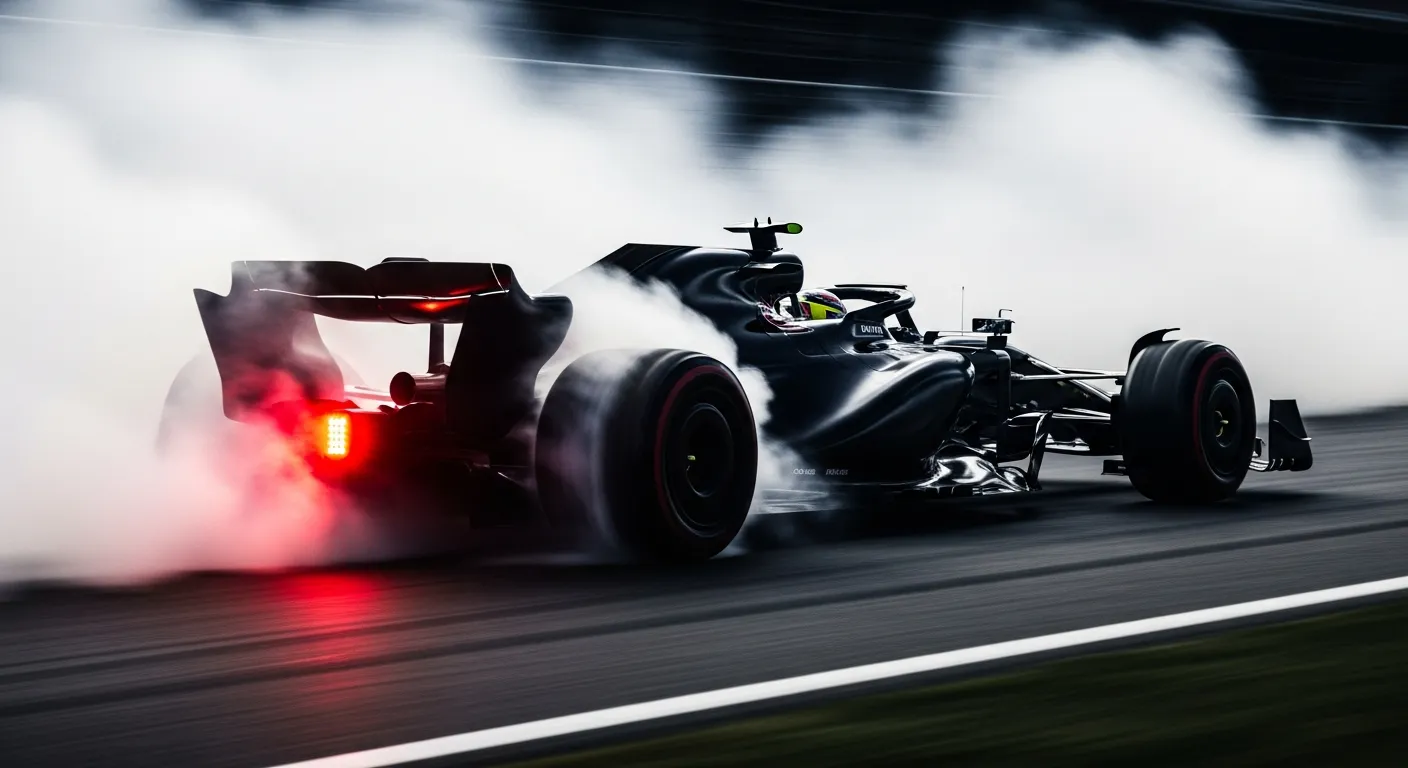
Mercedes' performance at the Mexico City Grand Prix is a fascinating study in adaptation, marked by periods of dominance and subsequent challenges at a circuit that uniquely tests their engineering philosophy. The team has secured three wins (2015, 2016, 2019) and seven podiums, including two 1-2 finishes, demonstrating their capability to excel, particularly in the earlier hybrid era. However, the Autódromo Hermanos Rodríguez, a permanent circuit situated over 2,200 meters above sea level, presents a distinct set of engineering puzzles that even a dominant team like Mercedes must meticulously solve.
The thin air at this altitude dramatically impacts both engine performance and aerodynamic downforce. While the Mercedes power unit is renowned for its efficiency, the reduced oxygen density inevitably curtails its output. To compensate for the lack of downforce, teams run maximum wing angles, yet the overall drag remains low due to the sparse air. This creates a unique aerodynamic compromise, often leading to cars that feel light and unpredictable. Mercedes has historically navigated this by finding a sweet spot, but in recent years, particularly with the ground effect regulations, balancing this high-downforce, low-drag paradox has proven more complex. This contrasts with circuits like Mercedes at the British Grand Prix, where their high-speed aero efficiency typically shines without such extreme atmospheric variables.
Beyond the raw power and aero, mechanical grip and tire management are paramount on the Mexico City track's permanent surface. The circuit features a mix of high-speed sections and a tight, technical stadium complex, demanding a car that can handle both. Mercedes' car concepts have, at times, shown sensitivity to ride height and bump compliance, which can be exposed on a circuit that requires precise handling and careful tire degradation management. This challenge is often a focus point for the team, similar to how they approach setup at Mercedes at the Spanish Grand Prix, another permanent circuit where car balance is key. Understanding the nuances of these interactions is crucial for competitive racing, as detailed by information found on the Formula 1 — official site.
Despite the unique hurdles, Mercedes has consistently been a front-runner, securing podium finishes in 2017, 2021, 2022, and 2023 even without a win in those years. The team's ongoing development, influenced by the broader evolution of Wikipedia: Formula One technical regulations, means their approach to the Mexico City Grand Prix continues to evolve. Each season brings a renewed effort to optimize their package for this singular challenge, with race data and historical results, such as those cataloged by Jolpica/Ergast — 2026 season data, providing critical insights for their engineering efforts.