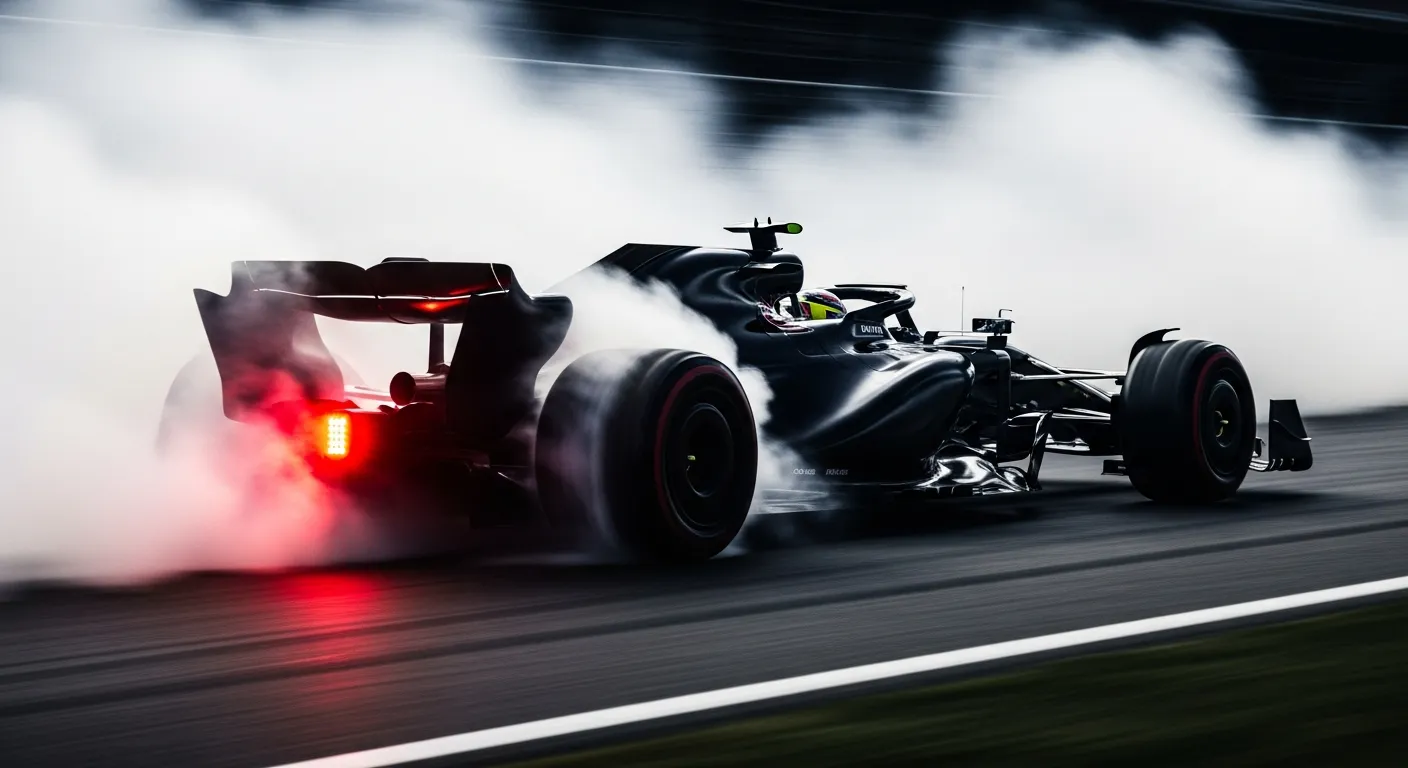
McLaren's performance at the Mexico City Grand Prix presents a unique technical puzzle, demanding a delicate balance between aerodynamic efficiency and engine output at the Autódromo Hermanos Rodríguez's extreme altitude. With a remarkable 22 starts at this permanent circuit, McLaren has secured 4 wins and 10 podium finishes, including a notable 1-2 finish in 1988. Their victories span different eras, from Bruce McLaren's triumph in 1969 to Ayrton Senna's dominant performance in 1989, and a projected win in 2025, showcasing the team's capacity for engineering excellence across varying technical regulations.
The circuit's high altitude, over 2,200 meters above sea level, significantly reduces air density. This means cars run maximum downforce settings to compensate for the thin air, yet still generate less actual downforce than at sea-level tracks. For a team like McLaren, running a Mercedes power unit, this presents a dual challenge: maximizing aerodynamic grip while mitigating the power loss and cooling issues inherent to the thin air. Unlike circuits such as Red Bull Racing at the Italian Grand Prix, where sheer power dominates, Mexico City demands a nuanced approach to engine mapping and turbocharger management to maintain performance through the long main straight and the subsequent braking zones.
Following the Grand Prix's return to the calendar in 2015, McLaren initially found the going tough, struggling to consistently score points. However, the team has shown a clear upward trend in recent seasons. Their 2023 performance, securing 5th and 8th positions, yielded 14 points, a significant improvement from earlier years. This progression suggests a better understanding of how their modern car concepts, often strong in medium-to-high speed corners reminiscent of sections at Red Bull Racing at the British Grand Prix, can be optimized for Mexico City's unique demands. The team's ability to extract performance from their chassis despite the power unit's altitude-induced limitations will be key.
The Autódromo Hermanos Rodríguez also features a tight, low-speed stadium section that requires excellent mechanical grip and precise car placement. This contrasts with the high-speed flow of tracks like Red Bull Racing at the Hungarian Grand Prix, which demand consistent downforce through sweeping corners. McLaren's recent development trajectory under Andrea Stella has focused on creating a more versatile car, capable of performing across a broader range of circuit characteristics. This adaptability, combined with strategic tire management—a critical factor given the high degradation rates often seen here—will be crucial for converting qualifying pace into race day results. Fans can track the latest developments and results on the Formula 1 — official site, and delve into historical data and regulations via Wikipedia: Formula One or detailed datasets like those from Jolpica/Ergast — 2026 season data.
McLaren's history at this permanent circuit is a testament to their enduring presence in Formula 1, with a total of 147 points accumulated. While their early successes were dominant, their recent performances indicate a renewed competitive edge, making them a team to watch closely as they navigate the complexities of the Mexico City Grand Prix.