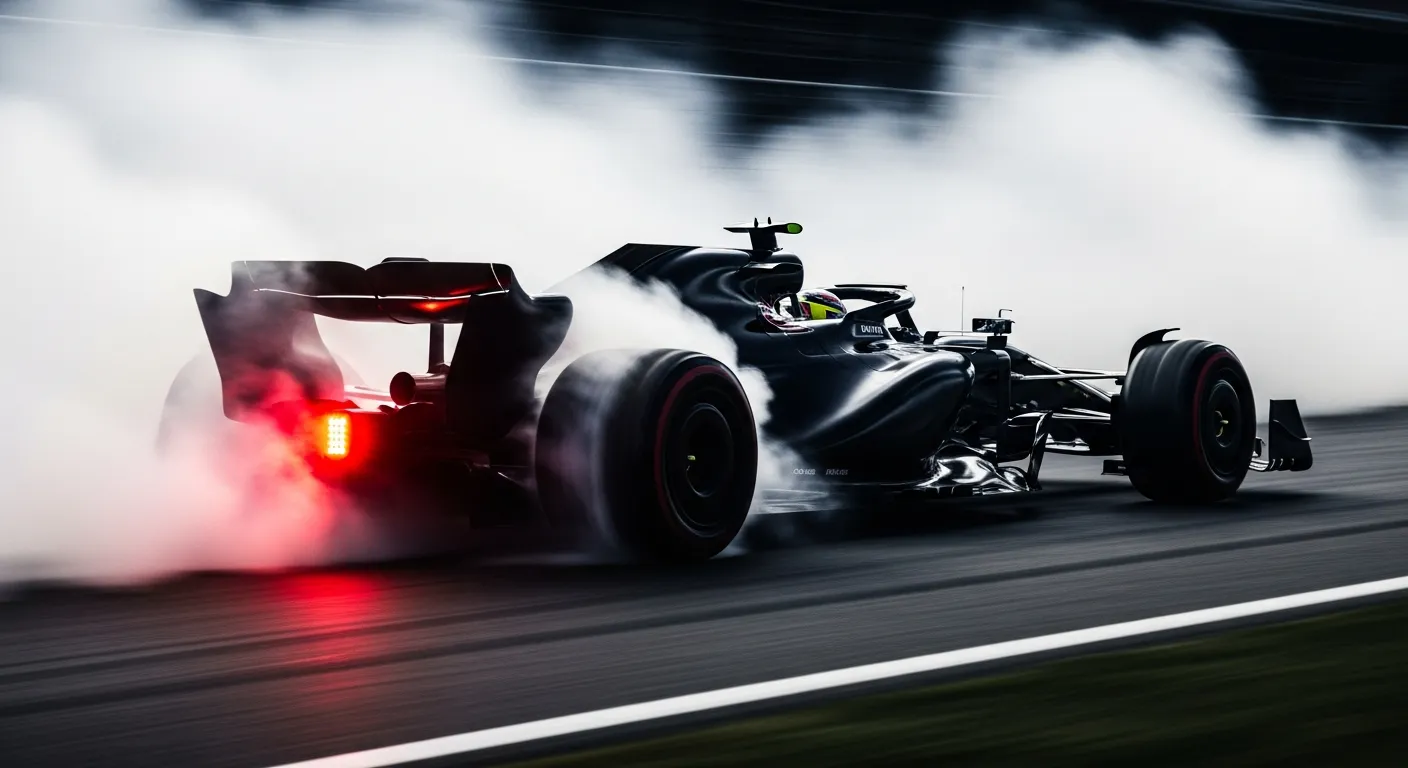
Red Bull Racing's performance at the Shanghai International Circuit has consistently highlighted their chassis's inherent design strengths in navigating the circuit's demanding high-speed changes of direction, even as power unit demands have evolved.
Oracle Red Bull Racing has contested 18 starts at the Chinese Grand Prix, securing 3 wins, 6 podiums, and 1 one-two finish. Their victories in 2009, 2018, and 2024 underscore a capability to adapt to the permanent circuit's distinct challenges across different regulatory eras. The 2009 win, in particular, marked a significant early milestone for the team, demonstrating their potential on a global stage.
The Shanghai circuit is a demanding test, characterized by its long straights, such as the one leading into Turn 14, which places a premium on outright power and drag efficiency. However, it also features a complex sequence of turns, including the snail-like Turn 1-4 complex and the high-speed Turn 7-8 section, requiring exceptional front-end grip and stability under direction changes. Red Bull's design philosophy, often prioritizing aerodynamic efficiency and a strong front axle, typically thrives in these high-downforce, technical sections. This balance is crucial for managing the varied demands, a trait also evident at circuits like Red Bull Racing at the Hungarian Grand Prix where mechanical grip and aero balance are paramount.
The Red Bull Powertrains-Ford unit's performance on Shanghai's long straights is a critical factor. While Red Bull cars have historically excelled in corners, the evolution of their power units has been key to their more recent successes, allowing them to compete effectively on both the straight-line and technical sections. This contrasts with circuits like Red Bull Racing at the Italian Grand Prix, where pure power output often dictates the pecking order more definitively. The team's ability to optimize their package for both high-speed and low-speed sectors is a testament to their engineering depth, a factor that contributes to their consistent presence at the forefront of the Formula 1 — official site standings.
The Chinese Grand Prix often presents strategic complexities, particularly regarding tire degradation and safety car interventions. Red Bull's strategic team, led by Christian Horner, has frequently demonstrated an astute understanding of these variables, turning challenging race scenarios into advantageous positions. The track's width and varying corner speeds also offer multiple overtaking opportunities, rewarding drivers who can maximize both the car's aerodynamic grip and mechanical traction. The detailed historical data, such as that found on Jolpica/Ergast — 2026 season data, shows a clear trend of Red Bull improving their performance over time at this venue.
The 2024 victory further solidifies Red Bull's mastery of Shanghai, demonstrating their current car's robust performance across all facets of the circuit. This consistent high performance, even after a significant hiatus for the event, suggests a fundamental compatibility between their car concept and the circuit's layout. This adaptability is crucial in the dynamic world of Wikipedia: Formula One, where car designs must perform across a diverse calendar. Their ability to deliver a one-two finish, as they did in 2009, or close to it, as in 2024 (1st and 3rd), underlines their potential for dominant weekends. The team's continued success at diverse venues, from Shanghai to Red Bull Racing at the Singapore Grand Prix, speaks volumes about their comprehensive car development.