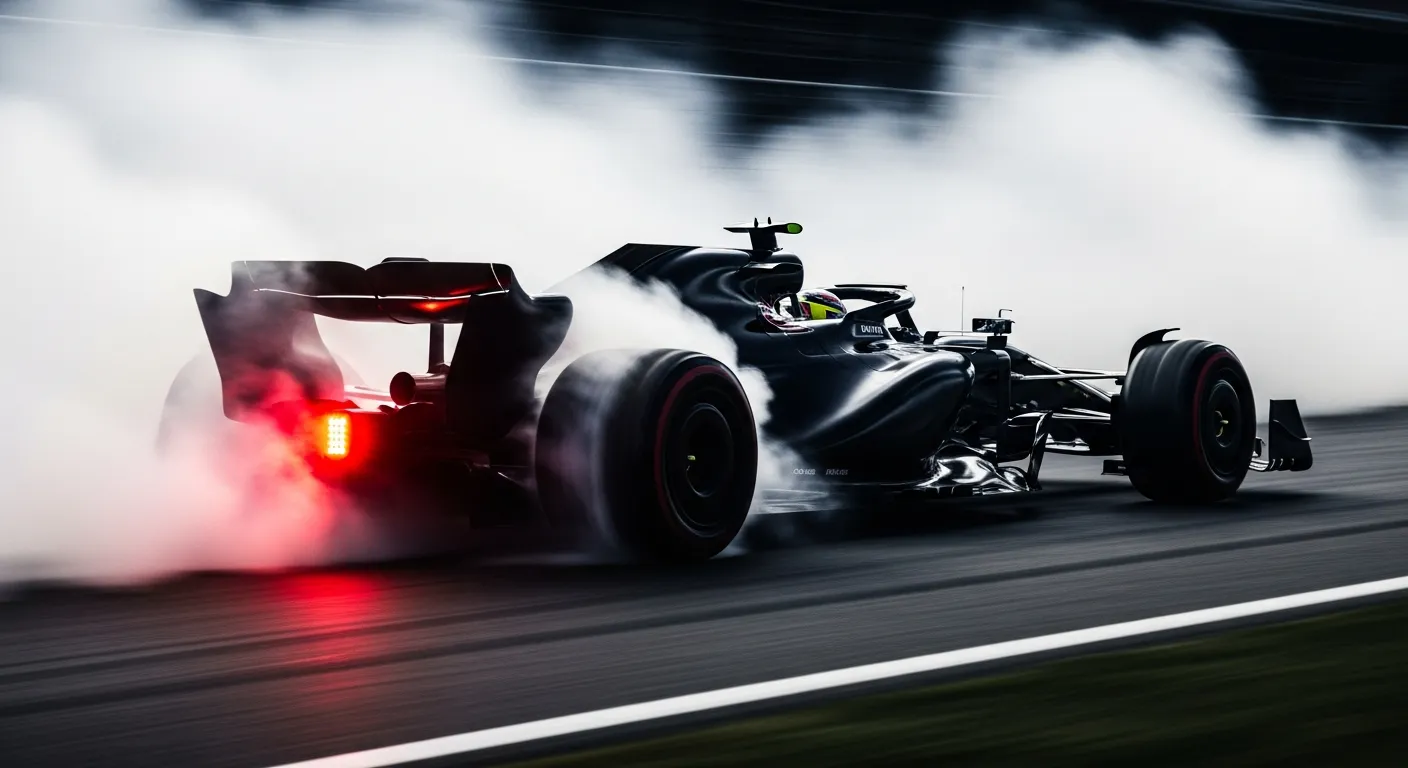
Max Verstappen's tenure in the ground-effect era, from 2022 through 2025, cemented his status as a multi-championship winner, marked by an extraordinary period of dominance with Red Bull Racing.
The era's character
The 2022 Formula 1 season ushered in a radical overhaul of technical regulations, fundamentally shifting car design towards ground-effect aerodynamics. The intent was to reduce 'dirty air' and promote closer racing, a significant departure from the preceding hybrid era. These new rules brought back underfloor tunnels and simplified aerodynamic surfaces, demanding a different approach to car setup and driving. Early challenges included 'porpoising' – a high-frequency vertical oscillation – which teams like Red Bull and Mercedes had to rapidly understand and mitigate. The era also continued under the financial regulations of the budget cap, which constrained development resources and forced teams to be highly efficient in their upgrades. This period saw a convergence of technical prowess and driver skill, where extracting maximum performance from these sensitive machines was paramount. For context on how different eras demand different skills, consider Fernando Alonso in the hybrid era, where power unit management was key.
What it asked of him
This ground-effect period demanded a unique blend of adaptability and precision from Max Verstappen. The new cars, with their stiffer suspension and reliance on underbody airflow, required a driver who could not only push the limits but also provide precise feedback for development. Verstappen's ability to drive a car with a sharp front end, often on the edge of oversteer, proved particularly well-suited to the characteristics of the Red Bull RB18 and RB19. He was tasked with consistently delivering peak performance under immense pressure, particularly in 2022 when Ferrari initially posed a strong challenge. His role extended beyond mere driving; he became a crucial anchor in Red Bull's development cycle, guiding the team's engineering efforts to refine what became the most dominant car of its time. This level of technical engagement is a hallmark of top drivers across generations, much like what was expected of at .